What Changed
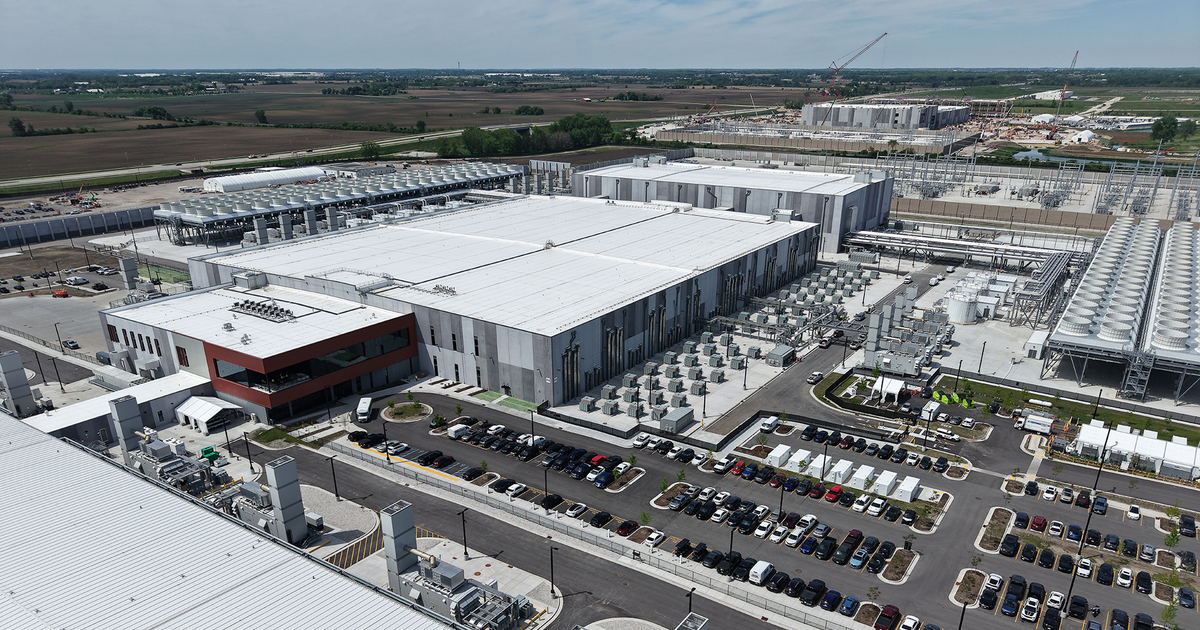
Microsoft has cut its Durand Avenue data center plan at the Mount Pleasant, Wisconsin, campus from nine buildings to seven, according to filings reviewed by Baxtel. The original plan called for nine facilities of roughly 580,000 square feet each, plus a 96,000 square foot office and storage building, totaling 5.2 million square feet and an estimated 7.97 billion dollars in taxable value. The revised, seven-building plan lowers projected taxable value by about 24 percent, or nearly 1.9 billion dollars, a reduction large enough that the village had to redo its own financial modeling around the project.
The cut sits inside a much larger 13.3 billion dollar expansion of the overall campus that the village board approved only in January, and it comes alongside a separate 530-acre site on International Drive, where six data centers are valued at 5.33 billion dollars and remain unaffected by this change. Microsoft is reshaping one piece of a buildout that remains, in absolute terms, one of the largest single data center commitments in the country, and the company has given no public timeline for when, or whether, the two cut buildings might eventually be added back.
The Money Behind the Cut
Mount Pleasant's village government built its tax projections, more than 76 million dollars a year once tax incremental district debt is retired, around the original nine-building scope, with roughly 45.2 million dollars of that figure tied specifically to the Durand Avenue parcel now being trimmed. A 1.9 billion dollar reduction in taxable value is not a rounding error against that projection, and it is worth asking why a company that just broke ground on a 13.3 billion dollar expansion is trimming two buildings from one parcel instead of absorbing the cut elsewhere in the campus where the financial exposure might be smaller.
Microsoft has not said publicly why the scope changed. What we do know is that the company told the village in September it would redirect up to 5 million dollars a year in incentive funding back toward property tax relief, a gesture village president David DeGroot welcomed, saying the village would dedicate every dollar of that funding toward reducing the community's property tax burden. Taken together, the incentive redirection and the building cut read like a company managing the politics of a megaproject while quietly tightening the physical footprint underneath it.
A Campus Still Very Much Alive
None of this amounts to Microsoft cooling on Wisconsin. The campus's first building, Fairwater, went live in June on a 315-acre site and already employs close to 550 people, with a second Fairwater building due in 2028. Microsoft's own construction estimate puts 4.7 billion dollars into local hyperscale construction between 2024 and 2028, and Baxtel counts six Microsoft facilities under construction in the Milwaukee metro area alone, out of 44 facilities total in that market and 63 across the state of Wisconsin run by 33 different providers.
The emissions backdrop adds useful context. Microsoft reported a 25 percent rise in CO2 emissions this year tied directly to data center expansion, a figure the company has linked to the pace of its AI infrastructure buildout across every region, not just Wisconsin. Trimming two buildings from one parcel, even inside an otherwise growing campus, fits a company trying to manage both the optics and the operating cost of growth it cannot easily slow down without ceding ground to competitors chasing the same AI capacity.
The Bigger Microsoft Picture
The Mount Pleasant trim looks smaller against Microsoft's overall trajectory. The company has said it plans 38 gigawatts of data center capacity by 2032, a figure that dwarfs any single campus adjustment, and it separately signed a 1.75 billion dollar deal with National Grid Ventures for a gas plant to power a Texas data center earlier this year. Microsoft is not pulling back from AI infrastructure in aggregate. It is making building-by-building adjustments inside a portfolio that keeps growing on net, which is a very different story than the headline number alone would suggest.
That distinction matters because it is easy to read any single cut as a signal that hyperscaler capex is finally slowing, and plenty of commentators have been eager to read it that way given how much has been written about AI infrastructure overbuilding. Mount Pleasant does not support that reading. A company trimming two buildings in Wisconsin while simultaneously committing to 38 gigawatts of capacity and new gas-fired generation in Texas is optimizing where it builds, not how much.
What This Means for Capacity Planning
The practical lesson for enterprise buyers is to treat an announced building count as a provisional planning assumption, subject to revision long after board approval. Microsoft cut two buildings from a parcel inside a campus it has spent years publicly championing, with incentives, tax projections, and a village government all built around the original scope. If scope can shift after formal approval at a project this large and this closely watched, every hyperscaler regional capacity roadmap deserves the same skeptical treatment before you build a product launch around it.
We would ask any provider account team for a direct answer on how often announced building counts at a given campus have changed since initial approval, and why, and how that history maps onto the specific region your workloads depend on. Mount Pleasant is a reminder that megaproject numbers move and that capacity planning built on the original headline figure deserves a buffer, not evidence of a campus in trouble or a company quietly retreating from its AI ambitions.