A Seed Round With a Pointed Thesis
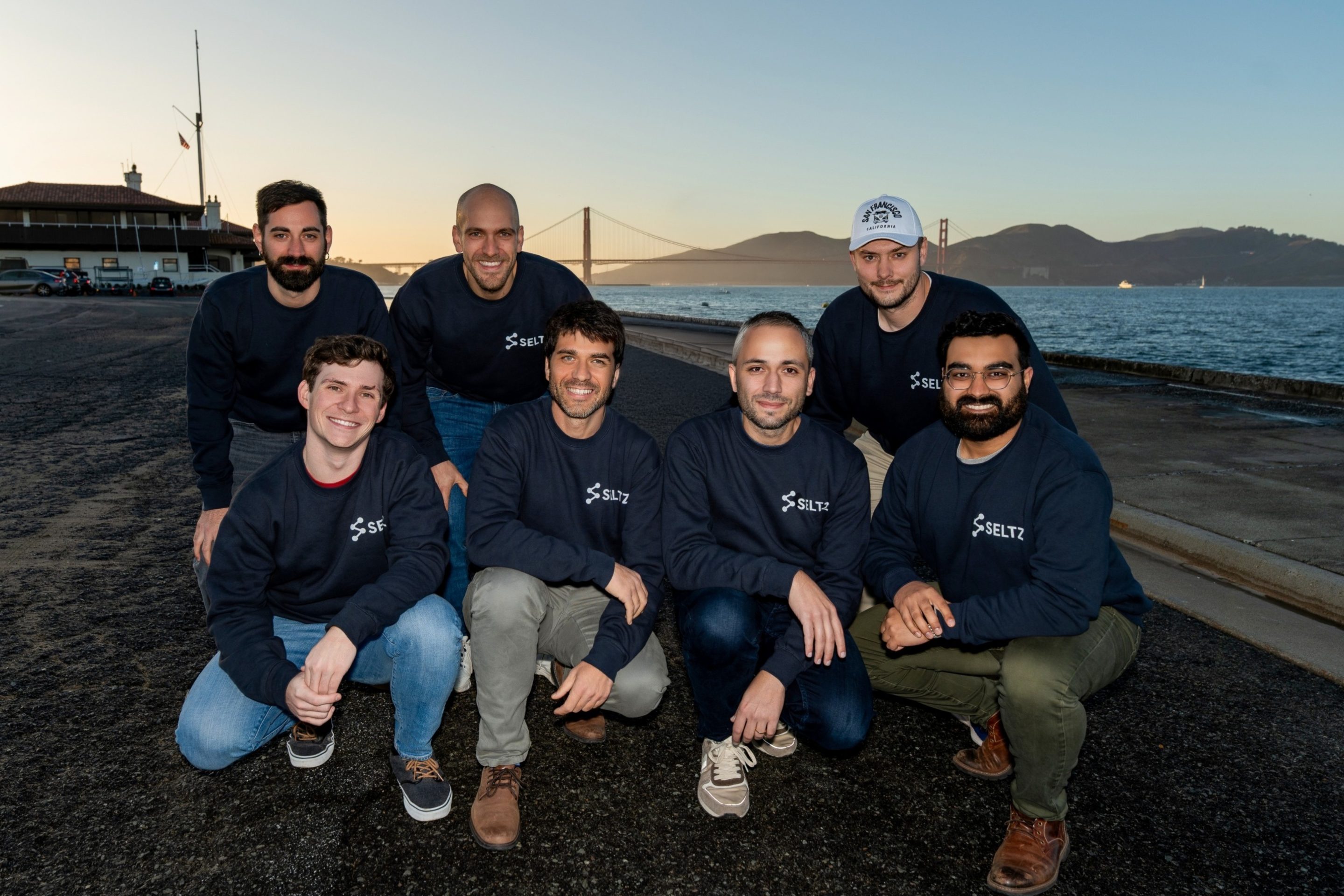
On June 24, 2026, Seltz announced a 12.5 million dollar seed round led by the European firm Speedinvest and the global investor B Capital, with participation from the Italian Founders Fund, United Ventures, and Future Back Ventures, the venture arm of Bain and Company. For a company incorporated only in October 2025 and running on six full-time staff inside a 15-person team, that is an aggressive vote of confidence. The investors are not betting on a better chatbot. They are betting that the search layer underneath every agent is built for the wrong customer.
We read this round as a signal more than a milestone. The dollar figure is modest by 2026 standards, where 100 million dollar AI rounds barely register. What matters is the thesis the capital endorses: that retrieval for machines is a separate discipline from retrieval for people, and that whoever owns it owns a chokepoint. Seltz operates remotely with offices in the San Francisco Bay Area, Pisa, and Leipzig, a structure that tells you the talent for low-latency search infrastructure is wherever the search engineers happen to live.
Why Human Search Breaks for Agents
Founder and CEO Antonio Mallia put the argument bluntly: "The old search methods don't work because they were architected for humans." Traditional engines optimize for a person scanning a ranked list of links, clicking through, and synthesizing. An agent does none of that. It needs the specific table, paragraph, or image that answers a sub-task, delivered in a format it can consume without a browser, a render, or a human in the loop. Snippet engineering for click-through is noise when the reader is a model on a deadline.
Mallia compared the moment to Google's early disruption of search, and the comparison is more than founder bravado. Google won because it matched its architecture to how humans actually navigated the early web. The claim here is that agents have changed the navigation pattern again, and the incumbents are serving a user that is being replaced. Whether that is true at scale is the open question, but the directional pressure is real: agent traffic is growing faster than human query volume across the enterprises we track.
Owning the Whole Stack
Seltz is not wrapping an existing index. It owns the entire search stack: the web crawler, the search index, the retrieval models, and the ranking layer. The system crawls hundreds of millions of pages a day and returns results in under 200 milliseconds, scoring individual passages and extracting the exact table, text, or image an agent needs. Mallia calls the discipline context engineering, the practice of shaping what reaches a model's context window so the agent narrows its attention to what is relevant rather than drowning in everything a query could surface.
For technology leaders, the vertical integration is the interesting part. Buying a retrieval API that resells someone else's index leaves you exposed to that index's incentives, which are usually advertising and human engagement. A stack built end to end for machine consumption can optimize for passage-level precision and latency budgets that agentic workflows actually live and die by. The risk, of course, is index coverage: a nine-month-old crawler competes with two decades of incumbent infrastructure, and freshness gaps will show up in production before benchmarks do.
A Suddenly Crowded Layer
Seltz lands in a category that has filled out fast. Parallel carries a roughly 2 billion dollar valuation on 100 million dollars raised, Exa has pulled in 85 million dollars, and Tavily was acquired by Nebius for as much as 400 million dollars. That an early seed entrant can still raise into this field tells you investors believe the market is large enough to support multiple winners, or that consolidation is coming and a sharp technical team is an acquisition target either way. We lean toward the latter as the more likely exit.
The competitive crowding also validates the underlying claim. When Parallel, Exa, Tavily, and now Seltz all converge on agent-grade retrieval as a standalone product, the layer has separated from both the model providers and the general search engines. For CIOs, the practical takeaway is that retrieval has become a procurement decision in its own right, not a feature bundled into whichever foundation model you happened to standardize on.
What This Means for Enterprise Buyers
The deeper story is where the bottleneck in agentic systems has moved. Through 2025, the constraint was model capability. In 2026, the frontier models are close enough that the differentiator is increasingly what you feed them. An agent reasoning over stale, ranked-for-humans search results will hallucinate or stall no matter how capable the underlying model is. Retrieval quality is becoming the binding constraint on production reliability, and that reframes where engineering and budget attention should go.
Our advice to buyers is to treat agent search as a first-class infrastructure choice and to test it the way agents will use it: passage precision, latency under concurrency, and freshness on the queries your workflows actually run. Seltz is too young to bet a production system on today, and index coverage is the metric to interrogate hardest. But the thesis it is funded on is sound, and it points at a layer that most enterprise AI roadmaps have quietly underinvested in.