AI That Covers the Entire Store, Not Just Produce
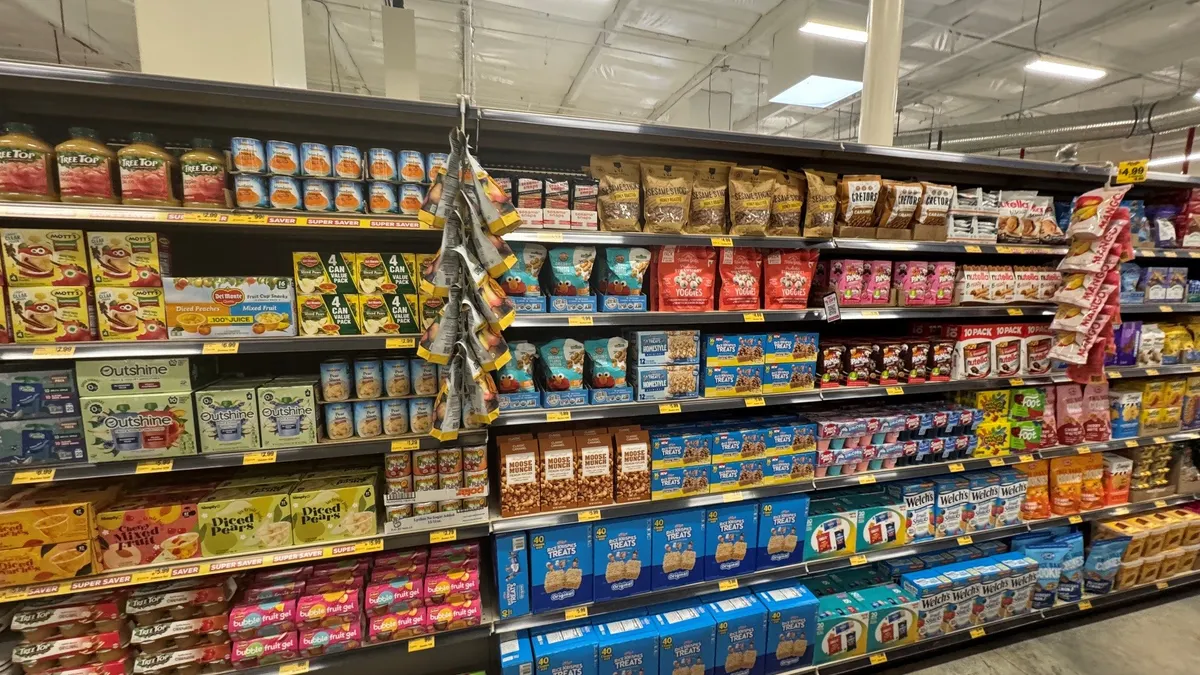
On June 10, 2026, Grocery Outlet said it is deploying Afresh's AI-powered ordering technology across fresh, center store and general merchandise departments, and that it is the first retailer to use Afresh's full-store, multi-category solution. That last detail is the headline that matters. AI-driven ordering in grocery has, until now, lived mostly in fresh departments, where spoilage makes the return on better forecasting obvious. Extending it to center store and general merchandise is a meaningful expansion of scope and ambition, because it asks one system to reason about lettuce, canned goods and homewares with the same engine, despite each having very different demand rhythms, shelf lives and economics.
We see this as the natural next phase of grocery AI. Fresh was the proving ground because the cost of getting it wrong, in shrink and waste, was visible daily. But the same forecasting logic applies to shelf-stable goods and general merchandise, where overstock ties up capital and stockouts quietly lose sales without leaving a pile of spoiled produce to make the loss obvious. By going full-store, Grocery Outlet is treating ordering as one continuous problem rather than a set of departmental silos, which is how the math actually works on a store's balance sheet. A category-by-category approach optimizes each department locally while the store as a whole carries the wrong inventory mix, and a full-store view is the only way to see that.
A Tool Built for the Operator, Not the Headquarters
Grocery Outlet's model is unusual: its stores are run by independent operators, not corporate managers, which shapes how the technology is framed. Frank Kerr, Chief Store Operations Officer, described the goal directly: "This investment is about simplifying and modernizing operations for our independent operators, and equipping stores with world-class tools that help them make smarter decisions every day." The phrasing is deliberate. In a chain of company-run stores, an ordering AI is a mandate from the center. In Grocery Outlet's model, it has to be a tool the operator chooses to trust, and the system delivers personalized recommendations based on each store's own demand patterns, with operators reviewing only the inventory the system flags.
That review-by-exception design is the smart part. It does not strip operators of judgment, it narrows where they need to apply it. For a business built on entrepreneurial store owners, an AI that quietly handles the routine reordering and surfaces only the exceptions respects the operator model rather than overriding it. We think this is the right instinct. The grocers that struggle with AI ordering are often the ones that impose a black box on skeptical store teams, who then quietly route around it and the project stalls. Grocery Outlet is positioning the tool as augmentation, which is how you win adoption from people who know their store, their neighborhood and their seasonal quirks better than any model does on day one.
The Numbers Afresh Is Putting Forward
Adam Litle, Afresh's Chief Revenue Officer, pointed to transparency as a selling point: "A part of the reason [Grocery Outlet] chose us is because there's also a lot of metrics and information in our dashboards where they can get real-time information at an organization level and a store level." Afresh reports a 94 percent adherence rate, meaning operators follow its recommendations the large majority of the time, and says that across partnerships workers halve order time, retailers lift sales by about 3 percent on average and cut shrink by 25 percent. Those are the four numbers a grocery operator actually cares about: less time ordering, more sales, less waste, and recommendations trusted enough to act on.
We treat vendor-supplied figures with appropriate caution, but the metrics that matter most here are adherence and shrink. A 94 percent adherence rate is the real proof of usefulness, because a recommendation engine that store teams ignore is worthless regardless of its underlying accuracy. The visibility at both organization and store level is also the operational glue. It lets Grocery Outlet see, across hundreds of independent operators, where the system is working and where it is being overridden, which is exactly the feedback loop a decentralized chain needs to manage consistency. Overrides are not just noise to be suppressed, they are signal: a cluster of operators rejecting the same recommendation usually means the model is missing something real.
What This Means for CPG Suppliers
When ordering shifts from human habit to algorithmic recommendation, the relationship between a grocer and its suppliers changes underneath the surface. For decades, a brand could influence shelf presence through the operator's familiarity, promotional pushes and the inertia of past orders. An AI that reorders based on each store's actual demand patterns is far less swayed by any of that. It buys what the data says will sell, which rewards genuine velocity and punishes products that were riding on relationship rather than performance. For consumer-goods companies, that is a quiet but real reordering of who holds the leverage at the shelf.
It also raises the value of clean, accurate data on both sides. A demand model is only as good as the sales, inventory and movement data feeding it, so suppliers with reliable item information and dependable fill rates become easier for the system to favor, while those with messy data or erratic supply risk being algorithmically deprioritized. We would advise CPG leaders to treat retailer ordering automation as a standing strategic question rather than a logistics footnote. As more grocers move to systems like this, the path to the shelf increasingly runs through performance data and supply reliability, not through the relationships that used to carry a mediocre product along.
Why Back-End AI Is the Quieter, Surer Bet
While much of retail's attention is fixed on customer-facing shopping agents, the steadier returns this year are coming from back-end operations: forecasting, replenishment and inventory accuracy. Grocery Outlet's move sits firmly in that camp, alongside a wave of grocers turning to AI for ordering across hundreds of stores. These projects do not generate splashy demos or viral screenshots, but they touch the line items that decide whether a grocery business is healthy: shrink, on-shelf availability, working capital tied up in inventory, and the labor hours that store teams pour into routine ordering instead of serving customers.
For executives weighing where to spend constrained AI budgets, that contrast is instructive. A shopping agent is a bet on changing customer behavior, which is uncertain, slow and partly outside the retailer's control. A full-store ordering system is a bet on a known operational cost, which is measurable from the first quarter and improves with every cycle of data it sees. Grocery Outlet's roughly 550 stores across 16 states give it the scale to test that math quickly and the diversity of formats to learn where the model generalizes and where it does not. We expect more of this unglamorous, balance-sheet-first AI through 2026, and we suspect it will quietly outperform the agent hype on return, even if it never trends.