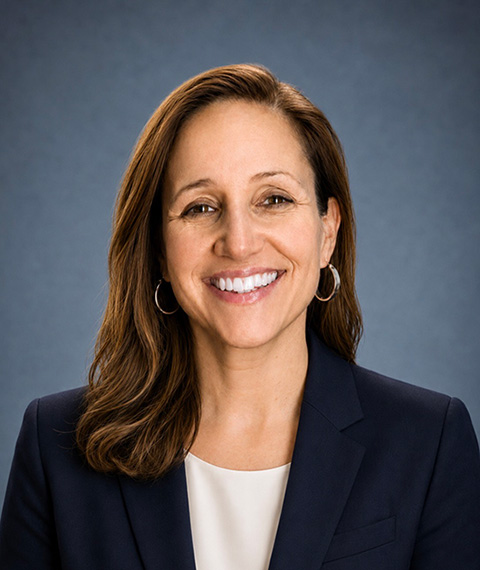
A physician takes the CIO seat
Seattle Children's has named Dr. Natalie Pageler as its Senior Vice President and Chief Information Officer, putting a practicing pediatrician in charge of the hospital system's digital strategy and IT operations. Pageler joins from Stanford Children's Health and Stanford University School of Medicine, where she served as Division Chief of Clinical Informatics and spent more than a decade as Chief Medical Information Officer. Her background combines direct clinical practice with over 20 years of clinical informatics leadership, a pairing that is increasingly the preferred profile for CIO roles at hospitals serving complex pediatric populations.
The appointment is not an isolated hire. Seattle Children's CEO, Dr. Christopher Longhurst, also arrived at the hospital system from Stanford Children's Health, where he held the Chief Medical Information Officer role, before an intermediate stop at UC San Diego Health. Pageler's arrival effectively reunites two Stanford Children's Health informatics alumni at the top of Seattle Children's leadership structure, with both the CEO and the CIO now sharing a common institutional background in clinical informatics rather than coming up through separate clinical and technology tracks.
What clinical informatics experience actually means here
Clinical informatics, as a specialty, sits at the intersection of medicine and technology, training physicians to design and evaluate the electronic health record systems, clinical decision support tools, and data infrastructure that frontline clinicians use every day. A physician-informaticist in the CIO seat brings something a traditional enterprise technology executive typically cannot: firsthand experience being on the receiving end of a poorly designed clinical system, and direct credibility with medical staff who are often skeptical of technology initiatives imposed by non-clinical IT leadership. That credibility matters enormously in hospital systems, where clinician adoption determines whether any technology investment actually changes patient care.
Pageler's specific specialization in pediatric informatics is also notable. Children's hospitals face distinct technical and clinical data challenges compared to general adult hospital systems, including weight-based medication dosing calculations embedded directly into clinical software, specialized growth and development tracking, and family communication tools designed for parents managing a child's care rather than for adult patients managing their own. A CIO with direct pediatric clinical informatics experience is positioned to make technology investment decisions that account for those differences natively, rather than adapting general hospital IT systems after the fact.
The Stanford Children's Health pipeline
The fact that both Seattle Children's CEO and its new CIO trace their most relevant prior experience to Stanford Children's Health points to something bigger than coincidental hiring. Stanford Children's Health, and Stanford Medicine's broader clinical informatics program, has built a reputation over the past decade as one of the strongest training grounds for physician-executives who combine clinical practice with genuine technology leadership credentials, producing a pipeline of talent that other academic pediatric health systems are now actively recruiting from.
For a hospital system like Seattle Children's, recruiting leadership from an institution with a well-established track record in clinical informatics reduces onboarding risk in a way that recruiting from outside healthcare, or even from adult hospital systems, typically does not. Both executives arrive already fluent in the specific operational and clinical challenges of running a pediatric academic medical center, shortening the runway before their strategic decisions start reflecting institutional priorities rather than a generic playbook imported from a different kind of health system.
Why hospital CIOs increasingly need an MD
Pageler's hire reflects a broader shift in how large hospital systems are staffing the CIO role. A decade ago, hospital CIOs were overwhelmingly drawn from traditional enterprise IT backgrounds, valued primarily for infrastructure management and vendor negotiation skills. As electronic health record systems have matured and hospital technology strategy has shifted toward AI-assisted clinical decision support, predictive analytics for patient deterioration, and increasingly sophisticated data governance requirements, health systems have concluded that a CIO without direct clinical training struggles to evaluate which technology investments will actually improve outcomes versus which will simply add friction to already overburdened clinical workflows.
That shift carries real implications for health IT vendors and enterprise technology companies selling into hospital systems. A physician-CIO evaluating a new clinical AI tool or data platform is likely to ask fundamentally different questions than a traditional IT executive, focusing more on clinical workflow integration and evidence of outcome improvement than on typical enterprise procurement criteria like total cost of ownership or vendor consolidation. Vendors accustomed to selling primarily to IT departments should expect that dynamic to keep expanding across large academic pediatric health systems specifically.
What to watch next
Seattle Children's has not yet detailed Pageler's specific strategic priorities beyond her formal mandate overseeing digital strategy and IT operations, leaving open questions about how quickly she will move on AI-driven clinical tools, a domain where her Stanford background positions her with unusually direct expertise relative to most hospital CIOs currently in the role. Her early public statements and any announced technology partnerships in the coming months will be the clearest signal of where she intends to focus first.
More broadly, Pageler's appointment is worth tracking as a bellwether for how children's hospitals specifically, as distinct from general adult health systems, are approaching technology leadership amid the same AI adoption pressures reshaping healthcare broadly. If the Seattle Children's and Stanford Children's Health leadership pipeline proves as durable as it currently appears, other pediatric academic medical centers are likely to follow the same recruiting pattern, prioritizing physician-informaticists over traditional technology executives for their next CIO searches.