A capital plan that bets on stores, not warehouses
Loblaw disclosed on September 1 that it will invest 1.2 billion dollars in store expansion through the remainder of 2026, part of a 2.4 billion dollar full-year capital program and a previously announced 10 billion dollar five-year plan running through 2030. The company has opened 75 locations planned for 2026, with 38 already open, split between 21 new grocery stores and 17 Shoppers Drug Mart locations, and roughly half of the 2.4 billion dollar annual budget already deployed. CEO Per Bank called out the early results directly: "We're very happy with how our new stores are performing, strong double-digit same-store sales growth."
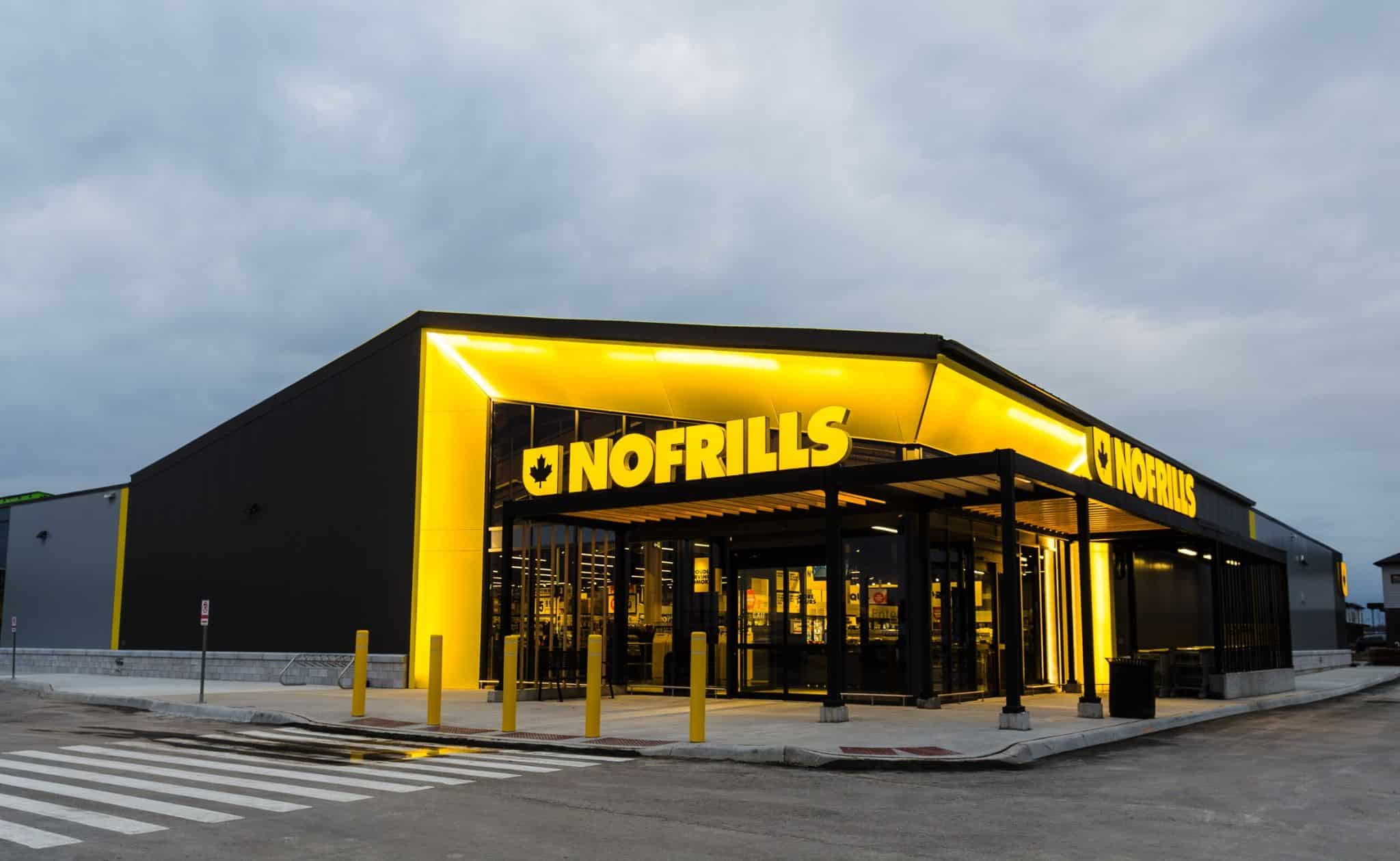
What is notably absent from that capital plan is a dedicated automated fulfillment network. Loblaw is testing smaller physical formats instead, including an 8,000 square foot No Frills in Dutton, Ontario built for rural markets, and a redesigned No Frills in Komoka, Ontario using a timber-steel structure, alongside more than 190 existing locations scheduled for renovation. The company is spending its e-commerce growth capital on the store network that already exists rather than on new-build automated distribution centers.
The e-commerce numbers this model is producing
Loblaw's e-commerce sales grew 19.3 percent year over year in the most recent quarter, and PC Express delivery sales increased more than 40 percent, both fulfilled primarily through the store network rather than purpose-built automated fulfillment centers. Click-and-collect sales held relatively stable, suggesting the growth is concentrated in home delivery rather than a shift between fulfillment channels, which is itself informative: customers are not migrating away from pickup, they are simply ordering more delivery on top of it. Those are strong numbers for a grocery e-commerce business at Loblaw's scale, and they arrive without the capital intensity of a dedicated automated fulfillment build-out, at a moment when peers elsewhere have discovered how expensive that build-out can get.
This matters because grocery e-commerce has spent the last several years assumed to require exactly that kind of capital intensity to work at scale, with every major grocer's investor calls treating automated fulfillment as the inevitable next step once online order volume crossed a certain threshold. Loblaw's results argue otherwise: store-based fulfillment, paired with disciplined format testing and renovation rather than new automated builds, can deliver comparable or better growth rates at a fraction of the capital commitment a dedicated automated network requires, and it can do so with a shorter time to payback because it reuses assets the company already owns and staffs.
The counterexample this quietly answers
The grocery industry has a very public counterexample to weigh this against. Kroger's partnership with U.K. automation firm Ocado produced automated fulfillment centers that, according to Grocery Dive's reporting on Kroger's decision to close three of them, were "just not processing enough orders to pay for all that technology investment," in the words of Ken Fenyo, a former Kroger executive now at Pine Street Advisors. That closure required 2.6 billion dollars in charges and shifted Kroger back toward its 2,700-plus stores as fulfillment hubs, deepening partnerships with Instacart and DoorDash instead.
Loblaw appears to have arrived at a similar architecture, store-based fulfillment over dedicated automated centers, without needing to write off a failed automation bet first. Whether that reflects better foresight or simply a different starting point in Canada's grocery e-commerce maturity curve, the practical result for a CTO evaluating fulfillment strategy is the same: the store-as-fulfillment-node model has now been validated by two large grocers taking different paths to the same conclusion, one after a costly retreat and one by never making the automated bet in the first place.
Private label is doing more work than the store count suggests
Loblaw's No Name private label promotional sales rose 18 percent since 2022, a period that spans the worst of grocery inflation and the trade-down behavior it produced. That is a brand and merchandising win as much as a store-network win, and it is easy to undercount when the headline is store openings and capital spend. Per Bank's framing of the consumer environment was direct: "Canadians are being thoughtful about every dollar they spend." A private label brand that gains share in that environment is capturing loyalty that tends to stick even as inflation eases, because trial during a downturn is how private label wins converts to habit.
For a technology organization, the private label growth number is a reminder that not every growth lever requires a platform investment. The store-based fulfillment model and the AI-adjacent inventory and forecasting systems that support it matter, but Loblaw's results show brand and assortment strategy pulling real weight alongside the infrastructure story, and a technology roadmap that ignores that risks over-indexing on systems at the expense of the merchandising decisions those systems are meant to serve.
What this means for grocery and general merchandise technology leaders
If your organization is scoping a grocery or general merchandise e-commerce fulfillment strategy for 2027, Loblaw's results are a real-world data point against defaulting to a dedicated automated fulfillment build. The capital efficiency case for store-based fulfillment, using the store network you already operate as the delivery and click-and-collect hub, has now been demonstrated at meaningful scale by a major grocer growing e-commerce nearly 20 percent without that capital outlay, and reinforced by a competitor's expensive retreat from the automated alternative.
That does not mean automation has no role. It means the sequencing matters: prove the model works with store-based fulfillment and disciplined format testing first, the way Loblaw is doing with its rural and redesigned No Frills formats, before committing billions to purpose-built automated centers that require a specific order density to pay back. The lesson from both Loblaw's growth and Kroger's writedown is the same, order density and store network utilization should drive the automation decision, not the other way around.