A user group stopped being polite
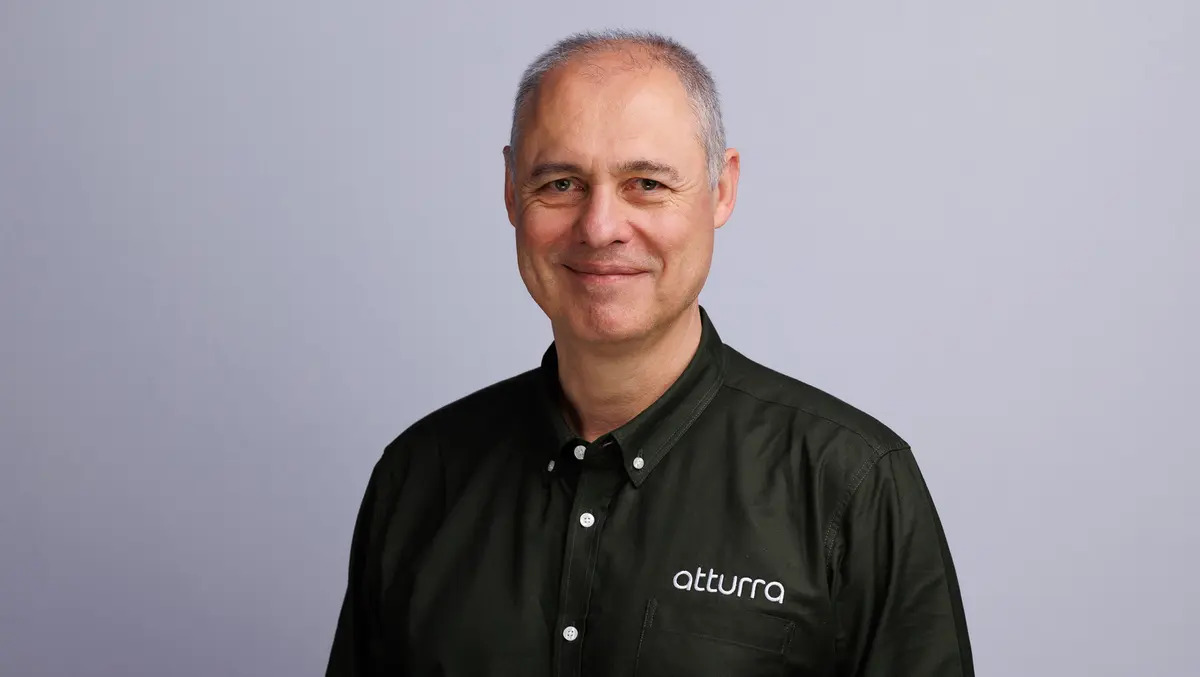
DSAG's 27th annual congress drew more than 6,000 attendees under the banner "Claim your ground, lead your business," and outgoing CEO Jens Hungershausen used the stage to say the thing most SAP customers normally only say in private: the vendor does not get to unilaterally set the scope, pace, and priorities of a migration that customers are funding out of their own budgets. That is a notable shift in tone from a group that has historically worked inside SAP's published roadmap rather than openly challenging it in front of thousands of its own members and the press covering the event.
The specific complaint is concrete and actionable for anyone negotiating a contract this quarter. DSAG wants AI features available to customers regardless of whether they run SAP Cloud, S/4HANA On-Premise, or a hybrid landscape, and it rejects the premise that meaningful AI capability should function as a lever to pull reluctant customers into RISE with SAP contracts earlier than their own infrastructure timelines justify. SAP's response so far, extending selected AI scenarios to ECC and on-premise customers through RISE, reads to DSAG as an opening concession rather than a settled answer. For CIOs negotiating renewals this quarter, that distinction between a first step and a finished commitment is effectively the entire negotiation.
The math behind the frustration
A full 54% of DSAG members are still running SAP ECC or Business Suite, systems whose mainstream maintenance ends December 31, 2027. That figure represents a majority of the group's entire membership, which turns the deadline pressure in the room from an abstract talking point into an operational emergency for more than half the attendees. SAP has already extended this cutoff once, pushing it from an original 2025 target, and its on-premise S/4HANA maintenance commitments now stretch out to 2040. Customers in the room drew the obvious conclusion: if the support clock can move once under pressure, the AI-access clock SAP is using to push cloud adoption deserves the same scrutiny before anyone signs a multi-year commitment around it.
Adoption numbers sharpen the stakes further. Only 43% of DSAG respondents in its own January investment survey had implemented any AI use case at all, and most of those cases ran on non-SAP tooling rather than Joule or SAP's native AI stack. That pattern points to a real competitive exposure for SAP: a majority of its own installed base is building AI capability around the platform instead of through it, using best-of-breed point tools layered on top of SAP data rather than waiting for SAP's own roadmap to mature. Every quarter that gap persists weakens SAP's argument that a cloud premium is the necessary price of admission to usable enterprise AI.
What CIOs should actually negotiate
DSAG's published asks give CIOs a ready template for their own renewal conversations. Push for AI feature parity that holds independent of deployment model, so a decision to stay on-premise a year longer doesn't quietly forfeit access to tooling your competitors on RISE already have. Demand transparent, stable licensing metrics that SAP commits to in writing rather than ones that shift year over year as the vendor experiments with monetizing usage differently. And insist on a resourced, realistic transformation timeline built around your organization's actual change capacity, rather than accepting a date SAP set unilaterally for its own revenue planning. The phrase DSAG used at the congress, fix the system rather than the symptom, is worth bringing into your own account team meetings nearly verbatim.
The practical risk for a CIO still sitting on ECC today is treating 2027 as an immovable technical wall when the evidence increasingly suggests it functions as a negotiated commercial one. SAP has moved this exact date before under sustained customer pressure, and a user group representing thousands of accounts just stated publicly, on stage, at its flagship event, that the gap between SAP's AI vision and usable product is widening rather than closing. That public admission is genuine leverage for every account team conversation happening this budget cycle. Use it to extract firm, written commitments on feature parity and pricing stability before committing meaningful capital to a cloud migration whose promised AI payoff remains, for now, largely aspirational rather than demonstrated at scale.
Complexity is the quieter fight
Beyond AI access and pricing, DSAG raised a less visible but arguably more expensive issue for most member organizations: landscape complexity. The group welcomes SAP's stated investment in data quality but wants tooling that actively reduces the number of moving parts in a typical SAP estate, rather than new modules and add-ons layered on top of systems that are already a decade or more into heavy customization. Every enterprise architect who has tried to fully map an aging SAP landscape, with its years of bespoke extensions and point integrations, knows this complexity is the actual cost center driving most migration budgets, far more than any single license line item SAP negotiates.
SAP's own Autonomous Enterprise framing, pitched publicly as the eventual end state of both GROW and RISE, gets a measured endorsement from DSAG, directionally correct as a vision but operationally premature as a purchasing decision today. Joule Work and its desktop variant earn credit for genuine ambition in the congress discussions, but DSAG's stated position is that reliable, repeatable customer experience with these tools remains pending rather than delivered at any meaningful scale. CIOs evaluating a RISE commitment on the strength of this vision should ask SAP account teams for named reference customers running Joule Work in production at volume, with specific numbers, rather than accepting roadmap slides and conference demos as proof of readiness.
The decision this actually forces
Strip away the vendor politics and the decision sitting in front of CIOs is a familiar one applied to new territory: build versus buy, now specifically for AI capability inside the ERP core rather than for the ERP itself. If your organization's actual production AI use cases are already running on non-SAP tools, as they are for most of DSAG's own membership, the business case for an accelerated cloud migration driven primarily by AI access weakens considerably on inspection. The underlying migration may still be the right call on infrastructure grounds, security posture, or long-term support, but each of those justifications deserves its own line item and its own cost-benefit case rather than riding in on the coattails of an AI promise that has not yet shipped broadly.
What genuinely changed this month is political cover for the CIOs who already suspected this. A 6,000-person user congress publicly challenging its largest enterprise vendor's practice of bundling AI access to cloud contracts gives every CIO still negotiating a RISE commitment a documented, public precedent to cite directly in their own vendor conversations. Bring the DSAG statement into your renewal discussion, and insist on separating the infrastructure migration decision from the AI feature decision on paper and in the contract language, even when SAP's account team would clearly prefer you treat the two as a single, bundled purchase decided on a single timeline.