A title change that is really an org design decision
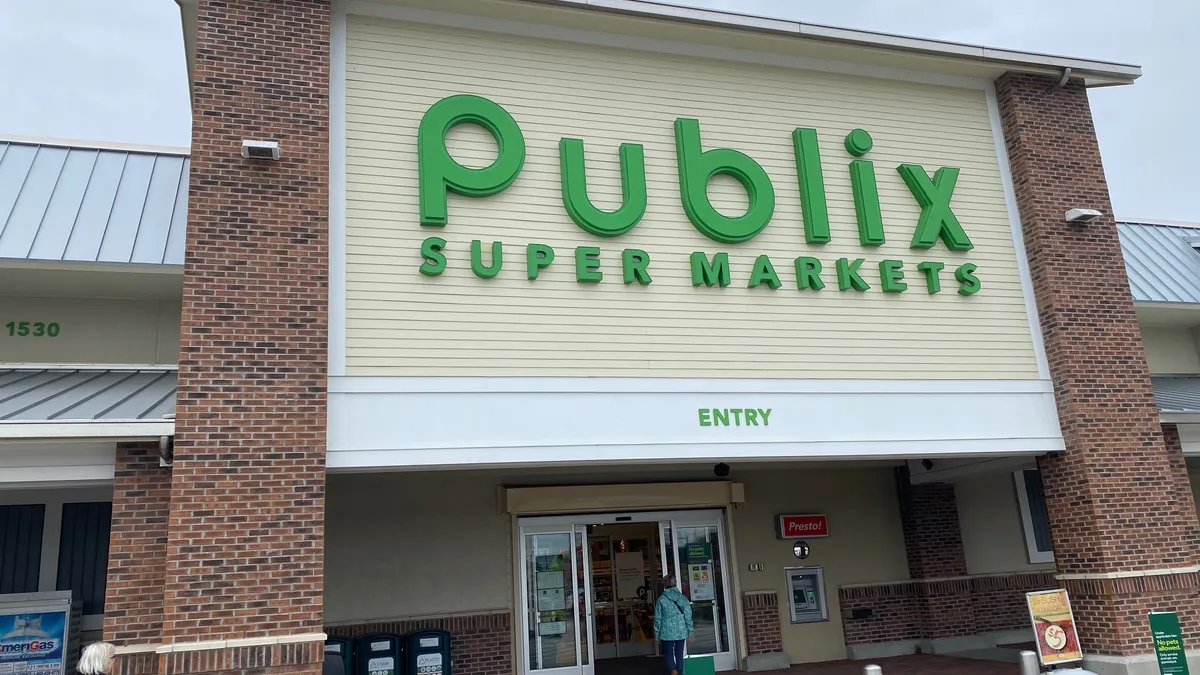
Publix promoted longtime chief information officer Laurie Douglas to executive vice president, chief information and digital officer, effective January 1, 2027. Douglas has been at the grocery chain since 2006, first as CIO and since 2019 also running digital, mobile, and omnichannel capabilities. The new title formalizes what had already been true in practice for years: core IT and the digital customer experience answer to the same person, with the same budget authority and the same accountability for both.
That formalization is the part worth paying attention to, not the promotion itself. A lot of large retailers still run digital and IT as separate executive tracks that meet in steering committees, which works fine until a digital initiative needs a core systems change on a timeline the IT roadmap never planned for and nobody owns the resulting conflict. Publix just removed that seam entirely, years after the practical need for it was obvious. The question for any CIO watching from outside is whether your own org chart still has two owners for something that should clearly have one.
A retirement wave disguised as a leadership announcement
The promotion did not happen in isolation. It is one of nine changes tied to three retirements, two in technology and one in industrial operations, after careers running 38, 43, and multiple decades at the company. Steve Wellslager, VP of IS technology and security, retired at the end of August after 38 years. Renee Kelly, VP of IS application development, plans to retire at the end of 2026. A third senior operations leader is retiring after 43 years.
That is three decades plus of institutional memory leaving within months of each other, concentrated in the exact functions, security and application development, that carry the most tribal knowledge about why systems were built the way they were. Publix is managing that exposure by promoting six technology leaders and two operations leaders simultaneously rather than running separate searches, which spreads continuity risk across a larger internal bench instead of betting on one or two successors.
The bet on internal continuity over external disruption
Every one of the nine promotions announced went to an internal candidate, several with two or more decades at the company already, one dating back to the 1980s. Publix did not use this moment to bring in outside perspective on AI, omnichannel, or modernization, even though all three are active priorities. It chose depth of institutional knowledge over the fresh thinking an external hire might have forced onto the roadmap.
That is a defensible choice for a company whose competitive advantage is operational consistency across thousands of stores, where a leadership change that disrupts execution costs more than it gains. It is a riskier choice for an organization trying to move faster on technology than its culture naturally wants to. Which side of that tradeoff your organization sits on should drive how you staff your own next senior technology opening, not habit or convenience.
Why this particular merger took this long to happen
Douglas did not get the combined title on day one of running digital in 2019. It took roughly six years of actually doing both jobs, under two separate titles, before Publix made the organizational structure match the reality of who was accountable for what. That lag is common across large enterprises and usually harmless, except when it creates ambiguity during exactly the kind of leadership transition Publix is managing right now, with multiple senior departures landing in the same window.
The practical lesson is to audit where your own title structure still lags the real accountability lines in your organization, especially anywhere digital and core IT responsibilities already overlap informally without a title to match. Fixing that mismatch before a retirement or departure forces the question is far cheaper than fixing it during one, when a search committee or an interim arrangement has to guess at responsibilities nobody ever wrote down in the first place, under time pressure nobody chose.
What this means for your own succession map
Publix's answer to a cluster of senior retirements was to promote broadly and quickly, naming eight successors at once rather than running a slower, more deliberate search for each role one at a time. That speed only works because the bench already existed, built over years of giving long tenured staff visible ownership of real decisions rather than keeping authority concentrated at the top and leaving everyone else as an executor. A company that waits until a retirement is announced to start building that bench will not have the option to move this fast.
If your technology organization depends on two or three people who have been there since before the last major system migration, this is the prompt to map that exposure now, before a resignation letter forces the question. Ask who actually understands why your core systems were built the way they were, whether that knowledge is written down anywhere outside their own head, and whether your bench could absorb three simultaneous departures without resorting to an expensive external search under time pressure. Publix's answer took years to build, through visible ownership handed to long tenured staff well before anyone announced a retirement. Yours should not wait for the announcements to start building it, because the knowledge transfer window is always shorter than it looks from the outside looking in.
The part a press release will never say out loud
Grocery Dive and CIO Dive both covered this as a routine leadership announcement, and on its surface it is exactly that: a competent, well liked executive gets a bigger title and a cleaner mandate. But the underlying event is a 43 year veteran, a 38 year veteran, and several two decade staffers all leaving the building within a matter of months, at a company whose operational model depends heavily on continuity and tenure.
Most enterprises do not get to choose when their most experienced technology leaders retire, and most do not have eight ready successors sitting in the wings when it happens. Publix apparently did, which is itself the more interesting fact buried in this story. The real test will not be visible for another year or two, once the new chief information and digital officer and her promoted peers have to make a hard call without the people who used to make it for them.