What actually changed, and what did not
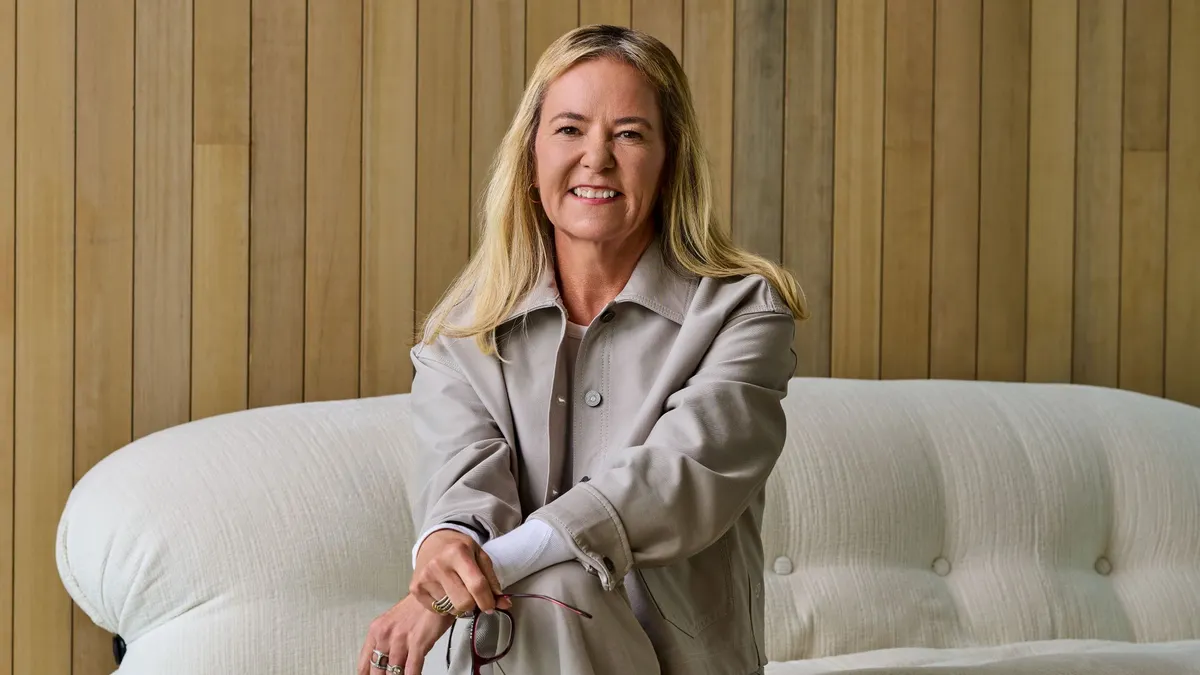
Heidi O'Neill, who started as Lululemon's CEO on September 8 after being named to the role in April, made her first major leadership move by creating two new positions. Maggie Gauger, most recently CEO of Athleta for a little over a year and a longtime Nike veteran, becomes chief product officer, covering merchandising, design, footwear, product innovation, and materials science. Joseph Godsey, previously chief growth officer at Walmart Canada with earlier stints at Walmart, Sam's Club, and fifteen years at Adidas, becomes chief operating officer, overseeing sourcing, production, fulfillment, and related functions. Both roles start October 26.
What the announcement does not include is a chief technology officer. Lululemon is actively searching for one, and until that search closes, CFO Meghan Frank, who already stepped into an expanded role after co-CEO duties following Calvin McDonald's January departure, is taking on brand and technology functions on top of finance. Chief supply chain officer Ted Dagnese and chief brand and product activation officer Nikki Neuburger depart effective November 6, timed roughly a week after Gauger and Godsey arrive, which is the kind of overlap a company builds in deliberately rather than by accident.
Why the sequencing is the real story
A new CEO filling product and operations first, then leaving technology, brand, communications, and strategy roles open, is making a prioritization statement whether or not that is the intent. O'Neill's own words frame this as building toward focus and accountability and a stronger pipeline of differentiated product. Product and supply chain got dedicated executives on day one. Technology got a placeholder arrangement under the CFO. For a reader who has watched reorgs up close, that ordering usually reflects which functions the new leader already has conviction about and which ones she is still diligencing, rather than any judgment about technology's importance.
The risk is that a placeholder arrangement calcifies. Once a CFO has absorbed technology for two quarters and the metrics the CEO cares about have not visibly suffered, the organizational incentive to fill a dedicated CTO seat with the same urgency weakens. Lululemon has openly stated that technology spans product and supply chain systems, cybersecurity, and AI, which is a substantial scope to run through a finance leader's bandwidth indefinitely. Watch the length of this interim period as the real indicator of where the company lands, not the stated search.
The CFO-as-CTO pattern is becoming common, and it is not free
Routing technology through a CFO during a leadership transition is a recognizable move, and it has a real logic: a CFO already has visibility into capital allocation, vendor contracts, and the P&L impact of technology spend, so the function does not go unmanaged. But a CFO optimizes for cost discipline and predictable returns by training and incentive, not for architecture decisions, platform bets, or the build-versus-buy tradeoffs that a dedicated technology executive is paid to own. Cybersecurity and AI, the two areas Lululemon explicitly flagged as part of this scope, are precisely the domains where short-term cost discipline and long-term platform investment pull in opposite directions.
For a PE-backed operator watching this, the lesson is concrete. If your own technology function is currently reporting through a CFO or COO rather than sitting on the executive team in its own right, that arrangement may be functioning fine during a quiet period, the same way it may function fine at Lululemon for a quarter or two. The exposure shows up during the next major incident, security event, or platform decision that needs a dedicated advocate at the table, and by then the interim arrangement is harder to unwind than it was to create.
What the open seat means for Lululemon's AI and supply chain bets
Lululemon's technology scope explicitly includes AI use, which puts the company in the same position as most retailers right now: trying to move from pilots to production systems while the executive who would normally own that transition is not yet hired. Decisions about which AI initiatives get funded, which get paused, and which get killed outright are happening this quarter under Frank's expanded mandate, not under a CTO with a mandate built specifically around that tradeoff. Whoever Lululemon eventually hires inherits whatever precedent gets set during the interim period, for better or worse.
The same dynamic applies to supply chain technology, which sits awkwardly between Godsey's new operating remit and whatever the eventual CTO owns. Overlapping mandates between a new COO focused on sourcing and fulfillment and a not-yet-hired CTO focused on the systems that run those functions is a structural ambiguity that tends to produce turf friction once both seats are filled. Readers managing their own COO and CTO relationships should treat this as a cautionary data point: define the systems boundary between operations and technology leadership before both roles exist, not after.
The hiring signal for the rest of retail
Gauger and Godsey both came from large-scale retail and consumer operators, Athleta, Nike, and Walmart, rather than from technology-first backgrounds, which fits the pattern of O'Neill assembling a team around product and operational execution first. When Lululemon does name a CTO, the profile of that hire, whether it leans toward a merchandising-systems background, a platform-engineering background, or a cybersecurity-first background, will tell the market which of the three stated technology priorities, product systems, supply chain, or AI and security, actually drove the search.
For CIOs and CTOs elsewhere in retail and commerce, the practical move is to watch who Lululemon ultimately hires and how quickly. A fast hire with a clear platform mandate suggests the CFO bridge was genuinely temporary. A slow search, or one that quietly folds technology permanently under the COO or CFO's expanded portfolio, suggests the open seat was never as urgent as the four other open roles implied. Either outcome is useful evidence for how boards and new CEOs are currently valuing dedicated technology leadership against product, operations, and brand talent in a tight retail labor market.