What KnitWell actually created
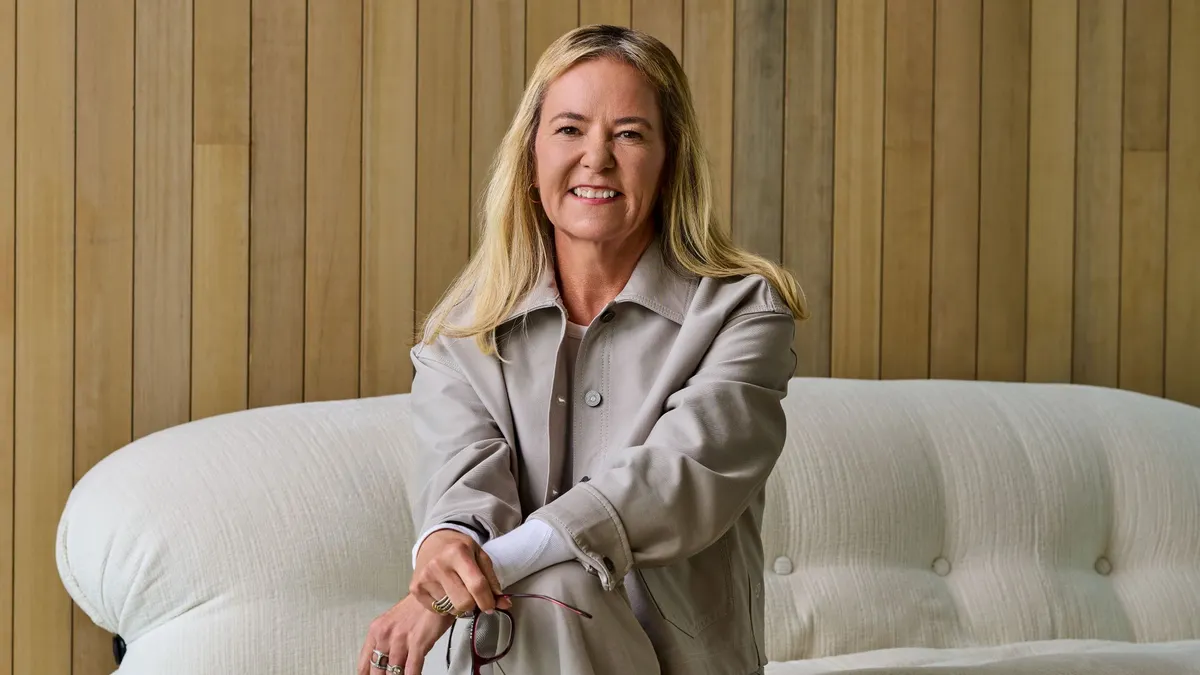
KnitWell Group named Angelica Munson chief digital and customer data officer, a newly created position at the parent company of Ann Taylor and Chico's. Munson joins from Shiseido Group, where she served as global chief digital officer and is credited with refining the company's global digital capabilities and launching its Beauty Tech Lab. Earlier in her career she held senior roles at Fast Retailing brands Theory and Helmut Lang, and at Estée Lauder's Clinique brand, giving her a consistent thread through beauty and apparel digital transformation rather than general enterprise IT.
The announcement, made via a press release and covered by Retail Dive, places her mandate squarely over customer data, customer insights, AI-assisted marketing tools, personalization, and digital marketing. CEO Lizanne Kindler said Munson's expertise in building enterprise capabilities across data, digital, and customer engagement will help create the tools and infrastructure the brands need. That phrasing, tools and infrastructure, is notable, because it describes platform work, not campaign execution, and platform work is traditionally a CIO's lane.
Why this role did not go to the CIO
Multi-brand retail holding companies like KnitWell run technology and data functions that serve several brands with different customer bases, different merchandising calendars, and different digital maturity levels. A traditional CIO org in that structure is usually optimized for shared infrastructure, uptime, and cost efficiency across brands, which is exactly the skill set that tends to move slowly on brand-specific personalization and AI-assisted marketing experiments. Creating a standalone digital and customer data seat, rather than asking the existing CIO to take on this scope, is a specific signal that leadership did not believe the current technology structure could deliver that speed.
This pattern shows up repeatedly across retail holding companies and should not be read as a one-off. When a company creates a new C-suite data or digital seat instead of expanding an incumbent CIO's mandate, the subtext is almost always a confidence gap, either in the current leader's ability to prioritize customer-facing data work against infrastructure demands, or in the org's structural ability to move at marketing speed. Readers running technology at a similar multi-brand parent should treat a sibling data or digital hire, rather than a title change for themselves, as the louder signal.
The turf question nobody resolves on day one
Munson's mandate, customer data, AI-assisted marketing tools, and personalization, overlaps directly with where most CIOs already have infrastructure: the data warehouse, the customer data platform, the AI and machine learning tooling that powers personalization engines. KnitWell's announcement does not specify where the operational boundary sits between her organization and the existing technology org, which means that boundary will get negotiated internally over the coming months, likely through budget allocation and platform ownership disputes rather than through an org chart published on day one.
This ambiguity is the single most common failure point in dual-ownership structures between a CDO and a CIO. Whoever controls the customer data platform effectively controls the roadmap for AI-assisted marketing, regardless of title. If KnitWell's CIO retains infrastructure ownership while Munson owns the use cases built on top of it, that can work well if the two report to the same executive and share incentives. If they report to different executives with different success metrics, the friction shows up within two quarters, usually around whose budget pays for the next platform upgrade.
What this means for AI governance at KnitWell
AI-assisted marketing tools sit inside Munson's explicit mandate, which means KnitWell now has a non-technology executive driving AI adoption decisions for customer-facing use cases, a structure increasingly common across retail but one that separates AI governance from AI infrastructure ownership. The practical risk is that fast-moving AI pilots get greenlit for customer engagement and personalization without the same security, data privacy, and model-risk review that a CIO-led AI governance process would typically apply, especially across two brands with different customer data sensitivities like Ann Taylor and Chico's.
This is a solvable problem, but only if KnitWell builds an explicit governance bridge between Munson's organization and whatever security and compliance function currently reports through IT. Readers at similar multi-brand retailers who have already split digital and data leadership from core IT should audit whether that governance bridge actually exists in practice, or whether it exists only on an org chart slide. The gap tends to surface during an incident, not during a quarterly business review, which is the worst possible time to discover it.
The decision every retail CIO should take from this
If a parent company creates a dedicated digital and customer data seat alongside your CIO role, the constructive response is to propose the operational boundary yourself before it gets imposed through budget fights. Draft a clear split: infrastructure, security, and platform reliability under the CIO, use-case prioritization and customer-facing AI experimentation under the new digital officer, with a shared governance checkpoint for anything touching customer data or model risk. Proposing that structure early positions the CIO as a collaborative architect of the new arrangement rather than a territory defender reacting to it.
The broader lesson for this audience is that the CDO or chief digital officer title is increasingly where boards park urgency about AI and customer data, specifically because they perceive the traditional CIO function as too infrastructure-focused to move at that speed. Whether that perception is fair in your own organization or not, it is clearly shaping hiring decisions at companies like KnitWell right now, and the CIOs who get ahead of it by proposing the boundary themselves will fare better than the ones who wait to be told where their mandate now ends.