What Pilot actually deployed
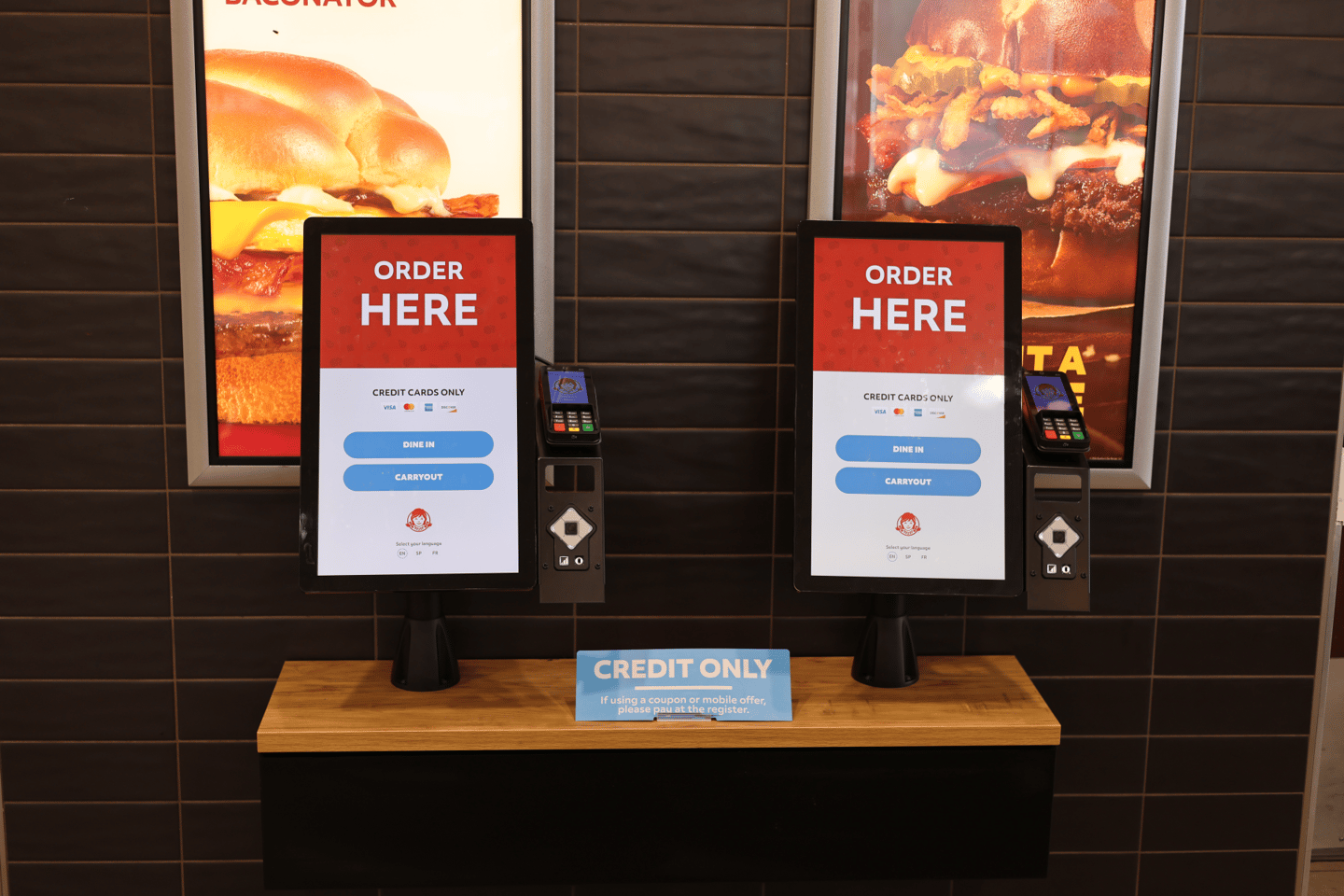
Pilot Company, the travel center operator, has installed 156 self-order kiosks across 78 Wendy's locations inside its North American travel centers, with additional rollouts planned alongside its Arby's and Subway tenants. The kiosks run the digital ordering platforms belonging to those restaurant brands rather than a proprietary Pilot-built interface, giving travelers access to customizable menu items with ingredient modifications, mobile ordering, ADA-compliant accessibility features, loyalty program participation, brand-specific promotions, and integration with third-party delivery apps.
Gemma Patterson, Pilot's senior director of restaurant relations and e-commerce, described the rationale directly: "By bringing our quick-service restaurant partners' preferred digital ordering platforms into our travel centers, we're enhancing convenience, improving speed of service." That framing is worth noting precisely because of what it does not claim. Pilot is not positioning this as a proprietary technology investment or a differentiated in-house product. It is explicitly a decision to run someone else's software on Pilot's own physical real estate.
A small deployment with a bigger question underneath it
156 kiosks across 78 locations is a modest rollout in absolute terms, well short of the scale that would make this a headline-grabbing technology story on its own. What makes it worth examining is the structural decision it represents, one that every operator hosting third-party branded tenants inside its own real estate eventually has to confront: does the host own the ordering and payment interface, or does the tenant bring its own technology stack and simply rent the physical space.
Pilot chose the latter, and the tradeoff is not subtle. Running Wendy's own ordering platform means Wendy's, not Pilot, captures the customer data, loyalty engagement, and order-level insight generated by every transaction at that kiosk. Pilot gets faster deployment, lower engineering cost, and a ready-made feature set that would have taken its own product team months or years to replicate. What it gives up is the ability to build a unified, cross-brand loyalty and data layer across all of its restaurant tenants, since each partner's system operates as its own silo rather than feeding a common Pilot-owned platform.
Why most hosts default into this arrangement without deciding it
The build-versus-lease decision for tenant-facing technology rarely gets made deliberately. It tends to happen by default, because the tenant brand already has a mature ordering platform ready to deploy, while the host would need to fund a custom build from scratch to compete with it. Pilot's decision here is almost certainly the economically rational one in isolation: Wendy's mobile ordering and loyalty stack is a mature, well-tested product, and there is no realistic version of Pilot building an equivalent system faster or cheaper for a single tenant relationship.
The problem is that this logic holds for each individual tenant decision while producing a fragmented outcome in aggregate. If Wendy's, Arby's and Subway each run their own ordering system inside Pilot's travel centers, Pilot ends up hosting three disconnected checkout experiences instead of one unified one, and it forfeits the chance to build a single loyalty program, a single customer data asset, or a single upsell layer across its own real estate. Each individual tenant negotiation looks sensible; the cumulative architecture looks like exactly the kind of fragmentation that makes a unified customer experience initiative expensive to retrofit five years later.
What CTOs hosting third-party tenants should take from this
Any retailer, mall operator, airport concessions manager, or travel center chain hosting branded third-party tenants faces this same structural choice, and the Pilot deployment is a useful real-world data point on what leasing the interface actually costs in practice. The near-term convenience is real: faster time to market, lower capital outlay, and immediate access to a proven ordering experience. The long-term cost is equally real and shows up later, typically when the host tries to launch a loyalty program, a unified app, or a personalization initiative and discovers that its own real estate is running on infrastructure it does not control.
The more defensible long-term position for any host with more than a handful of tenant relationships is to negotiate data-sharing and interface standards into tenant agreements upfront, even while allowing tenants to run their own front-end ordering software. That preserves the near-term speed advantage Pilot is capturing here while avoiding the fragmentation cost that compounds as more tenants come online. Hosts that skip this negotiation now are effectively deferring a much harder integration problem to whichever future leader has to unify three or four incompatible tenant systems into one coherent customer experience.
The pattern to watch as this scales beyond 78 locations
Pilot's stated plan is to extend this kiosk model to its Arby's and Subway locations beyond the initial Wendy's rollout, which means the fragmentation question above is about to compound rather than resolve. Each additional tenant brand that brings its own ordering platform into Pilot's travel centers adds another disconnected data silo and another loyalty program competing for the same traveler's attention inside the same physical location. Multiply that across dozens of travel centers and hundreds of kiosks, and the near-term convenience of leasing each tenant's software starts accumulating into real long-term integration debt that somebody at Pilot will eventually have to pay down.
Watch whether Pilot eventually layers a unifying loyalty or app experience on top of these tenant-specific systems, the way some mall operators and airports have tried with mixed success, or whether it accepts permanent fragmentation as the cost of fast, cheap tenant onboarding. That decision, more than the kiosk count itself, will determine whether Pilot's travel centers end up with a coherent digital customer experience or a collection of disconnected ordering screens that happen to share a parking lot. Every host retailer expanding a multi-tenant footprint over the next few years will face the same fork, and the cost of choosing wrong only grows with scale.