A bellwether report for enterprise AI spending
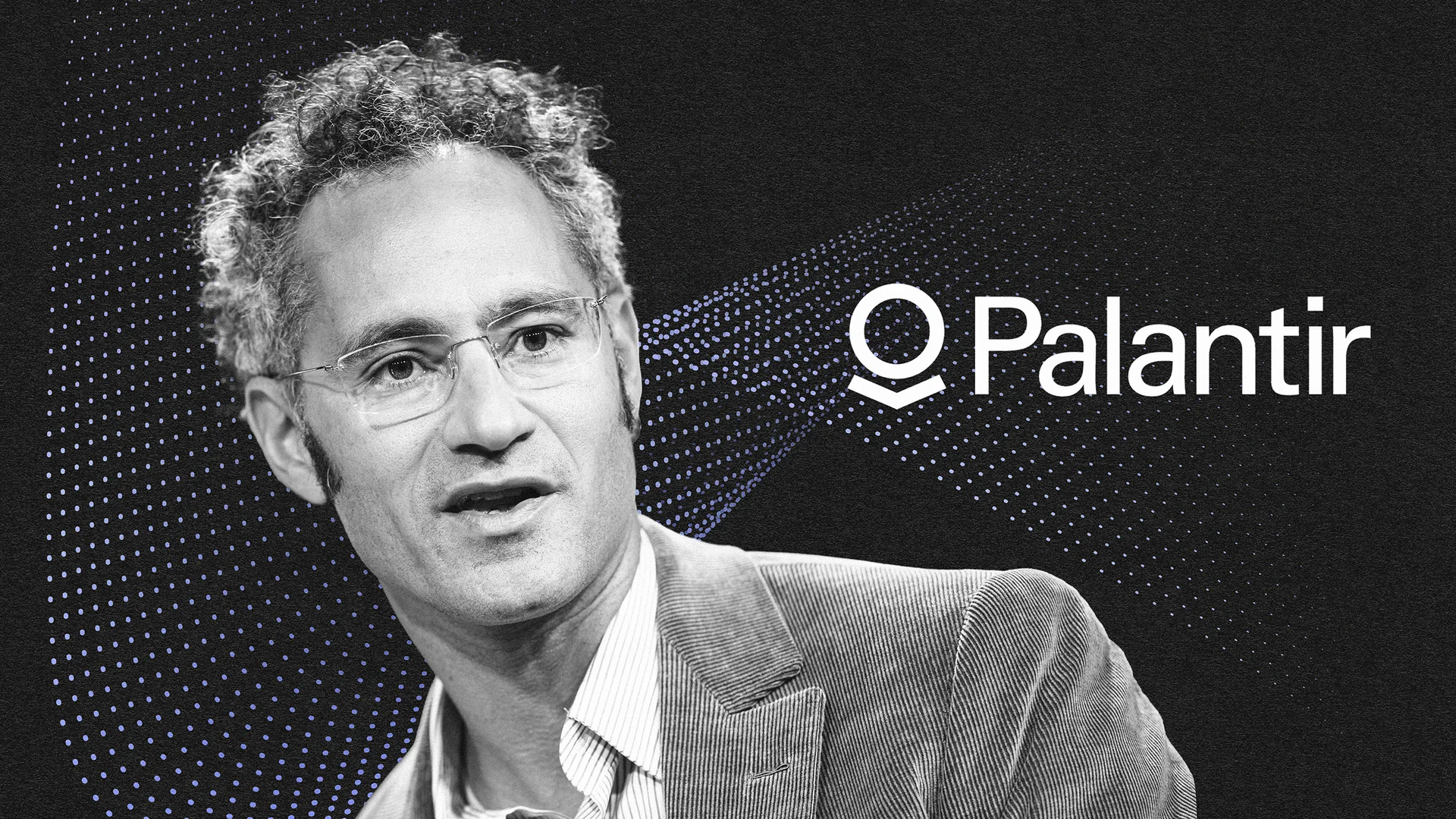
Palantir reports second quarter 2026 results this week, and the numbers going in are already a useful proxy for what CIOs are actually buying when they say they are buying AI. The company's first quarter US commercial revenue hit $595 million, up 133% year over year, with 206 commercial deals worth at least $1 million each closed in the period. Full year revenue guidance sits at $7.6 billion, and analysts widely expect another beat when results land, with Palantir having topped Wall Street estimates for eight consecutive quarters heading into this report.
What makes this report worth reading closely is the composition underneath the top line. Palantir's growth has become a case study in how enterprise AI revenue actually concentrates, and that concentration pattern is showing up across the sector, well beyond one government-adjacent software vendor. For CIOs benchmarking their own AI vendor spend against peers, the shape of Palantir's book is more instructive than the headline growth rate, and it maps closely onto patterns showing up in budget surveys and analyst forecasts across the wider enterprise software market this quarter.
Growth is concentrated at the top, not spreading evenly
Mike Leone, an analyst at Moor Insights & Strategy, points out that Palantir's 20 biggest customers grew about 45% last year while the rest of the commercial customer base grew closer to 65%. On the surface that reads as broad-based strength. Look closer and it says something more specific: the largest, most bespoke deployments are maturing into steadier, slower growing accounts, while everything below that tier is still in a higher variance land grab phase where wins and losses swing results more.
For enterprise buyers, that pattern maps onto a familiar reality inside their own AI programs. A handful of flagship use cases get the executive sponsorship, budget, and internal champions needed to reach production, while the long tail of pilots stalls somewhere between proof of concept and general availability. Palantir's top 20 customers averaging $108 million in trailing 12 month revenue is not evidence that AI adoption has become uniform. It is evidence that a small number of accounts are doing the heavy lifting, which is exactly the pattern Gartner and others have flagged in broader enterprise AI pilot data all year, and it is a pattern CIOs should expect to see reflected in their own portfolio of AI initiatives when they audit which ones actually moved past a single champion team.
Forward deployed engineers are the quiet cost center
Palantir's forward deployed engineer model, staff embedded directly inside client operations to build and tune the software against real workflows, remains core to how the company closes and expands deals. Liz Miller, an analyst at Constellation Research, has been blunt about what that model has become in practice: many of these engineers are, in her words, better trained and more sophisticated inside sales reps now rebranded for the AI era.
That framing matters for any CIO comparing vendor bids on a self-service versus implementation-heavy basis. Palantir's roughly 46% operating margin and $1.5 million of revenue per employee prove the model can be highly profitable at scale, but that profitability rests on labor intensive delivery that does not show up in a per-seat license price on a procurement scorecard. Enterprises evaluating similarly positioned AI platforms should budget implementation and integration effort as a first class line item, not an afterthought, because the vendors with the strongest commercial numbers are often the ones absorbing the most delivery cost internally and simply not itemizing it separately in the contract.
The governance gap analysts keep flagging
Beyond the revenue mechanics, the more consequential issue for CIOs is governance. Leone's assessment is direct: current systems cannot reliably prove that an agentic workflow's decision was correct, and they cannot get the people affected by that decision to agree that it was handled properly. That is a materially different bar than uptime or latency, and it is the bar regulators and internal risk committees are increasingly going to apply to production AI systems, not just pilots.
The pattern extends well beyond Palantir. It is a category wide gap between how fast agentic deployments are shipping and how slowly audit, explainability, and accountability tooling is catching up across the vendor landscape. CIOs greenlighting agentic workflows in finance, healthcare, or public sector contexts should treat governance instrumentation as a deployment prerequisite, built into the initial rollout plan alongside data pipelines and access controls, rather than something added after a regulator or auditor asks for it.
What this means for CIO vendor evaluation
The practical takeaway from this earnings cycle is that headline revenue growth numbers, whether Palantir's, a hyperscaler's, or a smaller AI vendor's, reveal very little about deployment friction, implementation cost, or governance maturity on their own. CIOs should be asking vendors directly what share of new revenue comes from expansion inside existing flagship accounts versus genuinely new logos, and what share of each deal includes embedded delivery staff versus self-service configuration that a client team can operate independently.
The second question worth pressing on procurement calls is what audit and explainability tooling ships by default versus what gets bolted on later at extra cost once a regulator or internal risk committee asks for it. Palantir's results this week will move its stock and generate plenty of headlines either way. The more durable signal for enterprise technology leaders is what the deal composition underneath those results says about how AI actually gets deployed at scale in 2026: still slower, more labor intensive, and less governed than most vendor marketing suggests.