A capacity number that runs opposite to the rest of the industry
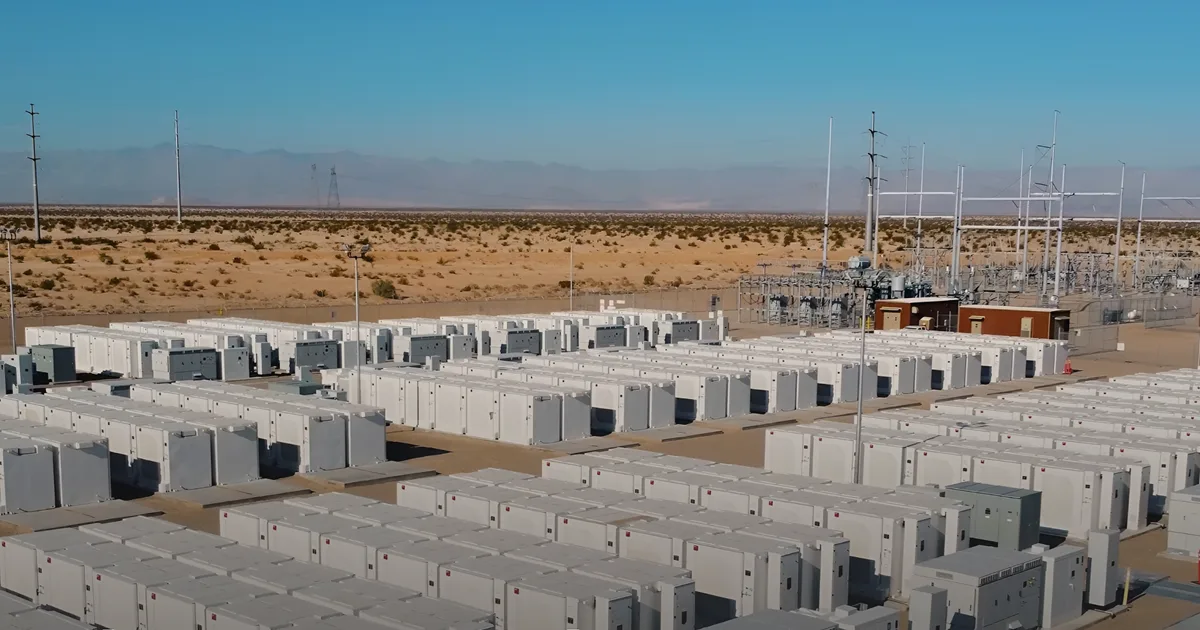
On its fiscal 2026 earnings call, OVHcloud disclosed 250 megawatts of total data center capacity, with only 140 megawatts currently operational. That leaves 110 megawatts, nearly half its built capacity, sitting available rather than committed to customers. CEO Octave Klaba framed this directly as a growth lever rather than a problem, saying the company will use that capacity to accelerate growth. In an industry where every hyperscaler earnings call this quarter has centered on capacity shortages and accelerated capex, a major provider announcing spare capacity is itself the news.
The context Klaba gave is the more interesting part. He said OVHcloud was hesitant on GPU investment because it saw little demand for them three to four years ago, and watched competitors' GPUs go unsold across Europe during that period. He now believes real demand exists, but wanted proof before committing capital, and newer GPU generations offer enough of a performance jump to improve the economics for both OVHcloud and its customers. That is a deliberately contrarian capital allocation stance relative to the industry's prevailing build-now posture.
The financial discipline behind the caution
OVHcloud's fiscal 2026 numbers back up Klaba's framing. Revenue grew 5.6 percent year over year to 1.145 billion euros, with EBITDA rising to 480.5 million euros from 437.8 million euros and gross margin holding at 67.3 percent. Total capex came to 422 million euros, including 49.5 million euros prefinanced for 2027, with the 2026 deployment portion at 372.9 million euros, or 32.6 percent of revenue. Hardware costs rose to 242 million euros, about 21 percent of revenue, which interim CFO Julien Rabette attributed to component inflation raising per-server costs even as fewer servers were assembled overall.
Private cloud remains OVHcloud's dominant product line at 690.4 million euros, 60.3 percent of revenue, with customers split across digital starters, digital scalers and corporate accounts, the last of which is the largest group by customer count. None of this reads like a company starved for capital or struggling to compete. It reads like a company that chose a slower, margin-protecting capex curve deliberately, and is now sitting on the optionality that curve created while hyperscalers scramble for power and chips.
Why this matters beyond OVHcloud's own numbers
The broader signal is about what happens when the AI infrastructure buildout eventually meets actual utilization. OVHcloud's caution was explicitly informed by watching competitors overbuild GPU capacity that went unsold in Europe. If that pattern repeats at hyperscaler and neocloud scale, which several analysts have flagged as a real risk given the scale of current capex commitments, a provider that under-built relative to its balance sheet is in a materially better negotiating position than one that financed a capacity bet it cannot fill.
Klaba's refusal to give 2027 capex guidance, citing variable customer demand and component pricing, reinforces that this is an ongoing stance, not a one-quarter anomaly. He did note the company has a good relationship with suppliers and does not expect supply constraints for its fiscal 2027 growth, and that prices have risen in what he called a moderated and mutualized way, with further increases expected. That is a provider managing its cost base carefully while competitors absorb larger, less certain commitments.
The sovereign cloud angle is real but secondary to the capacity story
OVHcloud operates more than 40 core data centers across Europe, North America and Asia-Pacific, and it is frequently positioned in European sovereignty conversations as a non-US alternative to AWS, Azure and Google Cloud. That positioning matters for enterprises navigating EU data residency requirements, but the capacity disclosure this quarter is a separate and arguably more immediately useful fact for any CTO: available megawatts, today, from a provider with a track record of not overcommitting its balance sheet to get them.
For a PE-backed company weighing alternatives to hyperscaler pricing or lock-in, or simply looking to diversify infrastructure spend across providers, the combination of available capacity and demonstrated financial discipline is a more concrete pitch than sovereignty alone has typically offered. Sovereignty arguments often run into a practical capacity or feature-parity wall when it is time to actually migrate workloads. OVHcloud's disclosed spare capacity removes at least one of those objections for the segment of workloads that do not require hyperscaler-specific services.
The roadmap implication
Any enterprise running a multi-cloud or cloud diversification initiative in Europe should add OVHcloud to the evaluation list this quarter, and should weight the capacity disclosure itself as heavily as the sovereignty narrative that usually drives these conversations. Available capacity translates directly into negotiating leverage on price and contract terms, leverage that is far harder to extract from a hyperscaler currently rationing allocation to its biggest customers first and treating smaller accounts as secondary. Request a current capacity and lead-time commitment in writing as part of any renewal conversation this quarter, and use OVHcloud's disclosed 110 megawatts as a concrete comparison point when a hyperscaler account team claims availability is tight everywhere.
More broadly, use OVHcloud's disciplined capex curve as a data point when assessing how exposed your primary cloud vendors are to a potential AI capacity overbuild. A provider that chose not to chase every GPU deal is signaling a view about demand durability that is worth weighing against your own vendors' far larger, far less hedged capital commitments when you model their pricing and reliability over the next two to three years. If a correction in AI infrastructure demand does arrive, providers carrying the least committed, least leveraged capacity are the ones best placed to offer stable pricing while others work through stranded capex, which is itself a reason to keep at least one such vendor active in your procurement rotation.