A five-fold density jump in the same footprint
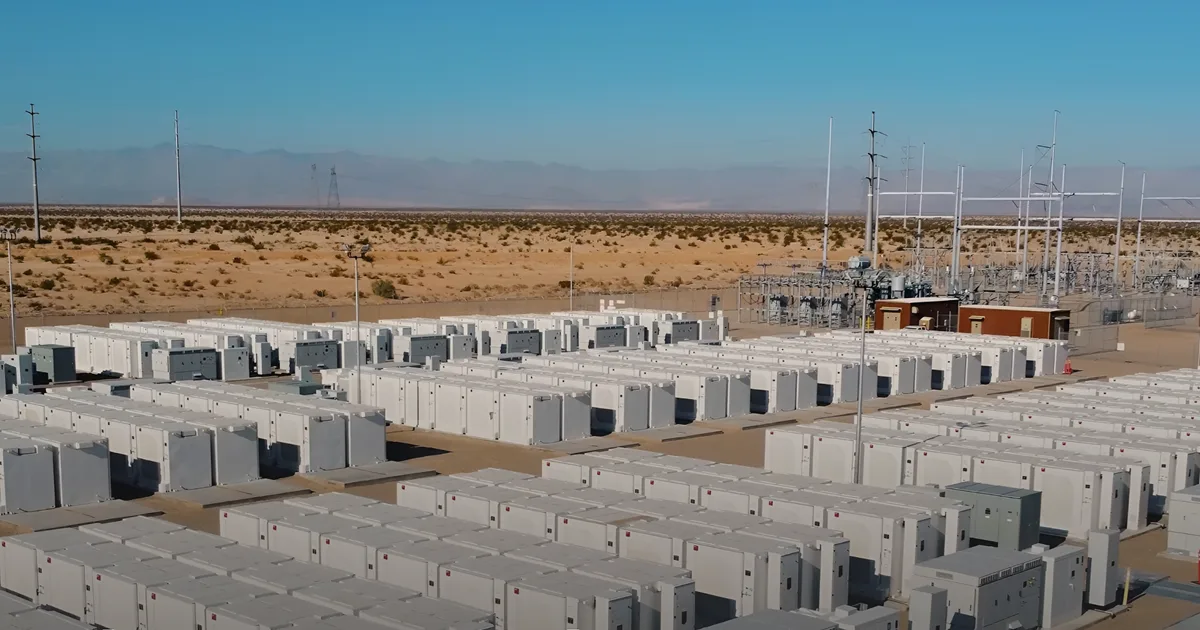
Crusoe's new Spark Liquid design delivers up to 3.5MW of IT compute capacity per modular unit, compared to 500kW for the air-cooled version it replaces, a five-fold increase in density within a broadly similar physical form factor. Each unit is assembled from three shipping-container-sized modules, each roughly 60 by 50 feet, which keeps the manufacturing and transport logistics consistent with Crusoe's existing modular approach even as the compute density inside jumps substantially. The design can scale up to 100MW when multiple units are combined on a single site, which puts a single Spark Liquid installation in the same range as a mid-size traditional data center campus, just assembled from repeatable modular pieces instead of custom construction.
That density jump exists because Spark Liquid is purpose-built for Nvidia's newest rack-scale systems, the GB300 NVL72 and Vera Rubin NVL72, which pack far more compute and far more heat output per rack than the generation Crusoe's original air-cooled Spark was designed around. Matching a modular data center's cooling capability to a specific new GPU generation is a sensible engineering response, but it also means the product's value is directly tied to how quickly the market adopts these specific Nvidia platforms rather than GPU hardware broadly, so buyers evaluating it should weigh how committed their own roadmap already is to that generation of Nvidia hardware.
The water story worth noting
Spark Liquid's closed-loop cooling system consumes no additional water after its initial fill, a meaningful detail given how much scrutiny data center water consumption has drawn in communities hosting new hyperscale and AI infrastructure this year. A modular unit that does not need an ongoing water supply for cooling removes one of the more visible points of local friction that has slowed or blocked other data center projects recently, including fights playing out in Virginia and Tennessee over infrastructure impacts on local communities, where water and power demand have both become organizing points for local opposition groups.
That is a real operational advantage for siting these units in water-constrained regions or communities already sensitive to new industrial water demand. It does not eliminate every source of local concern, since power demand and noise remain relevant factors for any data center buildout, but removing recurring water consumption from the list of objections a developer has to answer for is a tangible reduction in one specific category of community pushback that has proven costly elsewhere, and it is a selling point Crusoe can reasonably lead with when pitching sites in regions already wary of new industrial water use.
Nvidia's fingerprints are all over this design
Spark Liquid complies with Nvidia's DSX Modular reference architecture and holds Nvidia's Exemplar status for cloud reliability, both signals that Crusoe built this product in close coordination with Nvidia's own specifications rather than designing independently and retrofitting compatibility later. That close alignment likely speeds deployment and reduces integration risk for anyone running Nvidia's latest rack-scale systems inside a Spark Liquid unit, since the cooling, power, and physical design have presumably been validated against Nvidia's own reference standards rather than left to Crusoe's interpretation alone, which should shorten the testing and certification work an operator would otherwise need to do before trusting a new modular design at production scale.
The flip side is that this is a single-vendor-optimized product. An operator or enterprise set on a multi-vendor GPU strategy, mixing Nvidia with AMD or other accelerators across its infrastructure, should recognize that Spark Liquid's advantages are specifically tied to Nvidia's GB300 and Vera Rubin platforms and may not translate cleanly to a different hardware mix. The tighter the integration with one vendor's reference architecture, the less flexible the resulting infrastructure is likely to be for anything outside that vendor's roadmap, a tradeoff worth weighing explicitly against the density and reliability gains Spark Liquid otherwise offers.
Speed to deployment versus traditional construction
Modular data center construction, assembling prefabricated container-sized units rather than building a facility on site from the ground up, has long been pitched as a faster path to new capacity than traditional construction, and Spark Liquid extends that argument to the highest-density AI hardware available. Because the cooling and power systems are engineered into the modules in Crusoe's factory rather than designed and built on site, the on-location work needed to bring a new unit online should be substantially shorter than a comparable purpose-built facility of similar density.
That speed advantage matters most in a market where GPU hardware generations are turning over quickly and operators want new capacity available while a given Nvidia platform is still current. A modular approach that can be manufactured in Brighton, Colorado and shipped to a site is less exposed to the long permitting and construction timelines that have slowed traditional data center projects in places like Loudoun County and Memphis this year, even though modular units still need power, land, and local approval to operate once they arrive.
Why none of this is available to outside buyers yet
Production of Spark Liquid units starts in 2027 at Crusoe's factory in Brighton, Colorado, but every unit built that year is already earmarked for Crusoe Cloud, Crusoe's own cloud service. That means enterprises interested in this specific modular design cannot buy or lease it directly in its first production year. Any access to this capacity in the near term would come indirectly, through using Crusoe Cloud itself as a GPU cloud provider, rather than through acquiring the modular hardware for a private deployment.
Crusoe cofounder and president Cully Cavness gave a useful planning data point regardless: he said 20 to 50MW deployments are probably the sweet spot for how operators will actually scale these units once broader availability does arrive. That figure is worth remembering for any enterprise or colocation partner evaluating Spark Liquid in a future procurement cycle, since it suggests the economics and operational design of the product are tuned for mid-size campus deployments rather than either small single-unit installs or the full 100MW ceiling the design technically supports.