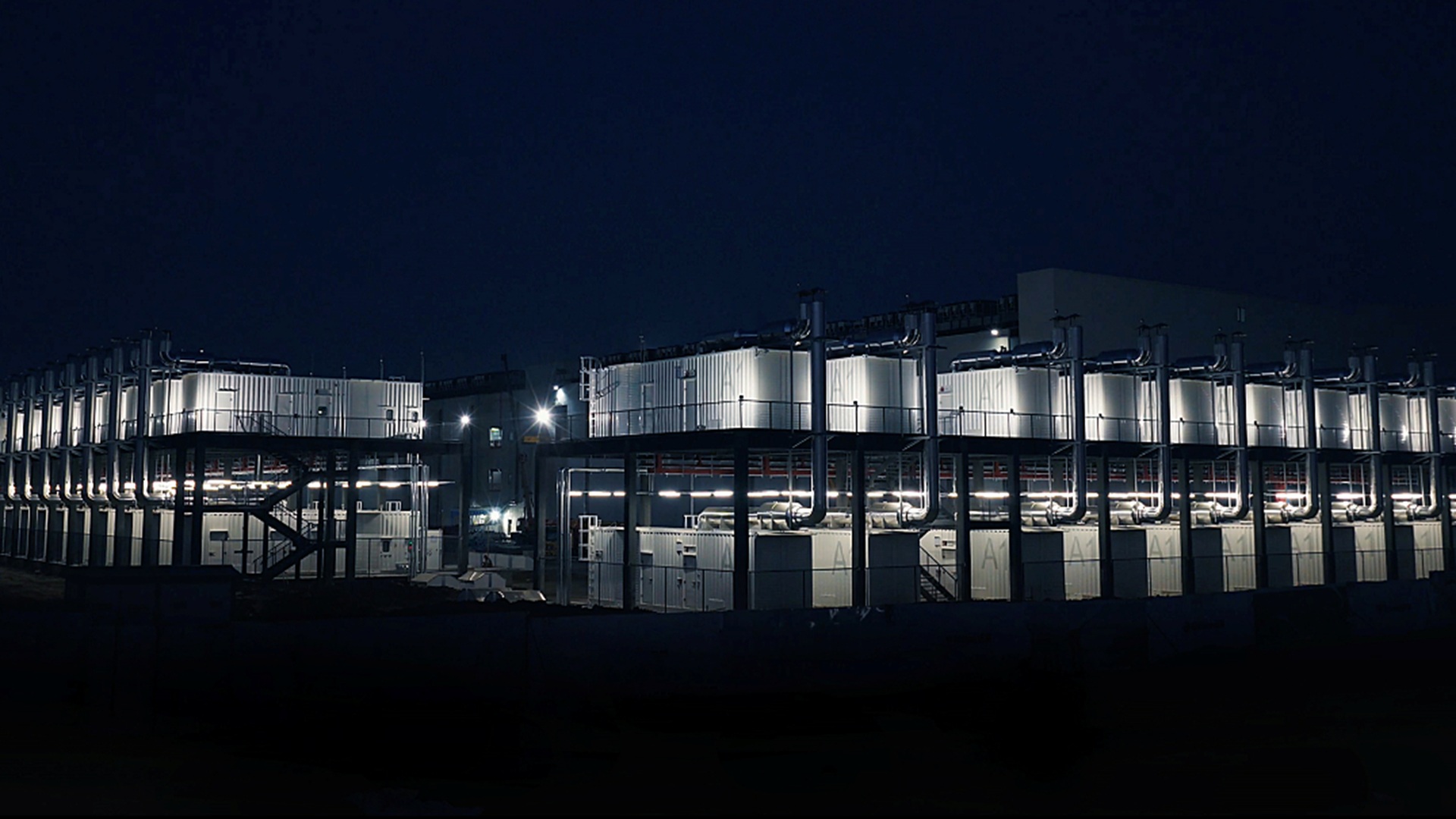
A partnership built around memory as much as chips
Nvidia and SK Group announced on July 25 a partnership worth more than $500 billion covering AI factory construction and next-generation memory supply, one of the largest single commitments in the AI infrastructure buildout to date. SK Telecom will build a 2 gigawatt AI cloud inside South Korea, with the first AI factory targeted for operation in 2027, while SK hynix supplies HBM4 high bandwidth memory that will run alongside Nvidia's Vera Rubin accelerators on the DSX platform. The scale of the commitment puts it in the same tier as the largest hyperscaler capital expenditure announcements of the past year.
Nvidia CEO Jensen Huang framed the deal in strategic terms, saying South Korea has the networks, data centers, and industrial base to become a global AI powerhouse. SK Group chairman Chey Tae-won described the arrangement as combining SK hynix's memory leadership with SK Telecom's infrastructure capabilities to build what he called a world-class AI ecosystem inside the country. Both executives framed the deal as a multi-decade industrial commitment rather than a single procurement cycle tied to one generation of hardware, language that suggests both companies expect the arrangement to extend well past the current Vera Rubin product cycle into whatever architecture succeeds it.
Why memory is the real story here
The detail enterprise infrastructure buyers should focus on is the memory piece. HBM4 chips are the single hardest component to source in current AI accelerator supply chains, and SK hynix is one of only three companies capable of producing them at the volumes hyperscalers now need. By locking in a dedicated, co-developed supply relationship with Nvidia rather than buying on the open market, SK Group secures priority access to a resource that is currently scarcer than the GPUs themselves, a distinction that has largely escaped mainstream coverage of the AI hardware race.
This shifts the competitive calculus for every other cloud provider and AI infrastructure operator. GPU allocation has dominated headlines for two years, but HBM capacity is now the tighter constraint, and deals like this one effectively lock a portion of global memory supply into a single country's infrastructure buildout for years. Rivals sourcing memory on shorter-term contracts will increasingly find themselves competing for whatever capacity SK hynix has not already committed under this agreement.
Sovereign AI as the explicit goal
South Korea's government and SK Group are explicit that this is about sovereign AI capability, not export revenue from selling memory to American hyperscalers. Building a 2 gigawatt domestic AI cloud means South Korean enterprises, government agencies, and startups gain access to frontier-class compute without routing sensitive workloads through US or Chinese cloud providers, a consideration that matters increasingly to regulators worldwide as data sovereignty rules tighten across nearly every major economy. It also gives Seoul a domestic policy lever it currently lacks, since decisions about who gets priority access to that compute can now be made inside the country rather than deferred to a foreign vendor's allocation process.
The strategic framing also matters for how other nations will respond. Countries with strong semiconductor manufacturing bases but limited hyperscale cloud presence, including Taiwan and Japan, are likely to pursue similar vertically integrated deals that combine domestic chip supply with domestic AI infrastructure rather than continuing to export components while importing compute capacity from providers based elsewhere. South Korea's move gives those governments a concrete template to negotiate from, and Nvidia now has an incentive to replicate the structure since it locks in demand for its newest accelerators well ahead of general availability.
What this means for multinational cloud buyers
Enterprises running AI workloads in Asia Pacific should watch how quickly SK Telecom's AI cloud reaches commercial availability and what pricing and access terms accompany it. A dedicated 2 gigawatt regional cloud backed by guaranteed memory supply could offer more predictable capacity and pricing than global hyperscaler regions currently constrained by GPU and HBM scarcity worldwide, particularly for workloads with data residency requirements tied to South Korea or nearby markets.
It also raises a practical question for procurement teams: if HBM supply is increasingly allocated through exclusive national partnerships like this one, enterprises negotiating multi-year AI infrastructure contracts should ask vendors directly about their memory supply chain commitments, not just their GPU allocation, since memory is becoming the harder resource to guarantee across the industry as a whole, not just in this particular deal. Vendors who cannot answer that question with specifics are likely reselling capacity they do not fully control.
A scale problem for everyone else
A $500 billion commitment from a single national conglomerate resets expectations for what counts as a major AI infrastructure deal. It also means Nvidia is now directly co-investing in specific national AI ecosystems rather than simply selling hardware to whoever can pay, a shift that gives Nvidia real influence over which countries get priority access to next-generation silicon and memory ahead of everyone else competing for the same limited supply.
For enterprises and cloud providers outside these anchor partnerships, the practical takeaway is that supply guarantees increasingly flow to whoever signs the biggest, most vertically integrated deals first. Waiting for spot-market allocation of GPUs and HBM will become a progressively worse strategy as more of global supply gets locked into arrangements of this size, leaving smaller buyers negotiating over whatever capacity the anchor partnerships leave behind rather than setting their own terms with suppliers.