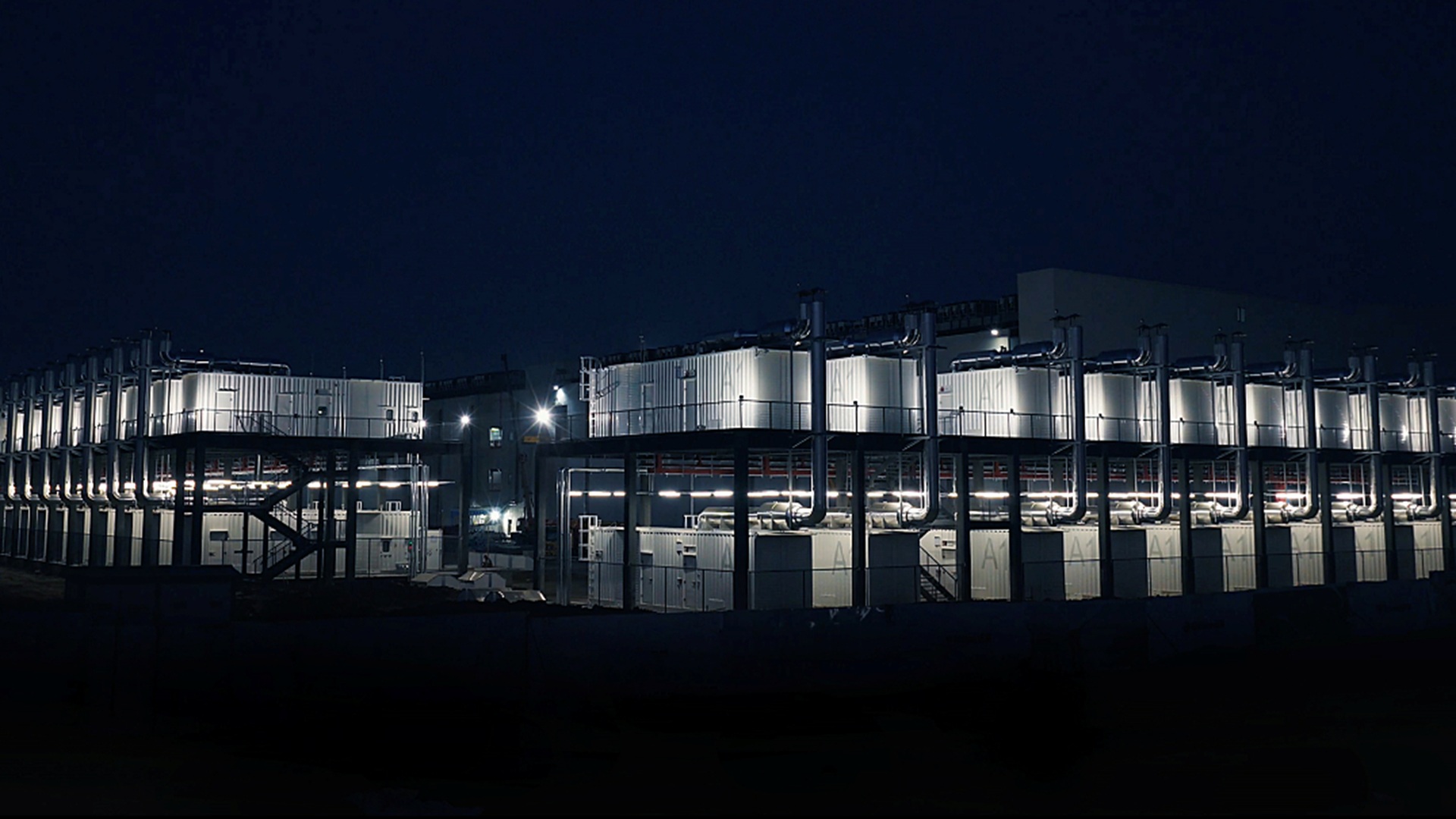
What Musk Just Confirmed
On August 6, 2026, Tesla and SpaceX confirmed a $16.8 billion initial investment in Terafab, a planned 100 million square foot semiconductor manufacturing campus in Grimes County, Texas, roughly an hour northwest of Houston. Musk described it in a post on X as "the largest and most valuable building on Earth by far," adding that the finished complex will be "50 times the size of the Pentagon." The announcement followed a Grimes County Commissioners Court meeting and was publicly endorsed by Texas Governor Greg Abbott, capping months of speculation that began when Musk first teased the project back in early 2026 and formally unveiled it in March at Austin's former Seaholm Power Plant.
The site sits on the former Gibbons Creek Reservoir coal plant property, which closed in 2018 and left behind grid infrastructure and water access that Tesla and SpaceX are now repurposing for industrial-scale chip production. The project is expected to employ at least 3,000 people, mostly hired locally from Grimes and Brazos counties, spanning roles from food service and facilities work up through advanced semiconductor process engineering. Intel joined the project in April as a manufacturing partner, contributing its 14A process technology for the facility's first production stage, and Grimes County approved a property tax abatement package in June to help clear the way for construction.
The Math Behind Building Instead of Buying
Musk's stated rationale is a supply argument, not a design one. Tesla and SpaceX currently depend on outside foundries, including Samsung, for chips, and Musk has said the two companies' combined compute demand will exceed 1 terawatt annually, more than every chipmaker on the planet can supply today or even by 2030 on current industry trajectories. As Musk put it on X: "We either build the Terafab, or we don't have the chips, and we need the chips." He has also framed the effort in characteristically maximalist terms, calling it "the most epic chip-building exercise in history."
Building a fab from scratch costs vastly more upfront than buying wafers on the open market, and it takes years to reach volume production, with early plans pointing to only a few thousand wafers a month before any meaningful ramp. Musk is betting that guaranteed capacity is worth that premium and that delay, a calculus that will sound familiar to any enterprise buyer who has spent this year negotiating for scarce GPU allocation instead of simply purchasing it outright. The long-term target, per SpaceX filings, is roughly one million wafer starts a month and 100 to 200 billion custom AI and memory chips annually once fully ramped.
Scale, in Context
At 100 million square feet, Terafab is roughly ten times the footprint of Tesla's own Giga Texas campus and about twelve times the size of Samsung's Texas semiconductor plant, comparisons Musk himself has drawn. He has described the building as running 2.5 miles long across four structures, and has said flatly: "We couldn't possibly fit the Terafab on the GigaTexas campus. It will be far bigger than everything else combined there. Several locations for Terafab are under consideration." That framing undersells how unusual it is for a single company to attempt a build of this size in one initial phase rather than staging it across a decade of incremental expansions.
SpaceX filings put full build-out costs across every phase as high as $119 billion, a figure that would rank Terafab among the most expensive privately funded industrial construction projects ever attempted, chip fab or otherwise. Several sites were reportedly considered before Grimes County was chosen, largely for its existing water access from Gibbons Creek Reservoir and the high-voltage grid capacity left over from the retired coal plant, infrastructure that would otherwise take years and its own separate capital outlay to build from nothing.
The Vision Musk Is Selling
Alongside the investment confirmation, SpaceX posted a rendering and video of the planned facility to X on August 6 (https://x.com/SpaceX/status/2085366782269817116), depicting Optimus robots, Robovans, Tesla Semis, and Cybercabs moving through the campus. Musk captioned his own version of the render: "Terafab Texas will be the largest and most valuable building on Earth by far. And it will be stunningly beautiful." The video drew roughly 5.5 million views within 24 hours of posting, a reach that turned an industrial construction announcement into one of the most-watched pieces of content on the platform that week.
The imagery leans heavily on Optimus, but the compute allocation Musk described tells a different story about priorities. He put the split at roughly 75 percent of Terafab's output going to AI spacecraft systems and only 25 percent to Optimus. Space-based compute, not humanoid robots, is the larger claimant on this facility's capacity, a detail worth separating from the marketing, and one that ties Terafab directly to SpaceX's broader ambitions around orbital data centers rather than to the consumer-facing robotics story most coverage has led with.
What This Means for the AI Compute Race and Enterprise Buyers
Terafab formalizes a pattern enterprise technology leaders have watched build for two years: vertical integration into silicon by any company with enough capital and enough compute appetite to justify it. Amazon, Google, and Microsoft have all funded custom chip programs of their own, but Musk's approach goes further, aiming to own manufacturing capacity itself rather than just chip design, and to lean on a foundry partner only for process technology rather than for the fab itself. Barclays analysts, cited alongside the announcement, project the humanoid robot market alone could reach $40 billion by 2035, with some estimates running as high as $200 billion, the kind of demand curve that makes owning capacity look rational on paper.
The pressure this creates runs in two directions. It tightens advanced-node foundry capacity for every other buyer competing for the same wafers, and it tests Nvidia's merchant silicon model if enough hyperscale buyers conclude that owning fab capacity is worth the capital risk Musk is taking on. Enterprise teams negotiating GPU and AI infrastructure contracts this year should read Terafab as a signal that today's supply constraints are structural rather than a temporary bottleneck that resolves itself, and plan procurement and build-versus-buy decisions accordingly.
What to Watch, and the Bottom Line
The open questions here are about execution, not ambition. Musk has disclosed no completion date, and the plan depends on Intel's 14A process, a node Intel has not yet proven at volume production itself, let alone at the scale Terafab would eventually demand. One retail trader following the announcement summed up the skepticism circulating among investors well: "the real test is whether they can actually finish a working chip design and start producing real silicon." That is precisely the gap between a rendering and a working fab that every prior chip megaproject has had to close, often on a slower timeline and at higher cost than announced.
Watch three signals over the next year: whether Intel's 14A node hits its own stated milestones, whether Terafab produces any working silicon, starting with Tesla's AI5 chip, rather than renderings alone, and whether other hyperscalers respond with comparable vertical integration bets of their own. Until wafers actually ship, Terafab remains the most ambitious chip infrastructure claim in the industry, and an unproven one at the only scale that counts for a CTO deciding where next year's compute budget goes.