The deal and its timeline
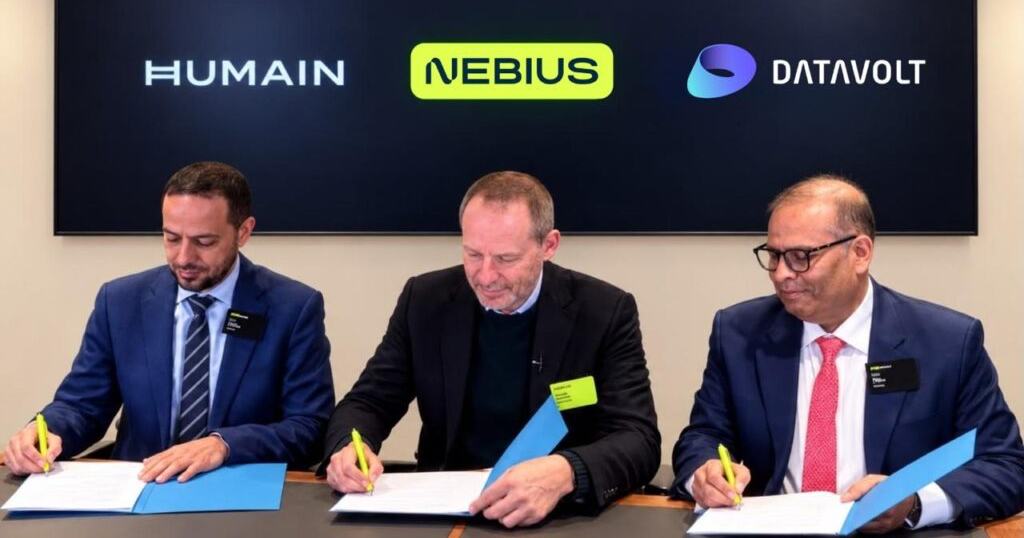
Nebius agreed on October 21 to become the anchor tenant at Oxagon, a floating industrial district inside Saudi Arabia's Neom megaproject, taking up to 50MW of the 100MW now under construction there. DataVolt, the developer that leases the land from Neom and builds out the facility, started construction in September. Six weeks from breaking ground to signing a committed anchor customer is an unusually fast cycle for data center development anywhere in the world, let alone inside a brand-new market with no established track record to point to.
DataVolt CEO Rajit Nanda framed the speed as the entire point of the pitch: 'Speed to market and infrastructure cost competitiveness will define the winners in the global AI compute race.' The campus plan calls for 360MW in its first phase and up to 1.5GW at full scale, with capacity coming online in phases through the end of 2027. Those are hyperscaler-grade numbers attached to a market most enterprise buyers have not previously considered a serious source of compute, and that gap between ambition and track record is exactly what deserves scrutiny.
Why Saudi Arabia is making this pitch now
Oxagon sits within Neom, the megaproject city launched by Crown Prince Mohammed bin Salman in 2017, and it is powered by Neom's own wind and solar generation rather than a regional grid connection. That answers the single biggest constraint slowing AI infrastructure growth everywhere else right now: power availability. US and European hyperscalers are fighting multi-year interconnection queues and local moratoriums just to get a committed power source. A greenfield site with its own renewable generation and a sovereign wealth fund behind it can simply build faster, which is exactly the gap DataVolt is selling directly into.
Nanda's language about positioning Saudi Arabia as an exporter of digital capacity, not solely an energy exporter, is a deliberate strategic reframe. The kingdom has spent roughly a decade diversifying its economy away from oil exports toward other sources of national revenue. AI compute capacity, sold to global tenants who need it delivered faster than Virginia or Texas can currently manage, is a logical extension of that broader diversification strategy, and one that several other Gulf states are now pursuing in parallel through their own sovereign vehicles.
What Nebius gets, and what it signals
For Nebius, Oxagon is one more leg of a deliberately scattered global footprint that already includes leases in the Netherlands, construction underway in Missouri, a planned gigawatt-scale campus in Pennsylvania, and a 240MW site in France. Spreading capacity across that many jurisdictions is a direct hedge against any single region's regulatory or power constraints becoming a hard ceiling on growth. It also gives Nebius something concrete to sell enterprise customers who are themselves trying to diversify AI workloads geographically for their own data residency or latency reasons.
The arrangement also tells us something useful about where neocloud capital is willing to go right now. Nebius, still establishing itself against Nvidia-backed peers like CoreWeave, is choosing to anchor a Middle East campus well ahead of any proven enterprise demand originating there. That is a deliberate bet that geographic optionality is worth more today than concentrating capital in markets where every hyperscaler is already competing fiercely for the exact same scarce power and land.
The due diligence this deal demands
A six-week turnaround from groundbreaking to anchor tenant is a genuine capability, but it is also a flag worth examining closely. Enterprises evaluating compute sourced through a Gulf-region campus should ask pointed questions about permitting rigor, long-term power contract terms, and what legal recourse looks like if construction slips or power delivery falls short of the renewable sourcing pitch made at signing. Speed achieved by skipping steps that US and EU markets typically require is simply not the same kind of speed as genuine process efficiency, and the two can look identical in a press release.
Data sovereignty and export control questions also apply differently here than they do in Europe or North America. Any workload destined for Saudi-hosted infrastructure needs a clear, documented answer on where data physically resides, who can legally compel access to it, and whether that satisfies whatever regulatory regime governs the underlying business, particularly for US or EU-headquartered companies carrying cross-border compliance obligations into a jurisdiction they have little prior experience auditing.
The decision for CIOs
This deal is a preview of a sourcing option that will show up in more enterprise RFPs over the next two years: AI compute capacity from Gulf-region campuses, priced competitively and delivered faster than domestic alternatives, sold through a neocloud intermediary rather than directly from the sovereign entity backing it. It will appeal most to workloads with low data sensitivity and high compute hunger, think large-scale model pretraining rather than customer data processing or anything touching regulated personal information.
Our read is that this belongs on the capacity-sourcing shortlist for non-sensitive, compute-heavy workloads starting now, with the caveat that contract terms, exit provisions, and power delivery guarantees need the same scrutiny you would apply to any new, unproven jurisdiction entering the market for the first time. Treat the six-week signing timeline as a marketing data point worth noting, not a substitute for your own diligence on the campus's actual delivery track record once phase one genuinely goes live and starts serving traffic.

