A Data Center That Became a Power Project
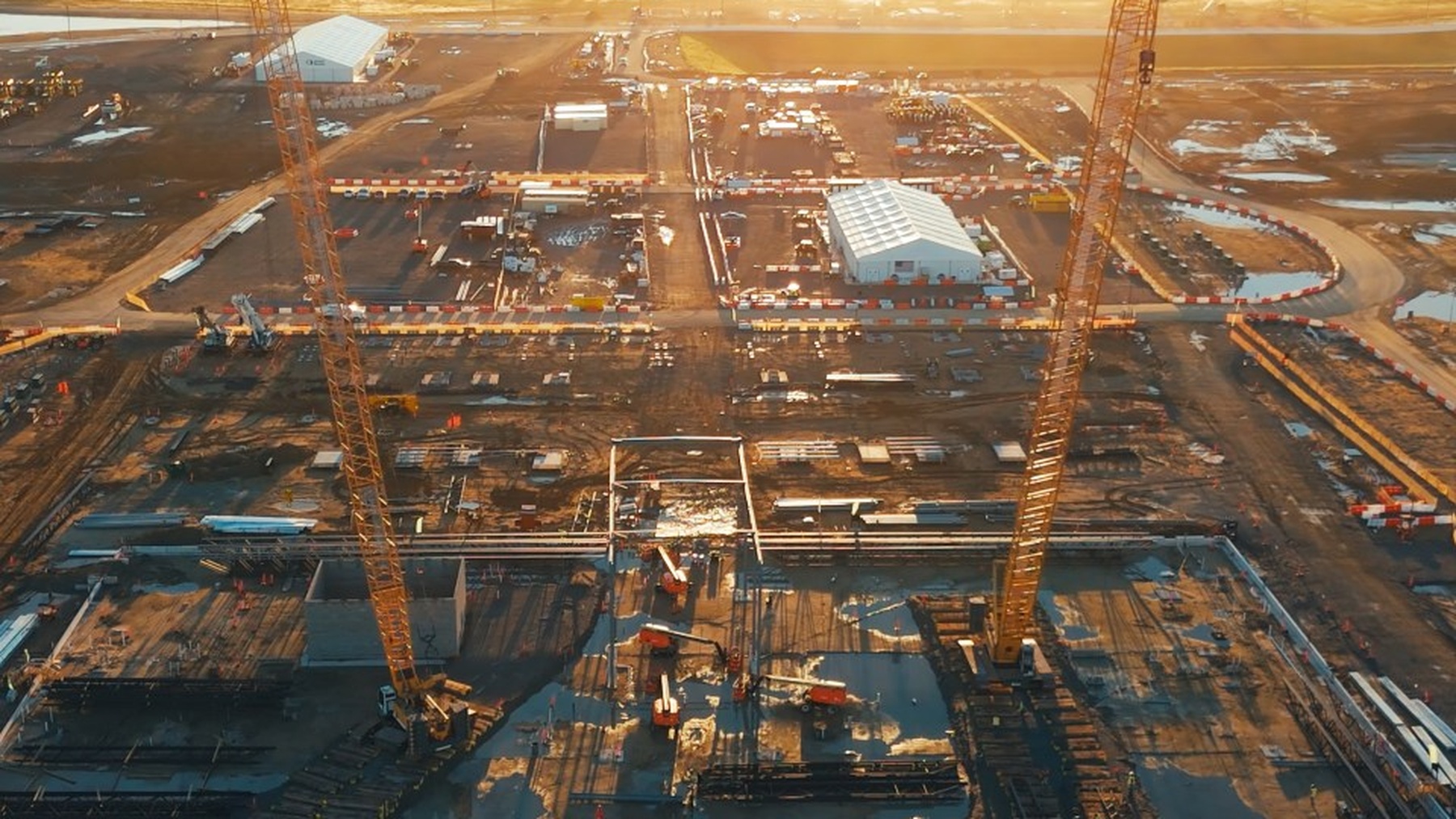
On July 13, Meta said it would dramatically expand its Hyperion campus in Richland Parish, northeast Louisiana, lifting the site to a 5 gigawatt target and pushing total planned investment past 50 billion dollars. That is not an incremental build. It is roughly double the commitment the company described in 2025, when it framed the project through a joint venture with Blue Owl Capital at about 27 billion dollars. The first phase is still on track to deliver around 2 gigawatts by 2030, but the ceiling has moved sharply higher.
Numbers like these change the category of the thing being built. Neil Osnato of Persistence Analytics Group put it plainly, noting that at 5 gigawatts a project stops being a large data center and becomes a regional infrastructure planning event. Richland Parish is a rural community of roughly 20,000 people in Louisiana's Delta region. Dropping a facility that can eventually draw the output of several nuclear plants into that setting is a decision about the local grid, the labor market, and the state's industrial future, not just about where Meta will train its next model.
From 27 Billion to 50 Billion in a Year
The jump in capital commitment tells you how fast the cost curve for frontier AI is bending. In 2025, the Richland Parish plan was already one of the largest private investments in Louisiana history. A year later the figure has roughly doubled, and the company frames the campus as scaling to 5 gigawatts over time rather than as a fixed build. That open ended structure is itself a signal. Meta is committing land, power contracts, and supply agreements against demand it expects to materialize, not demand it can point to today.
It fits the wider pattern across the sector. Meta has guided to capital expenditure well above 100 billion dollars for 2026, and Hyperion sits alongside a gigawatt scale build underway in the American Midwest. We read the Louisiana upgrade as the company planting its most expensive single stake in the ground and betting that owning generation adjacent compute at this scale will be cheaper, over a decade, than renting it. For enterprise buyers the takeaway is that the people setting AI prices are underwriting fifty year assets to do it.
Why Five Gigawatts Changes the Calculus
The hard constraint on projects this size is no longer chips. It is power, and specifically the ability to secure both generation and the transmission to move it. Stephen Sopko of HyperFrame Research captured the shift, arguing that securing gigawatts and transmission capacity is now as strategic as GPU access, because you cannot multisource a transmission queue slot. A company can shop GPUs across vendors. It cannot conjure a second interconnection queue or a second high voltage corridor when the first one is full.
That is why Meta is behaving less like a tenant and more like an industrial utility. Don Gentile, also of HyperFrame Research, framed power as a competitive advantage sitting alongside GPUs and the surrounding deployment infrastructure. Owning the power story lets Meta commit to timelines that competitors dependent on congested grids cannot match. It also concentrates risk. If the demand does not arrive on schedule, or if regulators slow the generation buildout, the company is holding an enormous fixed asset. The upside is control. The downside is that control at this scale is very expensive to be wrong about.
The Anchor for Meta Compute
Hyperion is not just internal plumbing anymore. Earlier this month Meta introduced Meta Compute, a plan to offer developers access to models running on its own GPU fleet and to rent raw capacity by the hour, in the manner of the neoclouds. A campus that scales to 5 gigawatts is the supply side of that ambition. It gives Meta the option to consume the capacity itself when its models are hungry, and to sell the surplus when they are not, smoothing utilization across a very large fixed base.
For CIOs evaluating where to place AI workloads, this matters. A credible fourth or fifth hyperscale supplier changes negotiating leverage, and a provider that owns its generation can make durable price commitments. It also raises a governance question worth asking early. Renting from a company that competes with you in advertising, social, and increasingly enterprise software is a different risk profile than renting from a pure infrastructure vendor. The Louisiana campus makes Meta Compute real, and real supply is what turns a press release into a procurement option.
The Community and Grid Question
Meta says the finished campus will support more than 1,000 permanent jobs and generate significant economic activity across Richland Parish and the surrounding region. Those are meaningful numbers for a small rural community, and they are the case the company and the state will make to residents. But a 5 gigawatt load also reshapes electricity planning for everyone connected to the same system. The scale of the draw invites hard questions about who pays for new generation and transmission, and whether ratepayers or the company absorb the cost of upgrades.
This is the tension now attached to every mega campus in the United States. Communities want the tax base and the jobs, and they are wary of the water, the noise, and the pressure on power prices. We have already seen local opposition stall other large builds elsewhere. Louisiana appears to be leaning in, but the durability of that welcome will depend on how transparently the power and cost arrangements are handled. Enterprises watching from the sidelines should note that social license, not just silicon, is becoming a gating factor for AI supply.
The Read for Enterprise Leaders
Strip away the eye watering figures and the strategic message is simple. The cost of frontier AI is increasingly a cost of energy and land, and the firms that can secure both at gigawatt scale will set the terms for everyone else. Meta doubling its Louisiana commitment inside a year is a statement that it intends to be one of those firms, and that it will spend against future demand to get there. For technology executives, that reframes the AI capacity conversation as an infrastructure conversation.
Practically, we would plan for a market where a handful of players control the cheapest compute because they control the cheapest power, and where availability tracks the pace of grid construction rather than chip fabrication. That argues for multi supplier strategies, for realistic assumptions about capacity lead times, and for watching which providers actually own generation. Hyperion is a long dated bet, phased out to 2030 and beyond. But the direction it points, toward vertically integrated, power anchored AI supply, is already the shape of the market enterprises will buy into.