A Once-in-a-Lifetime Reason to Start Over
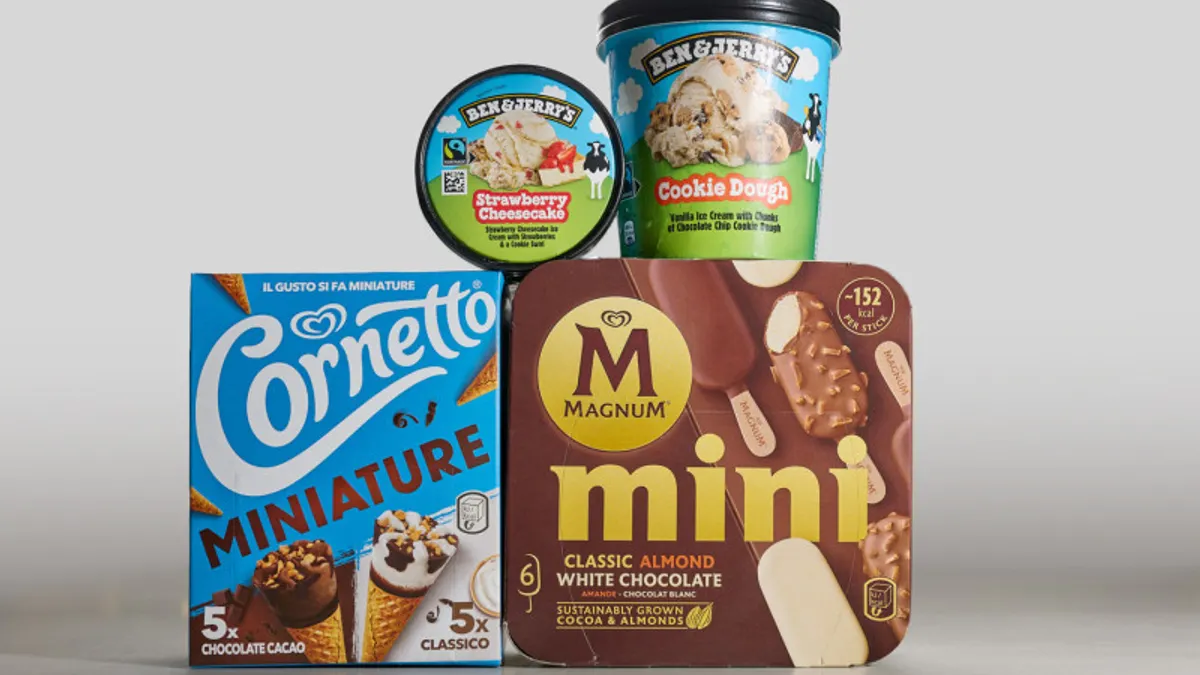
Most enterprises never get to rebuild. They inherit decades of ERP customization, bolt-on CRM, and supply chain systems wired together by people who left years ago, and the best a CIO can hope for is a careful modernization that does not break the business. The Magnum Ice Cream Company, home to Ben and Jerry's, Breyers, Magnum, Klondike, Cornetto and Popsicle, is in a different position. Spun out of Unilever and admitted to trading in December 2025, it is a multibillion-dollar consumer goods company with almost no technology estate of its own.
That is the rarest of gifts and the heaviest of burdens. We have watched plenty of carve-outs treat the spin-off as an excuse to lift and shift the parent's systems and call it a day. Magnum's leadership is doing the opposite. CIO of the Americas Michael Friedlander, who joined in August 2025 from PepsiCo, describes a phased two-year program to deploy new ERP, CRM, website management and supply chain capabilities. The chance to design an enterprise stack with no legacy debt, he has said, is a once-in-a-lifetime opportunity, and the company clearly intends to use it.
Living on Borrowed IT
The catch is that Magnum is not starting from zero on day one. Like most carve-outs, it operates under transition services agreements with Unilever, leaning on the former parent for core IT functionality and support while it builds its replacements. That arrangement is a clock, not a comfort. Transition services are expensive, time-boxed, and designed to end, which means the rebuild is happening under real pressure rather than at leisure.
This is the part of a spin-off that boards underestimate. The financial separation closes on a date certain, but the operational separation is a multiyear slog where every month on the parent's systems carries a cost and a constraint. Magnum's two-year horizon for ERP, CRM and supply chain is aggressive for a company of its scale, and it forces a discipline that more comfortable transformations lack. There is no option to defer the hard decisions, because the safety net of the parent's IT is being pulled away on a schedule.
Configure, Do Not Customize
The most important strategic choice Magnum has made is also the least glamorous. Friedlander is explicitly prioritizing configuration over customization. "We're trying to make sure we're integrating big platforms together," he has said. "That's really going to help us unlock AI faster, primarily because we're going to do more configuration than customization." The logic is that customization is where ERP transformations go to die, and where AI features later refuse to work.
We think this is the right instinct, and it is one most incumbents simply cannot follow. Every line of custom code is a line a vendor's AI roadmap was not written for, and a reason an out-of-the-box agent will misbehave against your data model. By standardizing processes wherever possible, Magnum is buying the ability to consume vendor AI as it ships rather than re-engineering it. "We're taking this opportunity to standardize the processes where we can and invest in platforms that are also investing in AI capabilities," Friedlander has said. That second clause matters as much as the first.
Vendor Selection as an AI Bet
When a company picks its ERP and CRM platforms today, it is not just choosing a system of record. It is choosing whose AI research budget it wants to ride for the next decade. Magnum's selection criteria reportedly weigh how heavily a vendor is itself investing in AI, alongside proven track records. That reframes the buying decision from a feature comparison into a wager on a roadmap, which is exactly how CIOs should be thinking in 2026.
It also quietly raises the stakes of vendor lock-in. Standardizing on big integrated platforms to unlock AI faster is sound, but it concentrates dependence on a handful of suppliers whose pricing and agent strategies are still in flux. Magnum is making a calculated trade: less flexibility and more reliance, in exchange for speed and AI readiness. For a company that has to stand up an entire estate in two years, speed is not a luxury. The discipline will be in keeping integration clean enough that the bet remains reversible if a vendor disappoints.
Clean Data as the Precondition
Friedlander's bluntest line is also his most universal: "None of this works without clean data." Every survey of enterprise AI in 2026 lands on the same blocker, with data readiness and quality cited more often than any other obstacle to scaling agents. The difference for Magnum is that it can design data hygiene into the foundation rather than retrofitting it onto twenty years of accumulated mess. That is a structural advantage incumbents would pay dearly for.
The planned AI applications are concrete rather than aspirational: camera recognition for factory safety in the supply chain, an HR assistant embedded in workflows, and forecasting across finance, supply chain and marketing. None of it is exotic. What makes it credible is that the underlying platforms and data are being built to support it from the start, not asked to accommodate it later. If the agents fail, it will not be because the plumbing was wrong.
The Real Test Is People, Not Platforms
For all the talk of platforms and agents, Friedlander keeps returning to the human side. "It's all about change management," he has said. "People are the main part of our company, and we have to have those people armed with the right resources to be effective." That is the line that separates a transformation that sticks from one that produces a beautiful architecture nobody adopts. A clean stack is worthless if the people who run the business cannot or will not use it.
We will be watching Magnum because it is a rare controlled experiment. A large consumer business with strong brands, a hard deadline, and a genuine clean sheet is showing what an AI-ready enterprise stack looks like when it is designed rather than inherited. If configuration over customization, vendor AI roadmaps, and clean data really do let a company unlock AI faster, Magnum will demonstrate it in production within two years. If they do not, it will be the clearest evidence yet that the greenfield dream is harder than the slide deck. Either way, every CIO stuck modernizing legacy should be taking notes.