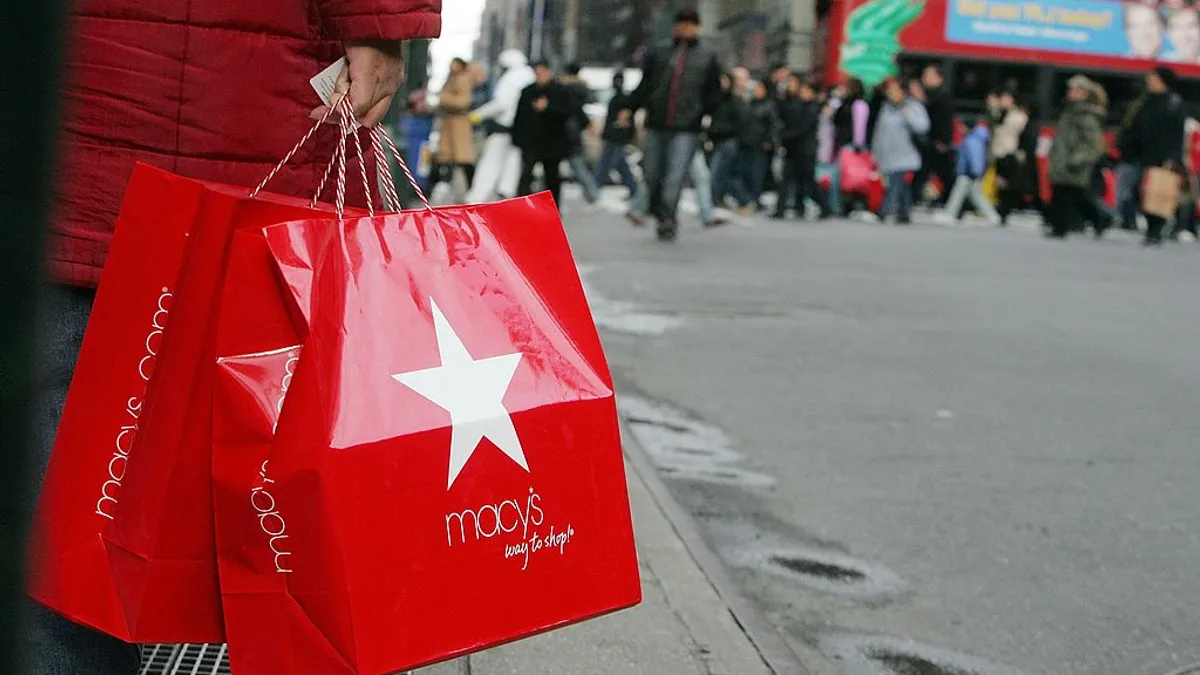
What Macy's is rolling out
Macy's confirmed on September 16 that it is expanding an AI forecasting capability for inventory replenishment from pilot testing into broader use across its operations. COO and CFO Tom Edwards described the goal in blunt operational terms: "having the right product in the right place at the right time." That phrasing reads like something a retail operations executive says when the tool in question is meant to quietly fix a persistent, expensive problem rather than generate headlines.
Edwards confirmed the tool is "moving from pilot to broader rollout in a bid to improve in-stock levels and drive inventory efficiencies." That framing puts the tool squarely in the category of AI investment retail CTOs should find easiest to justify internally: a forecasting model applied to a well-understood operational problem, with success measured against metrics the finance and merchandising teams already track every week regardless of whether AI is involved.
Where this fits in Bold New Chapter
This replenishment tool is not a standalone initiative. It sits inside Macy's Bold New Chapter transformation plan, launched in 2024, which set a target of 235 million dollars in supply chain savings by 2026. That plan has already reshaped Macy's physical network, including closing distribution centers and opening a new automated facility in North Carolina. The AI forecasting rollout is the software layer riding on top of infrastructure changes that were already underway, rather than a replacement for them. That order, physical network first, software second, is easy to state and hard to execute, since it requires holding off on an AI headline until the underlying logistics can actually support it.
That sequencing matters. Macy's spent roughly two years rebuilding its distribution footprint before layering AI-driven replenishment on top of it, which means the forecasting model is working with cleaner physical logistics than it would have inherited in 2024. Retailers trying to shortcut that order, deploying AI forecasting on top of a distribution network still being restructured, are more likely to see the tool amplify existing inefficiencies than fix them. A forecasting model is only as good as the physical network it is forecasting for, and Macy's did the unglamorous work first.
The inventory numbers behind the announcement
Macy's enters the fall season with Q2 inventory up 2.5 percent, which Edwards said is aligned with sales growth, calling it a good inventory position. That is a modest, deliberately unglamorous number, and it is the right kind of number to see attached to a supply chain AI announcement. Inventory that grows roughly in line with sales, rather than well ahead of it, is the basic signal that a retailer is not quietly building excess stock while its forecasting tools get credit for something else.
The 235 million dollar supply chain savings target gives the AI rollout a specific financial bar to clear, even if Macy's has not broken out how much of that figure the replenishment tool itself is expected to contribute versus the physical network changes. For a CTO evaluating a similar tool, the useful discipline to copy is Macy's insistence on tying the technology rollout to a number finance already tracks, rather than inventing a new AI-specific metric that is harder to audit.
Why the timing is deliberate
Moving from pilot to broad rollout right before the fall selling season, which runs into the holiday quarter that decides most retailers' annual results, is not a low-risk moment to expand a new forecasting tool. It is also exactly when the tool's value is highest, because in-stock accuracy during peak demand is where replenishment errors cost the most in lost sales and markdown losses. Macy's is choosing to take that risk deliberately rather than wait for a quieter quarter.
That choice suggests confidence built from the pilot phase, which presumably ran through a lower-stakes period earlier in the year before Edwards signed off on wider deployment. Retail CTOs considering a similar pilot-to-rollout timeline should treat the fall push as a data point about risk tolerance, not a template to copy blindly. Macy's had a pilot period to build confidence first, and skipping that step to chase a holiday deadline is a different and riskier decision.
What Macy's is not disclosing
Macy's has not named the vendor or the underlying model powering this replenishment tool, whether it is a proprietary build, a licensed platform, or a customized version of an existing supply chain forecasting product. That omission is common for a retailer treating supply chain technology as a competitive asset rather than a marketing story, but it limits how precisely other retail CTOs can benchmark their own AI forecasting investments against Macy's results.
There is also no disclosed accuracy metric, no forecast error rate before and after the tool, and no timeline for when the pilot began relative to the September rollout announcement. Anyone trying to build a business case referencing Macy's example should treat it as directional evidence that AI-driven replenishment is mature enough for broad deployment at a large, complex retailer, not as a benchmark with numbers attached. Retailers pitching a similar investment should be equally candid about what they can and cannot yet prove, rather than borrowing Macy's implied confidence without Macy's underlying data.
What this means for other retail supply chains
The template worth copying is the sequence, more than the technology itself: restructure the physical network first, run the AI forecasting tool as a contained pilot against that cleaner infrastructure, then expand once the pilot clears a specific financial bar tied to metrics finance already tracks. Retailers trying to reverse that order, leading with an AI headline before the underlying logistics network is sound, are setting the tool up to get blamed for problems it did not create.
Macy's is not claiming victory yet either. A good Q2 inventory position and a pilot-to-rollout decision are encouraging signals, not a finished case study, and the real test comes once the tool is running at scale through the fall and holiday demand spike. Retail CTOs should watch Macy's Q4 results for the actual evidence, and build their own forecasting timelines around a similar discipline: infrastructure first, contained pilot second, broad rollout only once the numbers justify it.