Prefab Comes for the Gigawatt Era
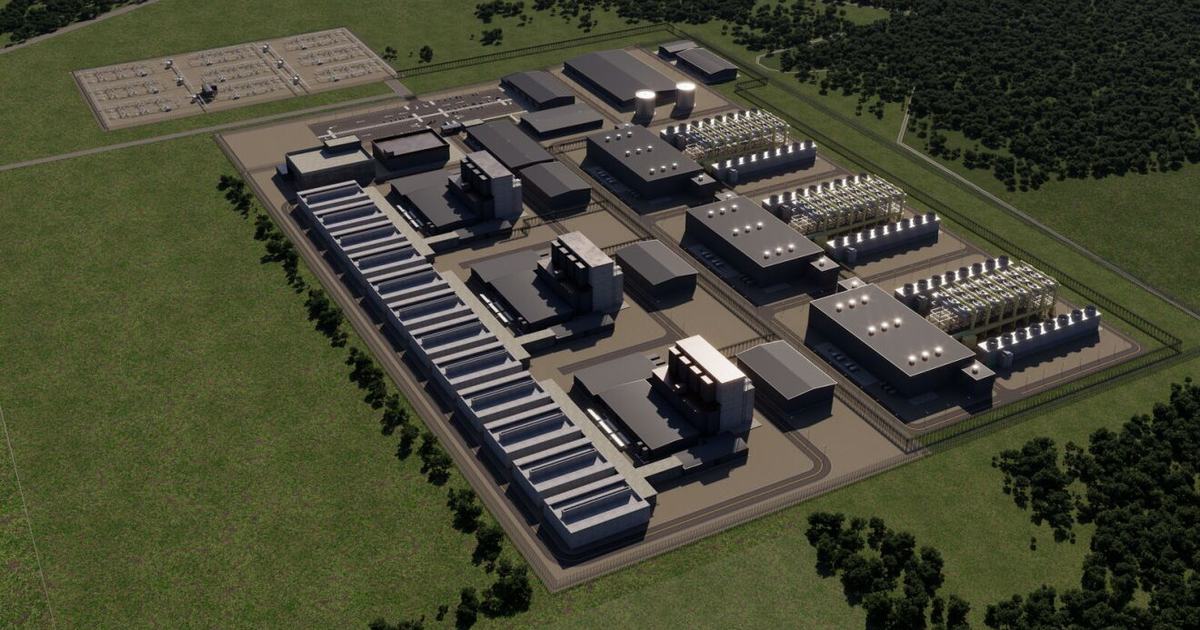
At ISC 2026 on June 25, KAYTUS unveiled a data center that ships rather than gets built. Its new gigawatt-scale offering is fully prefabricated and liquid cooled, assembled from three standardized container modules and designed to scale from a single 3-megawatt base unit up to a full 1-gigawatt AI factory. The pitch is simple and, in 2026, compelling: stop pouring concrete on site and start bolting together factory-built blocks. The launch lands at the supercomputing industry's flagship European gathering, in front of exactly the buyers, national labs, cloud operators and AI infrastructure teams, who are wrestling with how to deploy dense compute at unprecedented speed.
We have watched the industry's bottleneck migrate from chips to power to, increasingly, construction itself. When a hyperscaler signs a 500-megawatt lease that must light up in two years, the limiting factor is rarely the GPUs. It is the skilled labor, the permitting and the sheer time it takes to build a conventional hall. KAYTUS is selling against exactly that constraint, and the timing is shrewd. With US data center power demand alone forecast to jump from 41 gigawatts in 2026 to 66 gigawatts the following year, the operators who can compress their build schedules will capture demand that slower competitors simply cannot serve in time.
Three Cubes, One Factory
The architecture standardizes the data center into three modular units. The IT Cube is a two-tier stacked container holding 18 liquid-cooled compute racks, 12 network racks, 5 storage racks and 5 management racks per 3-megawatt block. The Power Cube integrates 2,500kVA power transfer units, medium-voltage transformers, switchgear, UPS systems and diesel generators in a Tier III N+1 configuration. The Cooling Cube delivers the thermal capacity. By packaging power and cooling as discrete, repeatable units rather than site-engineered systems, KAYTUS decouples the three hardest parts of a build so they can be manufactured and validated in parallel.
The discipline here is the point. By freezing the design into three repeatable units, KAYTUS turns a bespoke construction project into a manufacturing exercise. Each cube is built, tested and validated in a factory before it ever reaches the site, which collapses the variability that makes traditional builds slow and unpredictable. For operators chasing identical capacity across multiple geographies, that repeatability is worth more than any single performance spec. A campus assembled from known-good blocks is also easier to finance and insure, because lenders and underwriters can price a standardized, factory-tested unit far more confidently than a one-off design that exists only on a set of construction drawings.
Density Built for AI Workloads
The cooling numbers reveal who this is for. Each IT Cube supports 150kW rack power density out of the box, upgradeable to between 200 and 227kW. The Cooling Cube provides 4,200kW of liquid-cooling capacity at 35 and 45 degrees Celsius, plus 3,300kW of chilled-water capacity, with a 72-hour emergency water reserve and a 10-minute thermal buffer. These are not numbers for general-purpose enterprise racks. The water reserve and thermal buffer matter especially in regions where data centers face mounting scrutiny over consumption, giving operators a margin to ride through interruptions without drawing on stressed local supplies.
They are numbers for dense AI training and inference clusters, where rack densities have blown past anything air cooling can handle. By making liquid cooling the default rather than a retrofit, KAYTUS sidesteps the awkward middle ground many operators are stuck in, hybrid halls that were designed for 30kW racks and are now being force-fed 130kW accelerators. A purpose-built liquid-cooled block is a cleaner answer. The upgrade path to beyond 200kW per rack also future-proofs the design against the next GPU generation, which matters when a facility commissioned today must remain competitive across a five-to-seven-year depreciation cycle that will span several accelerator refreshes.
Time to Power Is the Real Product
The headline claim is the schedule. KAYTUS says the prefab model cuts deployment from the conventional 18 to 24 months down to roughly 6 to 8 months. In an environment where leased capacity is contracted years ahead and every quarter of delay is lost revenue, that compression is the actual value proposition. Density and efficiency matter, but speed to first power is what closes deals. A roughly two-thirds reduction in deployment time can mean catching a full GPU generation while it is still state of the art, rather than commissioning a hall just as the silicon inside it is being superseded.
This is a market thesis, not just a product. Epoch AI expects five data centers of a gigawatt or more to come online in 2026, each run by a different hyperscaler, and the gigawatt campus is becoming the new hyperscale unit. At that scale, no operator wants to engineer each facility from scratch. Standardized, factory-built blocks that scale by replication are the obvious endgame, and KAYTUS is staking an early claim. The same logic is drawing rivals and hyperscalers alike toward prefabrication, which means the competitive question is no longer whether the industry industrializes the build, but which vendors own the standardized block that everyone else assembles around.
What Buyers Should Scrutinize
The caveats are familiar to anyone who has bought modular infrastructure. Prefab promises evaporate if the supply chain for the modules themselves becomes the new bottleneck, and a factory can only build so many cubes a quarter. Buyers should press on manufacturing capacity, lead times for the modules and how the standardized design accommodates the next GPU generation without a full redesign of the IT Cube. They should also ask hard questions about transport and siting, because a two-tier stacked container imposes real constraints on road access, crane requirements and local building codes that vary widely across the geographies where capacity is most in demand.
Serviceability is the other open question. A sealed, two-tier container is elegant until something inside it fails and a technician needs access. Still, the broader direction is right. As the gigawatt campus becomes routine, the winners will be the vendors who industrialize the build, and KAYTUS has put a credible, fully specified product on the table at exactly the moment the market needs one. For enterprise and sovereign-AI buyers weighing whether to build or lease, a fully specified prefab block also reframes the calculation, turning a multi-year construction commitment into something closer to a procurement decision with a known unit cost and a predictable delivery date.