A 40 Percent Step Up in Five Months
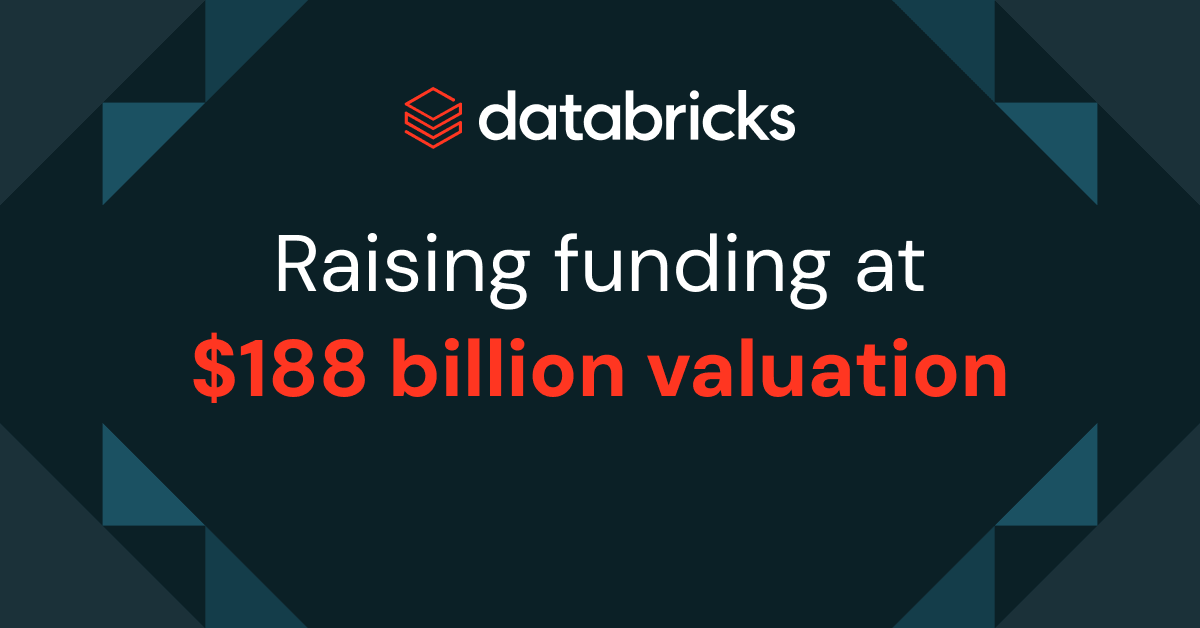
Databricks confirmed on July 16 that it has signed a term sheet for a strategic funding round at a $188 billion valuation, led by existing investor Coatue with other new and existing backers joining. The company expects the round to close later this summer. Databricks did not disclose the size, but Bloomberg and TechCrunch put it near $3 billion. The number that matters most is the trajectory. This valuation sits 40 percent above the $134 billion Databricks set only in February 2026, which itself followed a $100 billion round in September 2025 and a $62 billion round in December 2024.
We read a cadence like this as a company raising because it can, not because it must. Four rounds in roughly eighteen months, each at a materially higher mark, is the profile of a business that wants a permanent war chest for acquisitions and research while private capital stays cheap for category leaders. For data leaders evaluating multi-year platform commitments, the signal is durability. Databricks is not a vendor at risk of running out of runway, and its investors are pricing in continued share gains against Snowflake, the cloud warehouses, and the model labs pushing into data.
Tokenmaxxing Gives Way to Valuemaxxing
The framing from CEO Ali Ghodsi is the part worth quoting in full. "Enterprises are moving from tokenmaxxing to valuemaxxing," he said. "They don't want to burn expensive tokens on the smartest model for every task, they want the best outcome per dollar." That sentence is a positioning move as much as an observation. It reframes the AI conversation away from raw model capability and toward orchestration, routing, and cost governance, which happen to be the layers Databricks sells.
This matters for how CIOs plan 2027 budgets. The first wave of enterprise AI spending assumed the frontier model was the product and everything else was plumbing. The valuemaxxing thesis inverts that assumption and treats model choice as a routing decision optimized per workload. If that thesis holds, the strategic control point stops being the model contract and becomes the gateway that decides which model runs where, at what cost, under which governance policy. Databricks is spending this round to own that control point.
Where the Money Actually Goes
Databricks named three products the capital will accelerate. Unity AI Gateway is the multi-model governance and cost-control layer that routes traffic across providers while enforcing policy. Genie is the AI coworker that turns business data into answers and actions. Lakebase is the serverless Postgres database, built on the Neon acquisition, designed as the transactional store for AI agents that need to read and write state at low latency. The company also flagged future AI acquisitions and research as destinations for the funds.
These are not three unrelated bets. Read together, they describe a full agent stack sitting on top of the lakehouse. Lakebase gives agents an operational database, Genie gives them a reasoning surface over governed data, and Unity AI Gateway gives IT the throttle and the audit trail. The strategy is to make the data platform and the agent runtime the same purchase. For buyers, that is convenient and also a lock-in risk worth naming early, because the governance layer that controls your models is hard to swap once your agents depend on it.
The Customer Base Behind the Number
Databricks says more than 20,000 organizations use the platform globally, including roughly 70 percent of the Fortune 500, with named references such as adidas, AT&T, Bayer, Block, Mastercard, Rivian, and Unilever. The company did not disclose revenue or ARR in the announcement, which is typical for a private round and also a reminder that valuation here is set by a negotiation with a lead investor, not by public multiples.
For our readers, the useful takeaway from the customer roster is breadth across regulated and consumer-facing sectors. A retailer, a bank, a pharmaceutical company, and a telecom carrier have very different governance and latency requirements, and Databricks is claiming to serve all of them on one platform. That breadth is the commercial argument for consolidation. It is also the reason to scrutinize whether a single vendor genuinely meets your governance bar in every domain, or whether the demo simply covers the common cases well.
What This Does to the Competitive Field
The round lands weeks after both Databricks and Snowflake used their summer summits to pitch nearly identical stories about operating AI systems rather than merely building them. Both shipped semantic context layers, both leaned into open Iceberg interoperability, and both are now selling agents on top of governed data. A $188 billion valuation gives Databricks more ammunition for acquisitions and pricing pressure in that fight, and TechCrunch noted the company has been benchmarking open models like GLM 5.2 against proprietary systems from Anthropic and OpenAI for coding tasks.
The strategic subtext is that Databricks wants to be neutral about which model wins while owning the layer every model runs through. That is a durable position if it holds, because it profits regardless of which lab leads on any given benchmark. The risk is that the model labs push down into data and orchestration themselves, collapsing the gateway into their own platforms. This round is, in part, insurance against that scenario.
What Data Leaders Should Do With This
If you already run Databricks, treat this round as confirmation that Lakebase and Unity AI Gateway are becoming core roadmap items rather than experiments, and plan your agent architecture with that in mind. Ask your account team for concrete cost-per-outcome benchmarks on the gateway, because valuemaxxing only means something if you can measure it against your current spend. Do not accept the narrative without the numbers.
If you are on Snowflake, BigQuery, or a best-of-breed stack, the discipline is to separate the funding headline from your actual requirements. A larger valuation does not change your governance obligations or your latency budgets. What it does change is the pace of feature releases you will be asked to evaluate. Set a clear bar now for what would make you consolidate onto a single agent-plus-data platform, so the next wave of announcements gets measured against your criteria rather than the vendor's.