The trial that was supposed to prove the format
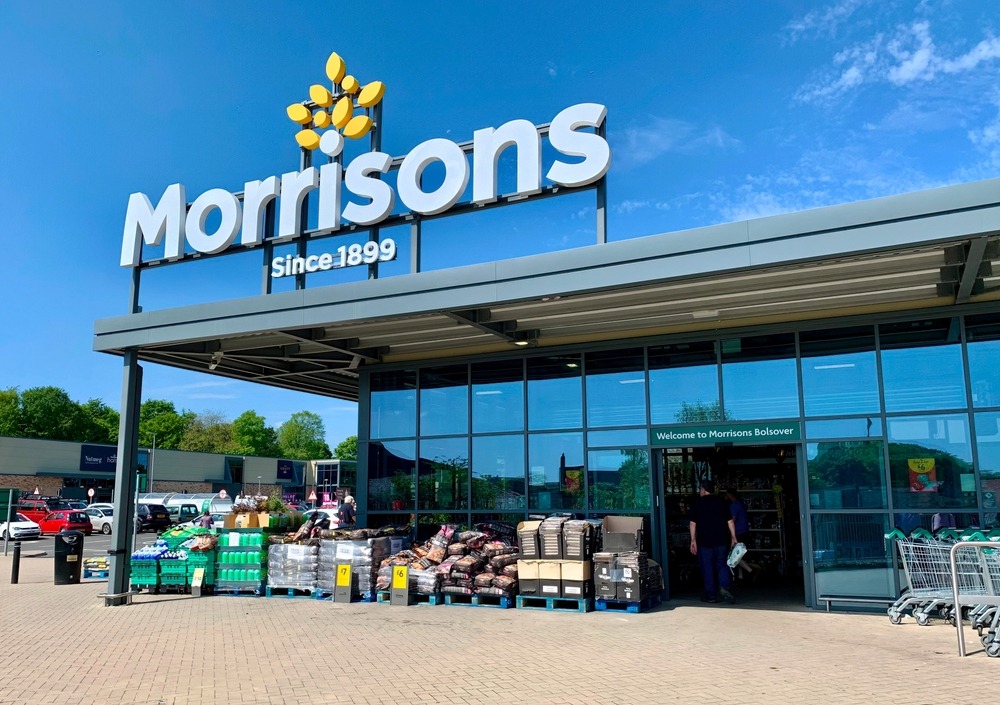
Instacart has told retail partners it is discontinuing Caper Carts, the AI-powered shopping trolleys fitted with cameras, built-in scales, and a touchscreen that tracked a shopper's basket in real time as they moved through the store. The company's own line, reported by The Grocer and confirmed by Morrisons, is blunt: retailer adoption did not scale quickly enough to justify Instacart's continued investment in the hardware. Morrisons is ending its UK trial, which ran at a single store in Ashton-on-Ribble, Preston, and the carts are also being withdrawn from US partners Schnucks and Wegmans.
This is a fast reversal by retail technology standards. Instacart launched Caper Carts in the UK with Morrisons as its first British partner barely a year ago, calling it the first fully integrated AI-powered trolley rollout in the country and describing shopping as 'a hybrid of both' online and in-store. At the time Instacart said the carts were already deployed in nearly 100 US cities across 15 states, with Kroger and Coles among the named partners. A format that size, walked back this fast, is the kind of signal that should change how a retail CTO reads vendor pitch decks for the next wave of in-store AI hardware.
What actually broke: economics, not technology
The carts worked as advertised. Cameras and scales tracked items as shoppers added them, a screen showed running totals and personalized offers, and checkout ran through a dedicated lane where shoppers scanned a barcode on the cart itself. The failure was not a technical one, it was that the value proposition for the retailer never cleared the cost of fleet hardware, maintenance, store-floor space, and staff retraining at a pace that justified the bet. Instacart's own statement makes that explicit: this was a portfolio decision about where continued investment pays back, not a product recall.
Commentary following the announcement has made a sharper point worth sitting with: the same retailers running these smart-cart trials are simultaneously running AI shelf-monitoring cameras that track stock levels, trigger reorders, and alert staff to gaps, and those systems are the part of the AI stack that is actually sticking. The difference is who captures the value and how directly it shows up on a P&L. Shelf monitoring reduces out-of-stocks and labor hours in a way a store ops team can measure within a quarter. Smart carts bet on changing shopper behavior at checkout, a much harder and slower thing to monetize, especially when the alternative, scanning at a familiar till, works fine for most people.
The vendor concentration problem this exposes
Morrisons, Schnucks, and Wegmans did not just buy a cart, they bought into a single vendor's roadmap for an entire in-store format: the fixtures, the checkout lane redesign, the staff training, the loyalty-card integration. When that vendor decides the unit economics don't work anymore, the retailer inherits the unwind on someone else's timeline, not its own. That is the structural risk every retail CTO should be pricing into any single-vendor, hardware-anchored AI commitment right now, whether it is smart carts, autonomous store cameras, or in-aisle robots: the question is not just 'does this work,' it is 'what happens to my store layout and my staff training budget if the vendor's board decides this line doesn't scale.'
That risk is compounded when the vendor is also your checkout and fulfillment integration partner, which is increasingly the case as grocery delivery platforms bundle hardware, software, and marketplace access into one relationship. A retailer evaluating any current smart-cart, autonomous-checkout, or in-store-robotics pitch should be asking for the vendor's actual deployment-to-decommission ratio across its full customer base, not just the logo slide of cities it operates in. Caper Carts' near-100-city footprint looked like traction. It was not enough to keep the product alive.
The interoperability question retailers skipped
Part of why the unwind is so disruptive is that Caper Carts were a closed, single-vendor format: the cameras, the scales, the checkout screen, and the backend scoring all belonged to Instacart, with no path for a retailer to swap in a different sensor supplier or software layer if the economics shifted. Contrast that with how the more durable in-store AI deployments tend to be built, on camera and sensor hardware that can run multiple software stacks, with the retailer owning the data pipeline and the vendor relationship limited to a specific analytics layer that can be re-sourced if a supplier exits the category.
That distinction should now be a standard line item in procurement for any in-store AI hardware, not an afterthought. Before signing a multi-store rollout, a retail CTO should be able to answer who owns the sensor data, whether the hardware can run a competitor's software if the original vendor exits the line, and what the actual cost and timeline is to revert a store to its prior checkout format. Caper Carts gave none of those answers to Morrisons, Schnucks, or Wegmans in a way that mattered once Instacart made its call, and all three are now absorbing a format reversal they did not choose on a timeline they did not set.
What this means for the next 12 months of in-store AI spend
The practical implication for 2027 budget cycles is to bias in-store AI investment toward applications where the retailer, not the shopper, is the direct beneficiary and where the ROI is measurable in weeks: shelf and inventory monitoring, loss prevention analytics, labor scheduling, and demand forecasting. Those categories have a track record of surviving budget scrutiny because the savings show up in shrink, labor cost, and out-of-stock rates, line items every CFO already tracks. Customer-facing novelty hardware, by contrast, needs a much higher bar of proven conversion or basket-size lift before it is worth multi-year fixture and training commitments.
None of this means scan-as-you-go or smart carts are dead forever. It means the burden of proof has shifted, and any pilot proposal for in-store AI hardware now needs a credible unwind plan built in from day one, not bolted on after a vendor cancels the program. The retailers caught in this wind-down are not being punished for experimenting, they are being punished for experimenting without a plan for what happens if the experiment's vendor loses patience first.