The work started before anyone said generative AI
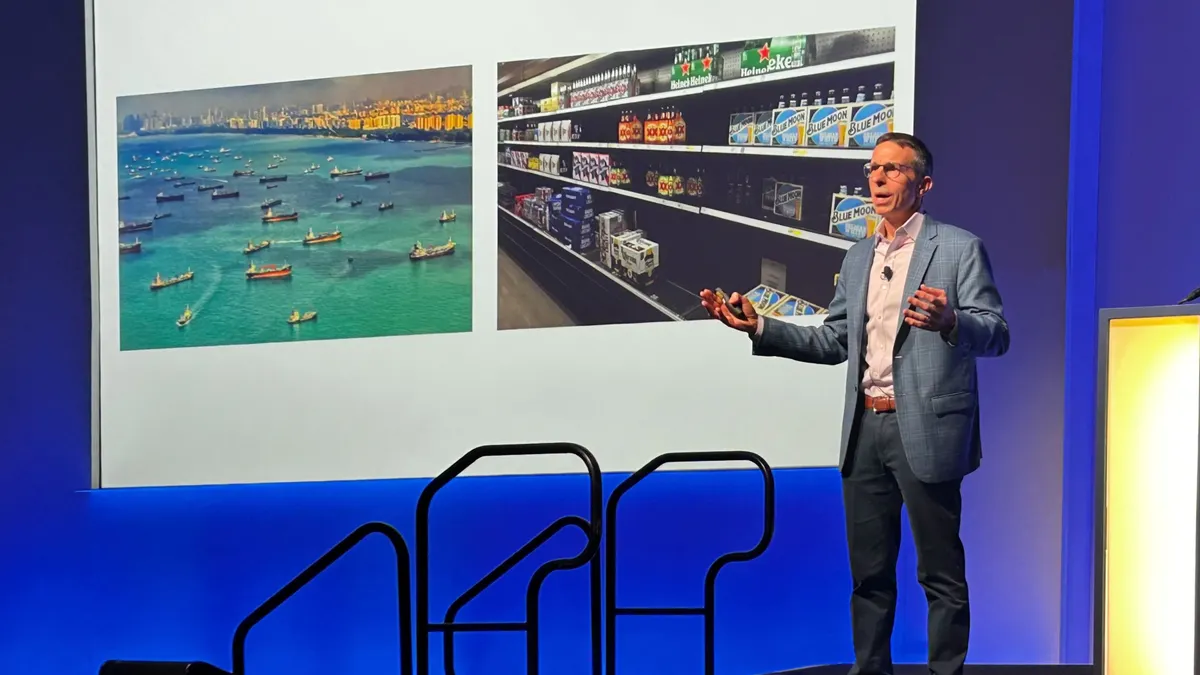
Frank Iannella, Heineken's US CIO and SVP for digital and technology, told attendees at Gartner's IT Symposium/Xpo in Orlando that the company's AI strategy did not begin as a reaction to generative AI at all. The technology team was already rethinking how to act on company data before the generative wave arrived, and when it did, Iannella's team folded it into work that was already underway rather than starting over with a new initiative.
That sequencing matters more than it sounds. A data and decision framework built specifically to answer the generative AI moment tends to be shaped by what the technology can do. A framework that predates it, and absorbs generative AI as one more capability layered on top, tends to be shaped by what the business actually needs. Iannella's framing suggests Heineken avoided the trap of building infrastructure around a tool rather than around a decision.
Signal, lever, and a learning phase
The decision framework Iannella described is deliberately simple to state, which is likely why it has held up over two years of expansion across supply chain and sales. It starts with identifying a signal, something concrete like a product that frequently runs out of stock. It then identifies a lever available to respond, such as accelerating delivery to the affected location. That capability gets written directly into transactional systems, and a learning phase follows to check whether the intervention actually reduced stockouts.
What makes this approach durable is the learning phase, which most enterprise AI rollouts skip in practice even when they include it on a slide. Writing a capability into a transactional system and declaring victory is common. Running a structured check on whether that capability produced the intended business result, and adjusting it based on what the data shows, is the step Iannella's team treats as mandatory rather than optional, and it took over two years to get that discipline embedded.
The ontology layer is where the real work lives
Iannella singled out the ontology layer, a machine-readable structural model that gives AI systems defined connection points across the business, as the component that absorbs most of the engineering effort. It rarely shows up in a press release or an executive summary, yet it is the piece that determines whether a signal identified in one system can actually trigger a lever in another system without someone manually translating between the two.
This is also the piece most enterprises underinvest in, because it produces no visible output on its own. A chatbot demo is visible. An ontology layer is infrastructure that only becomes visible when it is missing, in the form of AI initiatives that work in a pilot and then stall when they need to connect to a system nobody designed them to talk to. Heineken's two-year timeline is a reasonable estimate of what building this properly actually costs in time, not budget.
Decision-ready beats clean as the data standard
The distinction Iannella drew between decision-ready data and merely clean data is the most transferable idea in his talk. Heineken's team checks data against three questions: is it current enough to spot the signal, does it connect to the lever that would respond to that signal, and is its quality sufficient to actually enable the action. That is a narrower, more demanding standard than generic data-quality metrics, and it is scoped to a specific decision rather than to the dataset as a whole.
Iannella said this scoping is exactly what makes ROI easier to measure, because results can be tied directly to a defined outcome rather than argued abstractly from a data-quality score. A generic clean-data initiative can report improved completeness or accuracy without ever proving it changed a business result. A decision-ready data initiative, narrowly scoped to one signal and one lever, either reduces stockouts or it does not, and that clarity is what justified continued investment over two years.
Governance that matches the stakes of the decision
Heineken rolled out Microsoft Copilot broadly across the company and built an internal community where employees share use cases across functions, encouraging experimentation in lower-stakes areas without requiring a committee sign-off for every new idea. Iannella was candid on stage that trust is still being earned rather than assumed, openly acknowledging that the company is not fully there yet on automated, customer-facing decisions, which carry higher stakes and therefore require noticeably tighter governance than internal productivity use cases like drafting or summarizing.
That graduated approach, light governance for broad internal experimentation paired with tighter governance scaled specifically to sensitive data and customer impact, mirrors what Gartner and other researchers are now recommending for AI agent permissions generally across industries. Iannella's own summary of the posture, that an organization can fight the spread of AI tools or try to guide it, captures the practical choice facing most CIOs this year as adoption spreads with or without formal sanction. Heineken's two-year head start on building that guidance structure is the strongest argument in this talk for choosing to guide it early rather than catching up later under pressure.
What this means for the transformation roadmap
The lesson for any CIO building a data strategy this year is to resist funding another broad, generic data-cleanup program and instead scope investment to specific signals and levers tied to real business decisions, the way Heineken's team did from the outset of its multi-year effort. That reframing changes how a data initiative gets justified to the board, shifting the conversation from an abstract quality metric that nobody outside IT fully trusts to a measurable business outcome everyone in the room can evaluate, which is exactly the ROI clarity most AI programs are currently missing when they ask for another year of funding.
It also changes the build-versus-buy calculus for the ontology layer specifically. That infrastructure is specific enough to a company's own systems, products, and decisions that it is genuinely hard to buy off the shelf from a single vendor, which means budgeting real internal engineering time for it over multiple quarters rather than treating it as a line item a licensing fee can simply replace. Enterprises that treat this as a two-year investment, the way Heineken did, will have decision-ready data in place when their competitors are still arguing in a steering committee about what clean data even means for their business, let alone how to measure it consistently across functions.