The expansion signals the pilot phase is actually ending
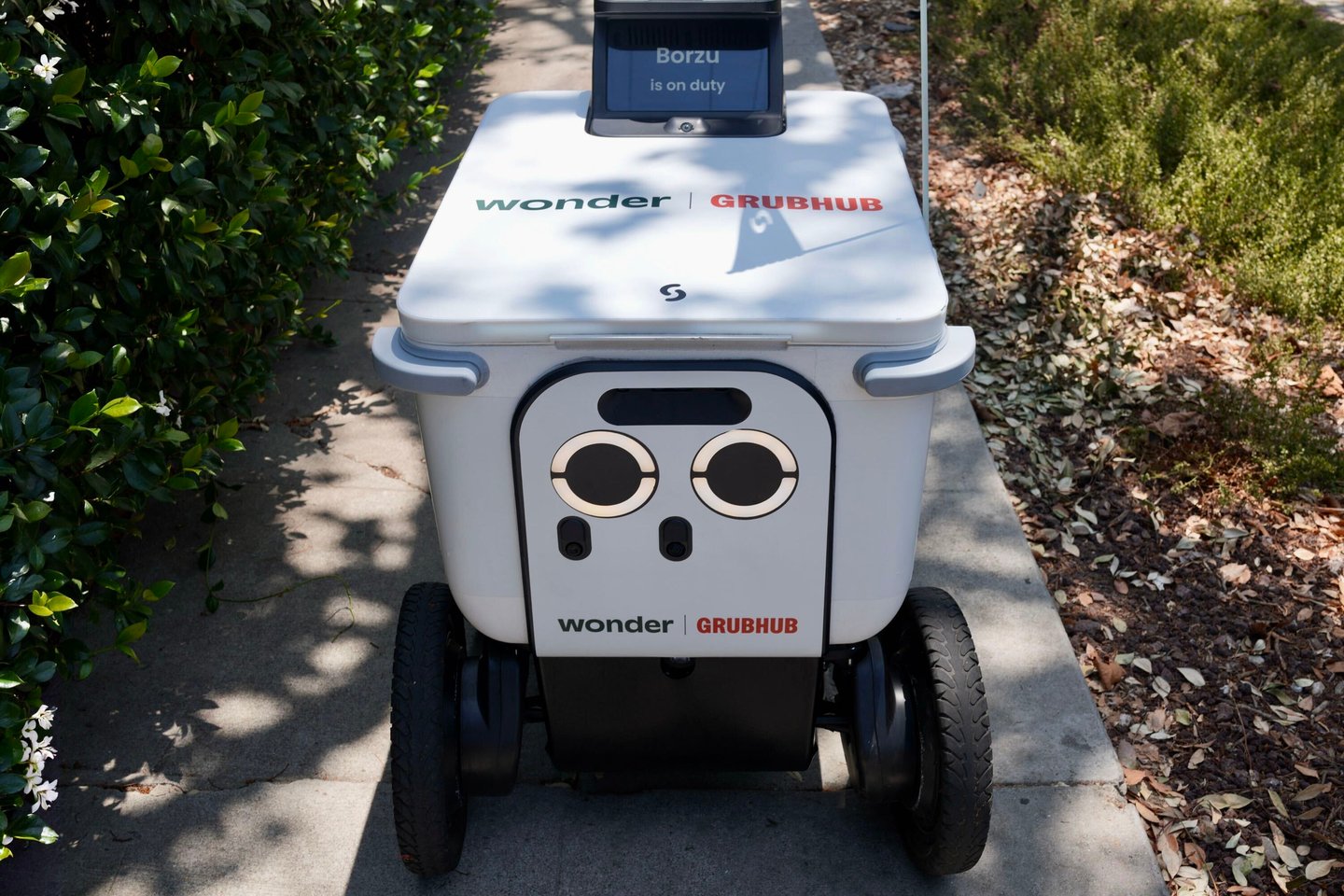
Delivery robotics has produced a lot of press releases and comparatively few multi-city rollouts. Wonder and Grubhub's move to add Chicago, Los Angeles, and Alexandria this week is notable precisely because it is not another single-market pilot. It took the Jersey City launch from October 2025 roughly ten months to generate enough operating data to justify expansion into three new metros simultaneously. For any retail or logistics executive tracking robotics ROI timelines, that ten-month figure is a more useful data point than the announcement itself.
The Alexandria location matters more than it looks. It is the first Wonder site outside New Jersey to offer robotic delivery, which means the company is testing whether the unit economics that worked in its home market translate to a different metro with different density, labor costs, and delivery radius. If Alexandria performs comparably, that is the real signal that this scales nationally rather than being a New Jersey-specific success story.
Grubhub's distribution is the actual asset here
Serve Robotics has run pilots with several delivery partners, but Grubhub's footprint of more than 415,000 retailers across 4,000-plus US cities is a different scale of distribution entirely. This is Grubhub's first partnership with Serve, and it gives the robotics company a path to volume that individual city contracts cannot match on their own. For Serve, landing inside an established delivery network with existing merchant relationships and customer demand is a far more efficient go-to-market than building city-by-city relationships with individual restaurants directly, one storefront at a time.
This is the pattern retail and logistics leaders should expect to see repeat across the delivery robotics sector over the next few years. The eventual winners will not necessarily be the robotics companies with the best hardware or the longest battery life, they will be the ones that get embedded inside networks that already have merchant density and proven customer demand. Evaluate delivery robotics vendors on the strength and reach of their distribution partnerships as much as, if not more than, their technology specifications, because distribution is what turns a working robot into a viable business line.
The 650 million dollar Grubhub bet starts showing its logic
Wonder's acquisition of Grubhub from JustEatTakeaway.com for 650 million dollars in November 2024 looked, at the time, like a food-hall company buying distribution it could not otherwise access quickly. This robotics expansion is one of the clearer early signals of what that combination is meant to produce operationally: Wonder gets to test its physical retail and kitchen model against Grubhub's delivery network and now its robotics partnerships, rather than building demand from scratch.
For CFOs and corp dev teams evaluating similar delivery or dark-kitchen acquisitions, this is a useful case study in sequencing discipline. Wonder did not rush robotics into Grubhub's network on day one. It waited nearly two years post-acquisition, ran a single-city pilot for ten months, and only then committed to a three-city expansion once the Jersey City numbers held up. That patience is worth noting given how much pressure exists industry-wide to announce AI and robotics initiatives before the underlying unit economics are actually proven at even a single-site scale, let alone across multiple markets with different cost structures.
A robot mascot is a tell about the real adoption barrier
Wonder and Grubhub introduced Chomp, a hamburger-themed robot mascot, specifically for advertising purposes alongside this rollout, and that detail is more telling than it first appears. The biggest unsolved problem in sidewalk robot delivery has consistently been public comfort and acceptance of robots navigating shared pedestrian space, well ahead of any remaining hardware or routing challenges. A friendly mascot is a low-cost way to address that perception problem directly, giving the robots a recognizable, approachable identity rather than relying on neutral, unbranded hardware to earn public goodwill on its own over time.
Retail and CX leaders evaluating any physical automation deployment, whether robots, drones, or in-store devices, should take this seriously as a template rather than dismissing it as marketing fluff. The engineering problem and the public perception problem are separate workstreams that need separate budget, separate owners, and separate success metrics inside a rollout plan. Companies that treat perception as an afterthought, bolted on after the hardware ships, tend to see meaningfully slower adoption curves and more local pushback than the underlying technology would otherwise support once it is actually working reliably.
What this means for the broader last-mile automation race
This expansion lands the same week Uber announced a drone delivery partnership with Zipline aimed at 1 million daily deliveries by 2029. Ground robots and drones are no longer competing concepts on a whiteboard, they are simultaneously moving into commercial deployment from different companies with different economics. Sidewalk robots work best in dense urban cores with short delivery radii, exactly the profile of Chicago, Los Angeles, and Alexandria's more walkable neighborhoods, while drones target suburban and exurban delivery where sidewalk infrastructure does not exist.
Retail and QSR operators should stop treating last-mile automation as a single strategic bet and start mapping which technology fits which store footprint block by block. A chain with dense urban locations and a chain with suburban strip-mall locations should not be evaluating the same vendor, the same contract terms, or the same rollout timeline, because the physical environments demand fundamentally different equipment. The Wonder and Grubhub expansion is useful less as a standalone story and more as a marker of how fast the ground-robot side of that map is now filling in, city by city, ahead of most operators' actual planning cycles.