What GMI Cloud is financing
GMI Cloud, a US-based Nvidia cloud partner backed by Taiwan's GMI Technology and Realtek Semiconductor, is raising debt against its GPUs. Bloomberg reported on July 14 that the company is seeking a multi-tranche package of about NT$20.45 billion, roughly $635 million, supported by customer contracts for graphics processors, with CTBC Bank coordinating. The trade publication IFR detailed the syndicated piece: a term loan of NT$14.05 billion, about $438 million, raised for GMI Cloud Phoenix, the company's Taiwan unit. Sources size the effort differently, but the structure is consistent: contracted GPU capacity pledged as the collateral behind bank debt.
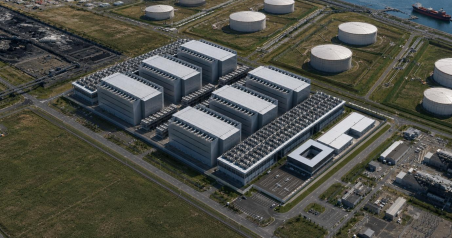
The financed vehicle is narrow and specific. The syndicated loan funds Project Phoenix, a ringfenced special purpose vehicle covering 7,488 Nvidia GPUs housed in a 16-megawatt facility IFR calls the Taiwan AI Factory, against server capital expenditure of roughly $546 million. GMI Cloud overall runs more than 30,000 GPUs spanning Nvidia's H100, H200 and Blackwell generations across US data centers. CTBC serves as mandated lead arranger and bookrunner. The deal is modest in dollar terms next to the tens of billions moving through American AI infrastructure, yet its structure is what makes it notable rather than its size.
The structure puts Nvidia at the top
The mechanics reveal how GPU lending actually works when the chipmaker is involved. According to IFR, total debt on the vehicle is capped at 55% of the value of GMI's master supply agreement with Nvidia, and drawdowns are limited to 80% of the first two phases of capital expenditure. Those conservative ratios exist because the underlying asset, a GPU, depreciates fast and can be obsoleted by the next Nvidia generation. Lenders want a thick equity cushion beneath them. The collateral extends beyond the hardware to the stream of contracted revenue those GPUs are expected to generate over the loan's life.
Nvidia's role is the striking part. The chipmaker provides credit support by agreeing to lease any unused capacity for up to six years, a backstop that gives banks comfort the GPUs will earn even if GMI's own customers fall away. In exchange, Nvidia sits high in the payment waterfall. IFR describes it holding a "quasi-super-senior position for its shareable revenue, ahead of bank fees, interest and principal." The supplier of the asset is also first in line to be paid from the cash it helps generate, a circularity that has become a defining feature of how this buildout is funded.
Why APAC's first matters
IFR calls GMI Cloud Phoenix the first borrower from Asia Pacific to bring GPU-backed financing into the syndicated loan market, where debt is sold down to a group of banks rather than held by a single lender. That milestone signals that contracted AI compute is maturing into a recognized collateral class in a new region. Syndication spreads risk across multiple institutions, which is how an asset type graduates from niche private credit into mainstream bank balance sheets. Getting Asian commercial banks comfortable underwriting depreciating silicon on the strength of usage contracts is a meaningful step in normalizing the instrument.
The precedent has been building in the United States, where neoclouds like CoreWeave and Lambda pioneered borrowing against GPU fleets and Nvidia has increasingly stepped in to backstop the offtake. GMI's deal carries that template into Taiwan, close to where the chips are actually manufactured. For a region racing to stand up sovereign and commercial AI capacity, unlocking bank debt against compute contracts widens the pool of capital available to operators who lack hyperscaler balance sheets. Expect more Asian GPU-backed financings to follow now that a syndicated structure has cleared the market and set reference terms.
The risk sitting under the collateral
The elegance of pledging contracted GPU revenue hides a real hazard: everything depends on the durability of both the contracts and the hardware. AI compute demand is intense today, yet the assets securing these loans lose value quickly as Nvidia ships faster chips on a roughly annual cadence. A Blackwell GPU financed at par in 2026 may be a discounted commodity by the time the loan matures. Lenders lean on the customer contracts and on Nvidia's capacity backstop to bridge that gap, which is why the chipmaker's involvement functions as a structural necessity for the debt to clear rather than a courtesy.
That dependence concentrates risk in a single vendor. If demand for a given GPU generation softens, or if Nvidia's own priorities shift, the credit support underpinning these structures could look different. The lesson for anyone evaluating a neocloud provider is to look past headline capacity and ask how the fleet is financed, how exposed it is to one supplier, and what happens to service continuity if the debt stack comes under stress. Compute you rent from a thinly capitalized operator carries counterparty risk that a hyperscaler contract does not, and financing structure is where that risk hides.
The read for enterprise buyers
Most CTOs will never touch a syndicated GPU loan, yet these financings shape the market they buy in. The whole point of pledging GPUs and contracted revenue as collateral is to let operators acquire chips faster than their own equity would allow, which adds capacity to a supply-constrained market. More debt flowing into GPU fleets means more instances available to rent, and over time, downward pressure on the premium that scarcity has commanded. GMI's deal is one data point in a broader shift toward treating AI compute as a financeable, income-producing asset rather than a pure capital cost.
For buyers, the practical guidance is diligence. When you sign with a neocloud or specialized GPU provider, understand its capital structure the way you would a critical SaaS vendor's runway. Ask who its lenders are, how much of its fleet is leveraged, and whether a hardware supplier sits senior to operations in a downturn. The rise of GPU-backed lending is broadly good for availability and pricing, and it introduces financial fragility that a procurement team should price into its vendor risk assessments. In this market, how your compute is financed is now part of how reliable it will be.