One site, two tenants, 9 billion dollars
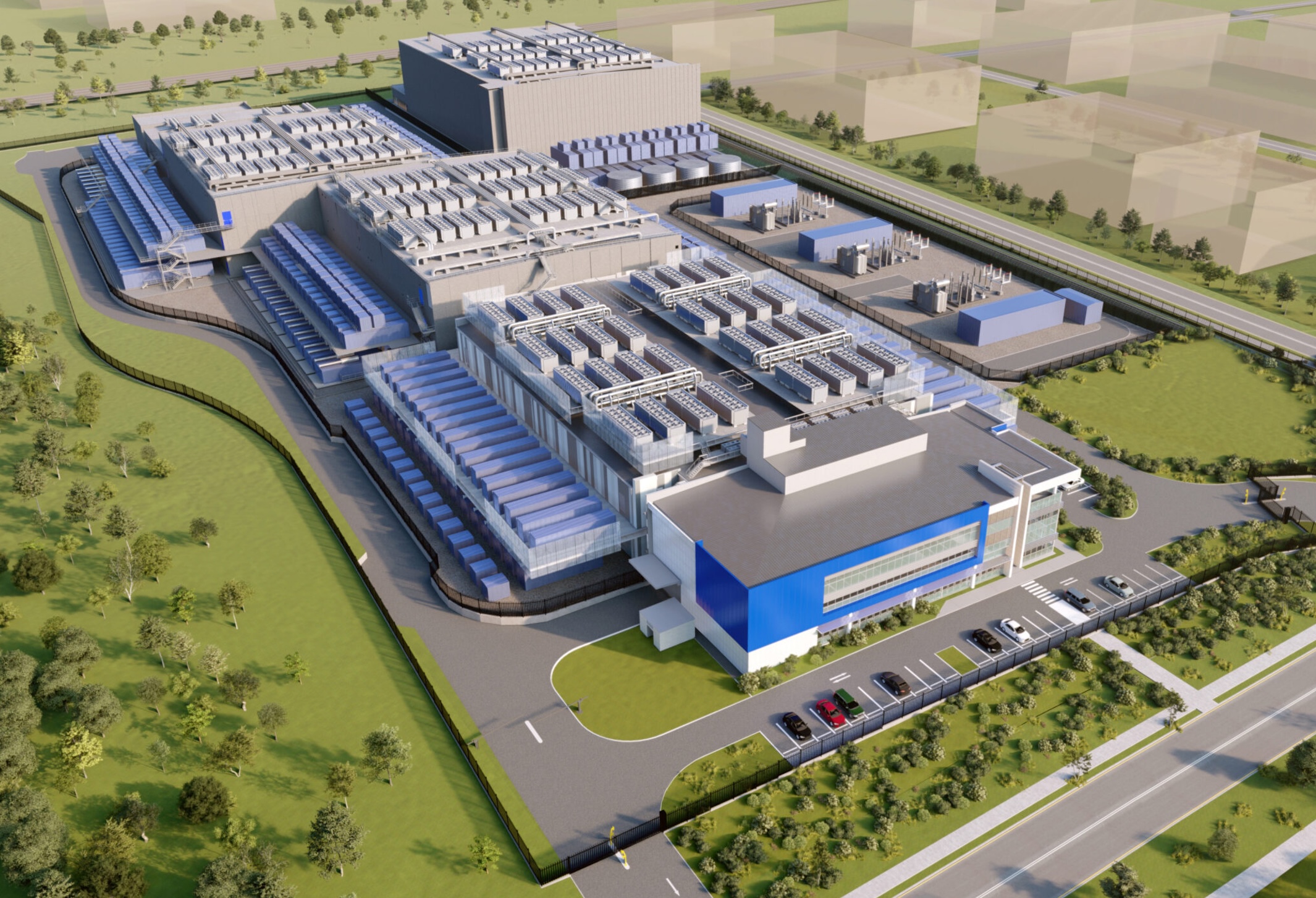
Cipher Digital, the company still widely known by its former name Cipher Mining, announced on October 10 that it has extended its lease agreement with AI cloud provider Fluidstack at the Barber Lake campus in Colorado City, Texas, stretching the site's contracted life from 10 to 20 years. The extension alone is expected to generate approximately $5.2 billion in additional contracted revenue, and total contracted revenue at the single site now exceeds $9 billion, up from $3.8 billion before the amendment. Cipher Digital CEO Tyler Page tied the extension directly to the facility's value, saying the longer term and added revenue reflect what the company believes it is building at the site.
Alongside the Fluidstack amendment, Cipher signed a separate binding commitment with an unnamed AI lab for a new 10-year lease on economic terms substantially similar to Fluidstack's. That second lease will begin only once Fluidstack's extended term ends, effectively queuing two full tenancies back to back at the same facility and giving Cipher two decades of visibility into a single site's revenue. The deal was first struck on September 25 and detailed more fully in the October 10 filing, meaning the full economics only became public in the past few days.
From bitcoin rigs to a fully leased 300 megawatt AI campus
Barber Lake's build-out has happened in stages that trace the broader industry's pivot from crypto mining to AI hosting. Fluidstack's original deal, signed in September 2025, covered 168 megawatts of critical IT load. A November 2025 expansion added another 39 megawatts, bringing the total to 207 megawatts, and Cipher now says the newly expanded agreement covers the entirety of Barber Lake's 300 megawatt capacity. That progression, from a partial lease to full-site commitment in roughly a year, mirrors how quickly bitcoin miners with power infrastructure and interconnection rights have been able to re-platform as AI data center landlords once a credible tenant signs on.
The delivery schedule has also shifted. Cipher originally targeted 168 megawatts online by September 2026 and the remaining 39 megawatts by January 2027, but the company now expects individual data halls to come online between the fourth quarter of 2026 and the first quarter of 2027, with rent starting as each hall is handed over. Cipher attributed the revised timeline to design changes and evolving tenant requirements rather than any site-level setback, a framing worth noting given how often delivery slippage in this sector gets attributed to vaguer causes.
The cost-sharing structure is the part worth studying
Buried in the lease economics is a cost overrun structure that enterprise infrastructure buyers evaluating similar deals should pay close attention to. Cipher absorbs the first $359.3 million of any costs above the original construction budget itself, meaning the landlord takes the first layer of execution risk. Beyond that threshold, the tenant reimburses half of any further overruns through additional rent, a structure explicitly designed to still give Cipher a contracted return even if costs run past the initial budget. That is a meaningfully different risk allocation than a straightforward fixed-price lease, and it signals that even sophisticated AI tenants like Fluidstack are willing to share construction cost risk in exchange for locking in long-term capacity.
For enterprises negotiating their own data center or colocation agreements, this kind of tiered overrun-sharing clause is becoming a more common feature of long-term AI infrastructure leases, replacing the simpler fixed-rent models that dominated traditional colocation. It reflects how volatile construction costs, equipment lead times and interconnection timelines have become across the industry, to the point that even landlords with strong balance sheets are unwilling to fully underwrite cost risk on a 20-year commitment without some tenant participation.
What the second, unnamed tenant signals
Cipher's decision to disclose a second, unnamed AI lab tenant at terms "substantially similar" to Fluidstack's, without naming the company, is itself a data point about how AI compute leasing has matured. A year ago, nearly every converted crypto site announcing a new AI tenant named that tenant prominently as a credibility signal. That Cipher can now structure and announce a nine-figure, decade-long commitment with an anonymous counterparty, and have investors react to the structure rather than demand the name, suggests the market has moved past needing a marquee logo to validate these deals.
It also suggests Barber Lake's power and interconnection position, rather than any single tenant relationship, has become the asset worth pricing. With the entire 300 megawatts now committed across two tenants for a combined multi-decade horizon, Cipher has effectively de-risked the site from any single customer's business performance, a meaningful shift from the early days of crypto-to-AI conversions when a single tenant's health determined the entire site's value. The commitment also means Cipher no longer needs to court a marquee hyperscaler name to validate the site: two overlapping long-term leases, stacked back to back, now do that work on their own, regardless of which logo eventually appears on the second tenant's signage.
The broader read for neocloud economics
Barber Lake's trajectory, from 168 megawatts partially leased to a fully committed 300 megawatt, two-tenant, 20-year, over $9 billion site in roughly thirteen months, is one of the cleanest illustrations yet of how much value converted power and interconnection assets have accrued during the AI buildout. It also shows that the economics work even for sites without a hyperscaler as the anchor tenant, since Fluidstack itself is a neocloud rather than AWS, Microsoft or Google, meaning tenant credit quality at this tier is being underwritten on contracted revenue structure rather than counterparty brand alone.
For CIOs and infrastructure buyers assessing neocloud providers like Fluidstack as an alternative to hyperscaler capacity, the Barber Lake numbers are a useful proxy for how committed that underlying capacity actually is. A tenant locking in 20 years of lease obligations at a single site, with cost-overrun exposure built into the contract, is making a far more durable bet than a short-term GPU rental arrangement would imply. That durability cuts both ways: it is reassuring for enterprises relying on Fluidstack's capacity, and it is a reminder of just how much long-dated financial engineering now underpins even mid-tier players in the AI infrastructure stack.