What happened, in sequence
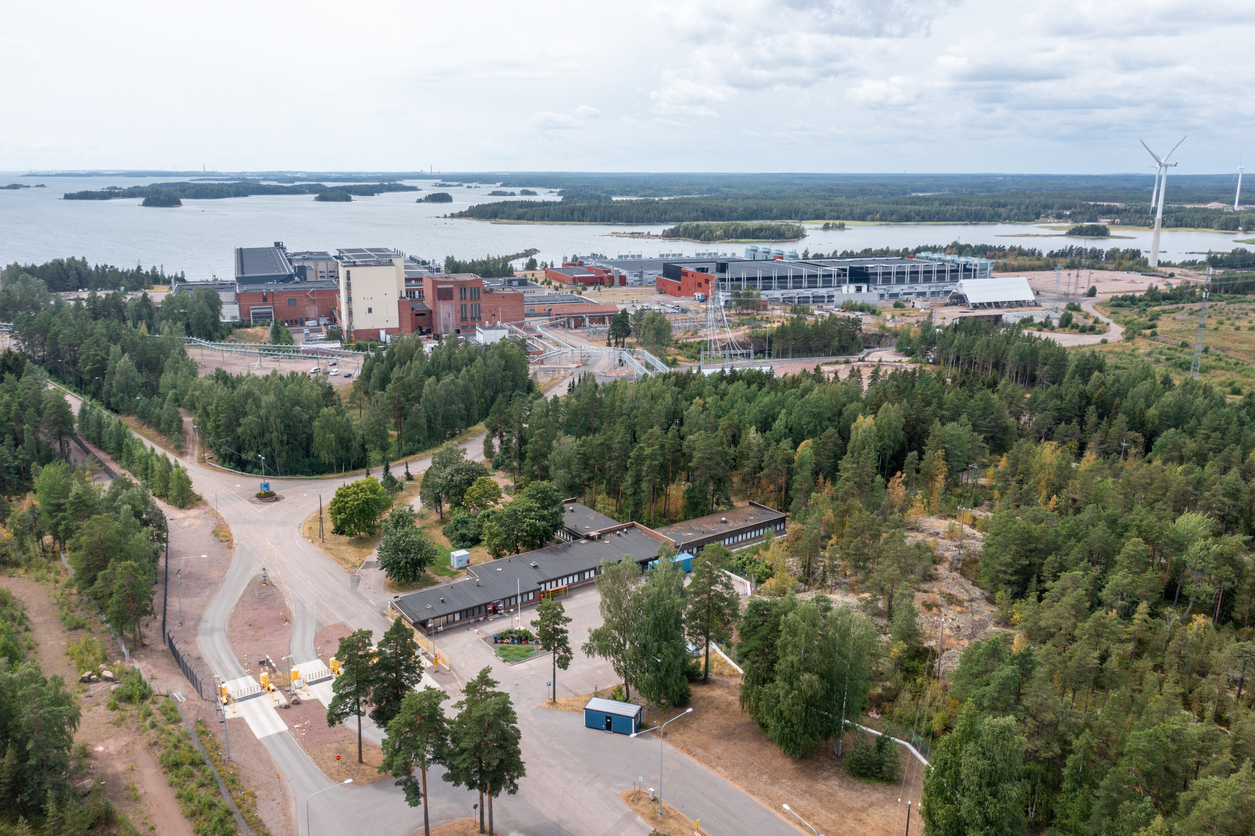
Ukrainian drones struck Yandex data centers across Russia's Ryazan, Kaluga, and Vladimir regions between October 8 and 11, in what now reads as a sustained, multi-day campaign rather than a single isolated incident. The first confirmed strike hit a facility in Sasovo, within the Ryazan region, on October 8, with Russian state media citing Yandex on the resulting power outage at that site. A second wave of strikes followed over the next three days, culminating in a Sunday, October 11 attack that fully suspended operations at the Vladimir facility, with Yandex publicly stating it was working to restore connectivity there afterward.
No injuries were reported in connection with either incident, according to available reporting. Yandex said it moved workloads over to other facilities after the earlier strikes in the sequence, and it warned customers directly that creating new cloud resources might be limited while that migration was underway. The company operates five data centers across Russia in total, and the fact that strikes landed across three of its regions within just four days represents a deliberately sustained campaign against its infrastructure rather than a single opportunistic or isolated event.
The numbers show how fast concentration becomes a single point of failure
NetBlocks reported that Russian cloud connectivity fell to roughly 30 percent of normal levels following the Vladimir strike specifically, with the country's main network dropping to about 63 percent of its baseline over the same period. Cloudflare Radar data separately showed automated traffic originating from Yandex's own network falling by approximately 94 percent compared with the second half of September, a drop large enough that it is visible clearly in third-party internet monitoring data well beyond Yandex's own internal reporting on the incident.
The reason the impact proved so severe traces back to one specific structural detail buried in the reporting: the Ryazan site alone houses two of Yandex's three supercomputers used for AI development work. A company can genuinely operate five separate data centers spread across different regions and still have its effective, most critical AI compute capacity concentrated in a single geography if two out of three of its most important systems happen to sit in the same place. Facility count, in other words, is simply not the same metric as actual resilience against a coordinated regional event.
What actually went down for end users
The affected services spanned payment processing, consumer-facing websites, financial trading platforms, Yandex's own AI chatbot product, and smart home devices connected through Yandex's cloud infrastructure. A regional newspaper's digital edition reportedly became inaccessible during the outage window, alongside Yandex Disk and Yandex Documents, two widely used consumer productivity products. This was not a narrow technical outage confined neatly to one isolated product line. It cascaded simultaneously across consumer, financial, and AI services because all of them shared the same underlying regional infrastructure without visible separation.
Yandex's own public statement that it was very difficult to predict when service would fully return is itself notable and worth dwelling on. That is the kind of admission most companies actively avoid making in public during an active incident, and it signals that even the operator's internal recovery timeline estimates were not reliable enough to share confidently within the first 72 hours after the strikes began. Any enterprise disaster recovery plan that assumes a cleanly knowable recovery window following a regional infrastructure event should be stress-tested directly against that kind of honest uncertainty.
Why this is not just a Russia story
It is tempting to file this entire episode under geopolitical risk specific to an active war zone and move on without drawing further lessons from it. That framing misses the transferable part of the story. Any enterprise running critical workloads across infrastructure that looks like genuine geographic diversity on paper, spanning multiple facilities, multiple availability zones, multiple labeled regions, can still carry a hidden concentration risk if the specific systems that matter most to the business happen to sit physically close together in practice. Standard cloud architecture diagrams rarely surface that kind of correlated regional risk clearly to the people making continuity decisions.
The broader context here also matters for completeness. Russia has been striking Ukrainian data centers since September in a parallel campaign of its own, with an attack on September 23 disrupting fixed-line internet service for roughly 100,000 households in and around Kyiv for an extended period. Physical attacks on data center infrastructure are clearly no longer a theoretical tail risk confined to an abstract line in a conflict-zone risk register somewhere. They are an active, ongoing category of real-world events happening right now, and enterprise insurance coverage and business continuity planning should reflect that shift directly.
What to actually check in your own environment
Pull the actual physical location data for your most critical systems, not simply the logical region or availability zone labels your cloud provider assigns in its console and documentation. Ask your infrastructure team specifically whether your disaster recovery failover targets sit close enough to your primary production site that a single regional event, physical or otherwise, could plausibly take out both simultaneously. Many disaster recovery architectures pass every scheduled tabletop exercise cleanly simply because the exercise itself never actually tests for this kind of correlated regional failure happening in practice.
This check is especially relevant for any AI workloads your organization has concentrated in a small number of specialized facilities, since AI infrastructure tends to cluster tightly around power and cooling availability rather than around deliberate geographic dispersion for resilience. If your own frontier AI capacity, much like Yandex's, happens to sit mostly in one place simply because that is where the power and the chips landed first, your organization carries the same structural exposure Yandex just demonstrated publicly this week, without needing an actual drone strike to prove the point to your own board.