The headline number
Gartner expects worldwide IT spending to grow 15 percent in 2027, reaching 7.35 trillion dollars, the first time the global IT budget has crossed the 7 trillion dollar line. The forecast, issued in October 2026, frames next year's growth as the fastest acceleration in recent memory, driven almost entirely by enterprises building out AI capability rather than by routine technology refresh cycles. John-David Lovelock, a distinguished vice president analyst at Gartner, said the market forces are reinforcing spend around AI infrastructure, which he calls the most attractive opportunity in global IT spending right now.
For a CIO building a 2027 budget, the number itself matters less than its composition. A 15 percent jump driven by discretionary software upgrades is a very different planning problem than one driven by AI infrastructure that competitors are already buying. Gartner's framing puts this firmly in the second category, which means the spending increase is less a choice than a competitive floor rising under every enterprise at once, whether or not a given CIO believes the AI investment case is proven yet.
Where the next trillion dollars goes
Gartner attributes the next trillion dollars of IT spending growth specifically to AI infrastructure and AI software, naming AI optimized servers, AI optimized infrastructure as a service, and AI software platforms as the fastest growing lines. That is a narrower claim than a general statement that AI spending is up, and it matters for procurement: the growth concentrates in compute and platform layers rather than spreading evenly across every IT budget line. Traditional software, devices, and communications spending are still growing in Gartner's model, but at a materially slower pace than the AI infrastructure categories carrying most of next year's increase, which is the detail a CIO building a budget narrative for the board actually needs. It also means a line by line review of next year's capital plan is worth doing now, before the budget gets locked around assumptions Gartner's own data no longer supports.
This concentration has a practical consequence for vendor negotiations. CIOs who assumed broad softening in enterprise software pricing because of AI efficiency gains should reconsider that assumption, because the money Gartner is tracking is flowing toward infrastructure providers and AI platform vendors, not away from software budgets generally. A 2027 plan that assumes AI will shrink overall technology spend runs against what Gartner's forecast says is happening industry wide. The more defensible planning assumption is that software renewal pricing holds roughly flat at best, while the AI infrastructure line in the budget grows fastest of all, and finance teams should be told that explicitly before they build next year's numbers on the opposite expectation.
The memory problem nobody priced in
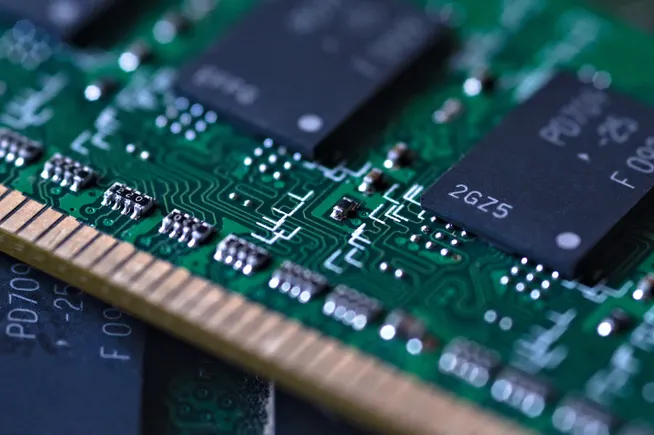
Gartner's forecast flags a specific and unusually concrete cost driver: memory chip prices have more than doubled over the past year, driven by data center demand for AI workloads. Lovelock was blunt about the mechanics: "Everything that has a memory chip or a computer chip in it is going up in price and there's no negotiating." Gartner calls this effect memflation, and it expects the pressure to persist through 2027 and likely into 2030, well beyond a single budget cycle that could be absorbed and forgotten.
That inflation does not stay contained to data center hardware. It ripples into PCs, laptops, tablets, phones, storage, and networking equipment, raising the cost of routine device refresh programs that have nothing to do with a CIO's AI strategy. The practical risk is budget creep in categories that finance teams see as fixed and predictable. A refresh cycle priced at last year's component costs will come in over budget in 2027, and Gartner's own framing suggests that gap is structural, not a one time anomaly.
Why today's cheap AI will not stay cheap
Lovelock's sharpest warning in the forecast is aimed directly at CIOs who have gotten comfortable with current AI pricing: "As much as CIOs are worried about the cost of AI today, it's not going to be this low again." The subsidized token pricing and generous model access many enterprises rely on today function as a usage driver for AI vendors racing to build market share, not as a stable floor. Gartner's own observation that the market currently has more capacity than demand explains why prices are soft now, and why that softness is a temporary artifact of the build out phase rather than a durable condition.
That has direct implications for any multi year AI business case built on today's unit economics. A pilot that looks profitable at current token prices may not clear the same bar once subsidies fade and demand catches up to the capacity hyperscalers have built. CIOs presenting AI ROI cases to their boards should stress test those numbers against a meaningfully higher cost basis, rather than assuming the trend line simply continues downward the way compute costs historically have.
The excess capacity paradox
The uncomfortable detail buried in Gartner's own commentary is that AI infrastructure is currently oversupplied relative to demand, even as prices for the underlying memory and chips climb. Lovelock's observation about excess capacity sits awkwardly next to the memflation story, and Gartner does not fully resolve the tension in its public remarks. The likely explanation is that component costs are set by broader global demand for memory across every device category, while AI specific compute capacity is a separate market that happens to be running ahead of current enterprise usage.
For a CIO, that paradox is actually useful information. The near term risk looks like a hardware cost environment that makes every purchase more expensive regardless of how much AI capacity is actually sitting idle, rather than a capacity shortage that forces rationed access. Vendors with excess inventory or capacity may still compete aggressively on price for compute access even as the components inside that infrastructure get more expensive to manufacture, which rewards a CIO who negotiates contracts line by line instead of accepting bundled pricing, and who separates the compute access question from the underlying hardware cost question when reading any vendor's price sheet.
What CIOs should actually do with this forecast
Build the 2027 budget around two separate cost curves instead of one. Treat AI compute and software access as a price that could rise sharply once current subsidies unwind, and treat hardware refresh as a category now subject to sustained memory driven inflation that has nothing to do with your own AI adoption pace. Gartner's own forecast through 2030 gives cover to lock in multi year hardware contracts now rather than betting on component prices softening on their usual cycle.
Use the forecast as leverage in vendor conversations instead of letting it talk you into delaying AI investment. The spending growth Gartner describes is happening across the industry regardless of any single enterprise's pace, so the realistic planning question is how precisely to time and structure that spend against a hardware cost curve that Gartner says will not ease for years. A CIO who sits out this cycle waiting for prices to fall is, on Gartner's own numbers, waiting for a correction that will not arrive before 2030 at the earliest.