The same title, four different industries
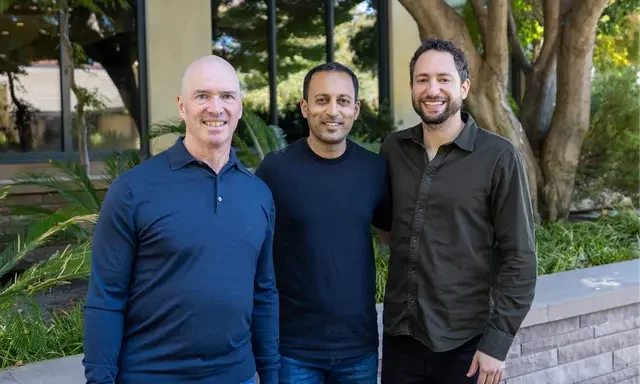
Target named Chandhu Nair as senior vice president and the company's first Chief AI Officer, pulling him from Lowe's, where he had run stores, data, AI, and innovation for the home improvement chain. Synchrony handed the same title to Nimrod Barak, who had spent recent years as managing director and head of the AI Center of Excellence at Citi, giving the consumer finance company a dedicated executive for a function that had previously been spread across risk, technology, and product teams. Ford created a Chief AI and Data Officer role for Mano Mannoochahr, who had previously run data, analytics, and AI at Verizon after six years at Travelers managing enterprise data strategy. Philips named longtime executive Shez Partovi as its first Chief AI Officer, a title layered on top of his existing operating responsibilities.
None of these companies lacked AI leadership before these hires landed. Target already employed innovation executives working on machine learning projects, Synchrony ran a model risk function inside its credit operations, Ford had a sizable data organization supporting manufacturing and connected vehicles, and Philips had Partovi already running Enterprise Informatics for its health technology business. What changed in each case is that the board decided AI specifically needed a named, accountable owner with a direct seat at the leadership table, rather than treating it as a capability that could keep living inside an existing function's broader mandate indefinitely.
Why now, and why these four sectors
Retail, financial services, manufacturing, and healthcare technology share a pattern that explains the timing: heavy regulatory exposure, large customer-facing surfaces where AI decisions touch real people, and boards that have spent roughly a year asking who actually owns the risk when a model gets something wrong. A Chief AI Officer gives directors a single name to call when a chatbot mishandles a claims decision, a pricing algorithm draws a lawsuit, or a manufacturing model misreads a safety signal on the floor. That clarity has real value to a board trying to demonstrate oversight to regulators and shareholders alike.
The title also answers an internal political problem that has been building inside large enterprises for two full budget cycles. When AI initiatives sit simultaneously inside IT, marketing, operations, and individual business units, every function ends up building its own shadow AI effort, duplicating vendor contracts and leaving nobody accountable for the tradeoffs between speed and risk. Naming a CAIO forces those competing claims onto a single desk, which is precisely why CIOs watching from other industries should expect a version of this role to appear on their own org chart well before the next fiscal year closes.
The hires all came from inside the machine
Look closely at where these four executives came from and a clear pattern holds across every single hire. Nair ran AI and innovation at a direct retail competitor before Target poached him. Barak built a major bank's AI center of excellence from the ground up before Synchrony recruited him into a nearly identical mandate at a larger scale. Mannoochahr held the equivalent data and AI leadership role at a telecommunications giant before Ford brought him in to replicate that structure for a manufacturer. None of the four came from a frontier AI lab, a management consultancy, or an academic research post, despite how commonly those backgrounds get floated as ideal preparation for this kind of seat.
That consistency looks like a deliberate signal rather than coincidence. Boards that created these roles were not hiring a visionary to deliver keynotes and shape public narrative. They were hiring someone who had already built governance frameworks, procurement discipline, and deployment muscle at genuinely comparable scale, and who could become productive inside a single quarter rather than spend a year learning the company. Enterprises now planning their own Chief AI Officer search should treat recent operating experience at a peer-scale company as the non-negotiable filter, well ahead of raw technical depth or external public profile.
Reporting lines reveal the real power structure
Three of these four new Chief AI Officers report at or near the very top of the house rather than up through an existing CIO. That placement matters considerably more than the title on the business card, because it determines whether the CAIO can actually override a business unit's AI roadmap when conflicts arise or whether the role can only advise from the sidelines. A CAIO who reports through a traditional IT organization inherits that organization's annual budget cycle and whatever credibility problems IT already carries with the rest of the business. A CAIO who reports to the chief executive or a chief transformation officer starts the job without either of those constraints weighing on day one.
Philips took a visibly different path by letting Partovi keep his existing Enterprise Informatics mandate layered underneath the new Chief AI Officer title. That hybrid structure sidesteps the classic failure mode of a brand-new CAIO who holds formal authority on an organization chart but lacks the existing relationships, budget lines, and institutional trust needed to make that authority stick in practice. CIOs currently negotiating their own company's AI governance structure should watch closely which of these two models survives the next eighteen months, because the answer will tell the rest of the market which reporting line genuinely produces results rather than just a tidier chart.
What this means for the CIO and CTO already in the building
A newly created CAIO role does not automatically become a threat to an existing CIO or CTO. It does mean, however, that a fourth senior executive now holds a legitimate claim on the AI budget, the vendor relationships, and the governance framework that previously belonged cleanly to one or two leaders. The enterprises handling this transition best are drawing clean operational lines early in the process: CIOs retain ownership of the infrastructure and security stack, CTOs retain ownership of product and engineering roadmaps, and the new CAIO owns model selection, risk tolerance, and the operating model for autonomous agents moving into production.
Enterprises that skip that explicit line-drawing exercise are quietly setting up a turf fight that will slow down the exact production AI rollout the board hired a Chief AI Officer to accelerate in the first place. The fastest-moving companies in this current wave treated the new hire as a welcome occasion to formalize decision rights that had stayed genuinely ambiguous for roughly two years running, rather than as the opening move in a reorganization to be contested department by department.
The bench this hiring wave is building
Every one of these four hires was pulled from a surprisingly short list of large enterprises that built out serious AI centers of excellence early in this cycle: Lowe's, Citi, Verizon, and, by way of Partovi's earlier career, Amazon Web Services and Dignity Health. That bench of proven operators is now smaller by four meaningful names, and the next cohort of banks, telecoms, and retailers racing to fill an identical seat will be fishing from an increasingly shallow and increasingly contested talent pool over the coming year.
That scarcity should directly shape how other enterprise leaders plan their own search timeline. Waiting indefinitely for a dream candidate who combines deep technical fluency with hard-won operating scars from a comparable company will likely mean losing the search entirely to a competitor willing to move faster on a slightly less polished profile. The four companies profiled here did not wait for a perfect match to surface. They moved decisively on proven operators already doing adjacent work, and the market has so far rewarded that speed over any amount of additional pedigree.