Two Numbers That Do Not Fit on the Same Page
The first quarter of 2026 produced a pair of figures that, placed side by side, tell the whole story of the AI infrastructure race. Data center lease commitments surged past 850 billion dollars, a 204 percent increase over the same quarter a year earlier and a 200 billion dollar jump from the prior quarter alone. Oracle led with roughly 250 billion in total commitments, Microsoft sat near 197 billion after adding 41 billion, and Meta reached about 183 billion after a single quarter increase of 79 billion. By any historical measure, this is the fastest accumulation of computing infrastructure commitments the industry has ever recorded.
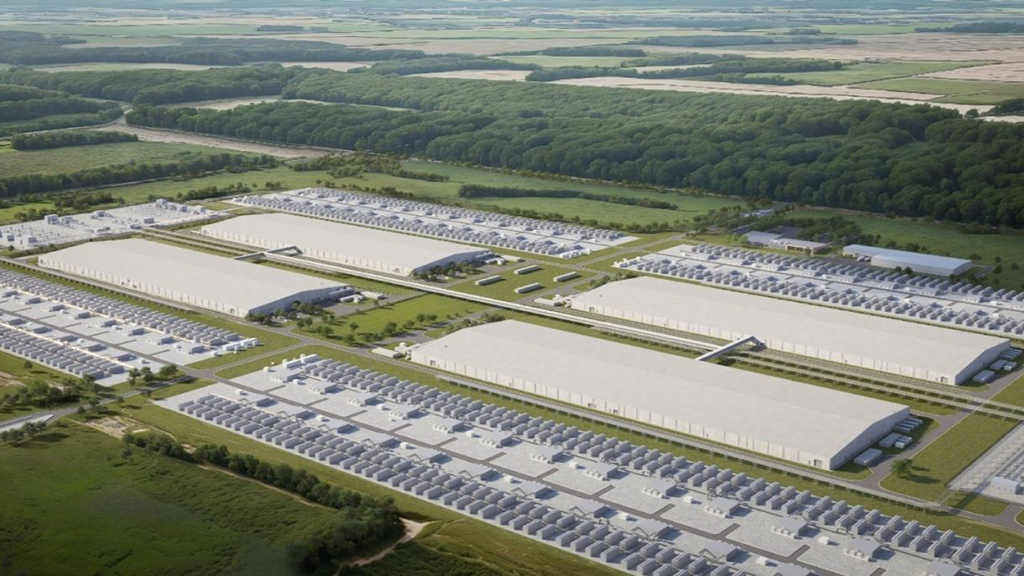
The second number complicates the triumph. In that same quarter, according to Data Center Watch, 130 billion dollars worth of US data center projects were blocked or delayed. Google walked away from a one billion dollar project in Franklin Township near Indianapolis. Amazon's 3.6 billion dollar Project Blue in Tucson drew organized resistance. The industry is committing capital faster than it can secure the physical and political permission to spend it. That gap, between money pledged and shovels in the ground, is the defining tension of the cloud buildout in 2026, and it is widening.
The Bottleneck Was Never the Chips
For two years the constraint on AI infrastructure was framed as silicon. Whoever could secure the most accelerators would win. That framing is now obsolete. The binding constraints have moved to power and permission, and neither can be solved with a bigger purchase order. A gigawatt of committed capacity means nothing without a grid connection to feed it and a community willing to host it. The hyperscalers have discovered, expensively, that the last mile of the AI buildout runs through zoning boards, utility interconnection queues and local ballot measures, none of which respond to the pace that capital markets now expect.
The projects that are succeeding reveal the new playbook. Bitzero signed a 15 year, 2.6 billion dollar lease with OneQode for 110 megawatts in Norway, where power runs at 3 to 4 cents per kilowatt hour. Applied Digital locked in 250 megawatts across 15 year leases worth roughly 7 billion. As one operator described the emerging strategy, the company locks down power access, grid positioning and pricing frameworks first, then builds on top of what it has already secured. Power procurement now precedes construction, not the other way around. The competitive edge has migrated from the balance sheet to the substation.
A Political Problem Wearing a Technical Costume
The opposition is not fringe. A Gallup survey found that 71 percent of Americans oppose data centers being built near their communities, a number that makes local resistance not an exception but the baseline expectation. Lawmakers have noticed. More than 300 data center bills were introduced in the first six weeks of 2026, and 14 states floated outright moratoriums on new construction. The concerns driving this, water consumption, electricity prices, noise and the visible transformation of rural land into industrial campuses, are tangible and local in a way that abstract arguments about AI competitiveness are not.
This is the part of the buildout that spreadsheets miss. A capital expenditure model can forecast chip costs, depreciation and utilization, but it cannot easily price the risk that a county commission votes no, or that a state legislature imposes a moratorium mid construction. Yet that risk is now material to timelines and returns. The hyperscalers are learning to treat community relations and regulatory strategy as core infrastructure competencies rather than public relations afterthoughts. The firms that build that muscle will deploy their committed capital. The ones that do not will keep announcing projects that never break ground.
What This Means for the Enterprises Buying the Capacity
It would be easy to read this as a problem confined to the hyperscalers, but the consequences flow straight to their customers. When 130 billion dollars of capacity slips or dies, the supply that reaches enterprise buyers tightens, and tight supply expresses itself as price, waitlists and regional availability gaps. Organizations that assumed AI compute would follow the historical cloud pattern of ever cheaper, ever more abundant capacity may find the curve bending the other way for the workloads that matter most. Capacity planning, once a background concern, is becoming a strategic one.
The practical response for technology leaders is to build geographic and vendor flexibility into AI infrastructure plans rather than assuming any single region or provider will have headroom on demand. It also means paying closer attention to where a provider's capacity is physically landing, because a lease announced is not the same as a facility energized. We would encourage buyers to ask their providers pointed questions about the permitting and power status of the capacity they are being sold, not just the headline commitment. The 850 billion dollar number is real. So is the 130 billion that will not arrive.
The Race Has a New Finish Line
The scoreboard for the AI infrastructure race is being rewritten in real time. For two years it measured capital committed and chips acquired, and by that measure everyone appeared to be winning at once. The 2026 data forces a more honest metric: capacity actually energized and operating. By that standard, the leaders are not necessarily the biggest spenders but the operators who solved for power and permission early, in places like Norway and the handful of US jurisdictions that still welcome the industry. Money pledged is abundant. Watts delivered are scarce, and scarcity is where competitive advantage lives.
We expect the next several quarters to expose the difference between announcement and execution more starkly than the industry would like. The firms that treated grid interconnection and community consent as afterthoughts will watch their pipelines stall, while the ones that made power procurement the first step will quietly pull ahead. For an industry accustomed to solving problems by spending more, the discovery that some constraints do not yield to money is a genuine adjustment. The AI buildout has met its first bottleneck that a bigger check cannot clear.