A decade long bet on one partner
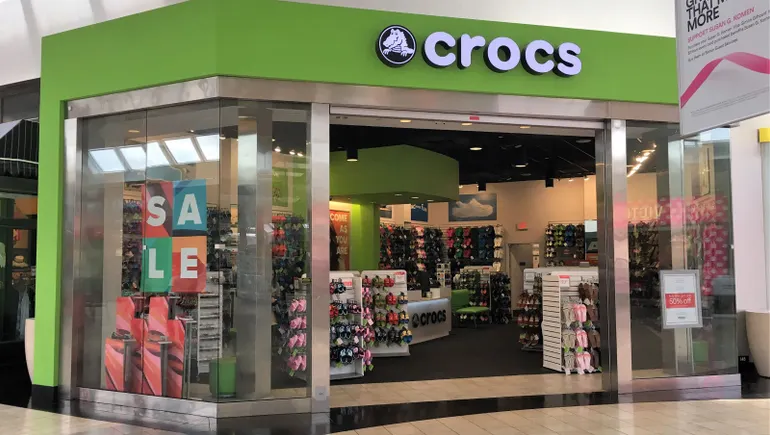
Crocs Inc has signed a 10 year strategic partnership with Infosys to modernize its core business systems and IT infrastructure using what the company calls an AI first approach. The scope covers data unification and a reduction in the operational silos that tend to build up across a multi brand company running separate systems for footwear design, manufacturing, and direct to consumer ecommerce. A decade is an unusually long commitment for a technology partnership, especially one anchored around AI, a category where the underlying tools and vendors are still changing quickly year to year.
Chief Information Officer Tom Britt framed the deal around three outcomes: optimizing operations, reducing costs, and scaling responsibly, using Infosys' delivery frameworks and automation capabilities to get there. That is a conservative, operations first framing rather than a growth or innovation pitch, which fits a company that just posted a milestone revenue quarter and is now trying to make sure its back end systems can support that scale without the cost base growing at the same rate.
Why now, and why Infosys
The timing follows the Crocs brand's first ever quarter above 1 billion dollars in revenue, a 4 percent year over year increase that gives the company real leverage and real urgency to invest in the infrastructure behind that growth. Systems built for a smaller, less complex business tend to become the bottleneck once a brand crosses a scale threshold like this one, and locking in a long term modernization partner while the business is performing well is a more defensible board conversation than doing it during a downturn.
Choosing a large systems integrator like Infosys over a narrower point solution vendor also signals the scope of what Crocs is trying to fix. This is a broader infrastructure and data unification project spanning core business systems, well beyond a single AI feature bolted onto an existing stack. That kind of foundational work is exactly the category of project systems integrators are built to execute, since it requires sustained delivery capacity across many workstreams rather than a single product implementation.
The Heydude problem sitting underneath
Crocs Inc's other major brand, Heydude, is not sharing in the same momentum. Heydude revenue fell 6 percent to 179 million dollars in the same period, even as its direct to consumer sales grew more than 7 percent, meaning the brand's wholesale business is dragging down results that its own DTC channel is not yet offsetting. That split performance across the two brands under one parent company is exactly the kind of situation a unified, AI first data and operations platform is supposed to help diagnose and fix faster than siloed systems would allow.
A modernized, unified infrastructure gives Crocs Inc's leadership a much clearer view into where Heydude's wholesale weakness is originating and how quickly the DTC growth there could offset it, assuming the new systems are built to surface that kind of cross brand comparison rather than just automating existing workflows. Crocs Inc has left undisclosed whether the Infosys partnership was scoped with Heydude's specific turnaround in mind, though the timing means any systems overhaul at Crocs Inc will inevitably have to account for two brands moving in different directions.
Two brands, one technology roadmap
That makes the stakes of the modernization higher than a typical single brand infrastructure refresh, since the new systems need to serve two businesses with different growth trajectories under one technology roadmap. A platform tuned only to the winning brand's needs would leave Heydude's turnaround effort under-resourced on the data and systems side precisely when it needs the clearest visibility into what is and is not working across its channel mix.
That tension is common in multi brand retail holding companies, and it is rarely solved cleanly. The more realistic outcome is a phased rollout where Crocs, as the stronger performing brand, gets priority access to new capabilities first, with Heydude's systems following on a delayed timeline. How Crocs Inc sequences that rollout over the coming year will be a useful signal of how seriously the company is treating Heydude's wholesale weakness as an operational priority rather than a cyclical dip it expects to resolve on its own.
What a 10 year AI infrastructure bet signals
Most retailers currently talk about AI in the language of pilots, quarters, and phased rollouts, hedging against a fast moving vendor landscape and uncertain returns. A 10 year commitment to a single integrator runs against that instinct, and it is worth asking what Crocs Inc's leadership believes it is buying with that length of commitment. The likely answer is stability and accountability, a systems integrator locked into a decade long relationship has a stronger incentive to deliver durable infrastructure than one working on a series of shorter, renewable contracts that end the moment results disappoint.
It is also a bet that the foundational layer, data unification and core systems modernization, matters more right now than chasing whichever AI model or point solution is newest. Retailers racing to deploy customer facing AI features on top of fragmented, siloed data have repeatedly run into limits that better infrastructure would have avoided. Crocs Inc appears to be prioritizing that foundation first, even if it means the more visible AI capabilities take longer to reach customers than they would at a competitor moving faster and less carefully.
The CIO's framing versus a CMO's framing
Tom Britt's public quote about the deal, optimizing operations, reducing costs, and scaling responsibly, is notably absent of any consumer facing AI promise, no mention of personalization, no mention of an AI shopping assistant, no mention of generative product content. That framing is a useful signal for how CIOs are talking about AI investment differently than marketing organizations at the same companies, prioritizing operational resilience and cost discipline over the customer facing features that tend to dominate retail AI headlines elsewhere.
For other retail CTOs and CIOs evaluating their own AI infrastructure roadmaps, that gap is worth studying. A modernization program justified purely in operational terms, lower cost, less silo related friction, more reliable scaling, is easier to defend to a board through multiple budget cycles than one justified by promised customer experience gains that are harder to measure and slower to materialize. Crocs Inc's public framing suggests its leadership made that calculation deliberately rather than by accident.