What shipped
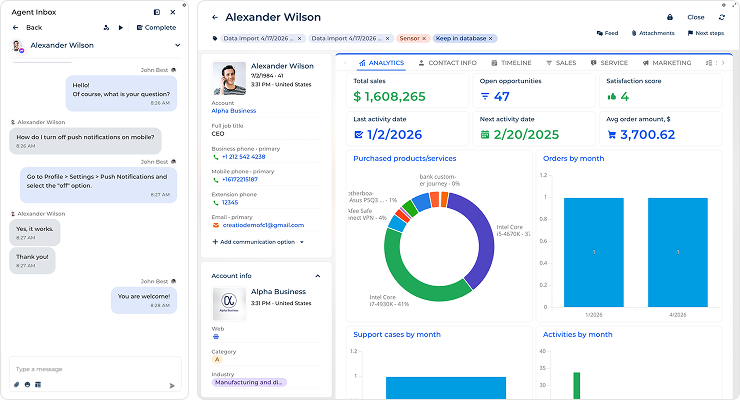
Creatio announced Creatio 10x on July 15, calling it the company's most significant release to date. The Boston-based CRM and no-code vendor, which serves mid-to-large organizations across more than 100 countries, built the release around two components. AI Twin is a conversational tool that lets any employee describe a need in plain language and have a personal AI agent built and deployed, no programming or AI expertise required. AI Studio is the counterpart for IT and operations teams, providing lifecycle management for agents including a prompt designer, a visual workflow designer, policy enforcement, approvals, audit capabilities and consumption optimization across the agents an organization runs.
The framing matters because it answers the question that has dogged citizen development for a decade. Making it easy for non-technical staff to build automation is solved and has been for years. The hard part is what happens when hundreds of employee-built agents start touching customer data and executing real workflows, and no one can see or control them. Creatio's design puts the easy-build layer and the governance layer in the same product, which is a more honest acknowledgment of the operational reality than most low-code pitches offer. Whether the controls are strong enough is the question that determines if this scales past a demo.
The consolidation play
Andie Dovgan, Creatio's chief growth officer, was explicit that the release is aimed at consolidation. He pointed to the opportunity to replace separate sales engagement tools, revenue forecast tools and field sales applications by folding those functions into one AI-native platform, and stressed that the company is "focused on governance and observability to give customers control deploying agents." The 10x release spans sales sequences, guided selling, revenue intelligence with AI-validated forecasting, and field sales with voice agents and an updated mobile experience. The through-line is a pitch to collapse a fragmented customer-facing stack into a single system where human-led and fully agentic workflows run side by side.
Consolidation is a perennial CRM sales motion, and skepticism is warranted, but the agentic era gives it new force. Every additional point tool in your customer stack is now a place agents cannot see across, a seam where context is lost and governance fragments. A leader weighing this has to balance the genuine benefit of one observable platform against the concentration risk and switching cost of betting the customer stack on a single mid-market vendor. The calculus is different than it was for seat-based SaaS, because the value of unification rises sharply once agents, rather than people, are the ones stitching workflows together across those previously separate tools.
Governance is the real product
The most important part of 10x is the least flashy. AI Studio's policy enforcement, approvals, audit trails and agent-decision observability are what make employee-built agents something a regulated enterprise can actually deploy. Without that layer, citizen-built AI is a compliance incident waiting to happen, and every CIO knows it. By pairing a frictionless build experience with the ability to observe what agents decide and optimize what they consume, Creatio is trying to resolve the tension that has kept low-code AI stuck in departmental experiments rather than core operations. The design admits that governance and velocity have to ship together or neither is usable at enterprise scale.
For technology leaders, this is the feature set to interrogate first, because it is where the platform either earns production trust or does not. The questions to ask are concrete: can you enforce which data an employee-built agent may touch, can you require approval before an agent acts on a customer, and can you see and reconstruct the decisions an agent made after the fact. If the answer to those is yes and enforced rather than advisory, the citizen-development model becomes defensible. If the controls are cosmetic, you have simply industrialized the creation of ungoverned automation, which is a faster route to the same governance problem, not a solution to it.
Meeting enterprises where their data already lives
One pragmatic choice stands out. Creatio's new autonomous agents, purpose-built for banking onboarding and account servicing and for manufacturing field-visit preparation and execution, are designed to work with Creatio CRM and with third-party CRM systems alike. That interoperability matters more than it sounds. The single biggest barrier to CRM modernization is incumbency: enterprises have years of process and data locked into Salesforce, Microsoft or SAP, and rip-and-replace is a non-starter for most. Agents that can act across an existing system lower the adoption barrier from platform migration to a bounded pilot on one workflow.
This is a smart concession to how digital transformation actually happens in large organizations, which is incrementally and around systems too entrenched to remove. For a CIO, the appeal is the ability to test agentic automation on a real process without first committing to a full CRM swap. The caution is to verify how deep that third-party integration runs, because surface-level connectors and genuine bidirectional action are very different things in practice. If the interoperability is real, Creatio has given itself a wedge into accounts it could never win with a migration pitch, and given buyers a lower-risk way to trial agentic workflows on their own terms.
Where this fits the market
Creatio 10x lands in the same current pulling every major platform vendor. SAP, Salesforce, Workday, Oracle and ServiceNow are all repositioning from systems of record into systems of action, where the software actively executes your process through agents rather than filing it away. Gartner projects that 40 percent of enterprise applications will embed agents by the end of 2026, up from under 5 percent a year earlier, and has warned that agentic arbitrage puts a large slice of seat-based SaaS spend at risk over the next several years. A mid-market platform moving decisively toward employee-built, governed agents is a rational response to that shift.
The read for buyers is that the competitive frame for CRM and low-code has changed. The question is no longer how many users a platform seats, it is how well it lets agents build, act and be governed across your customer workflows. Creatio's answer is a two-track model that tries to democratize creation without surrendering control. It is a credible entry, and the pressure it reflects is industry-wide. Every vendor in this space will be judged over the next year on whether their agent story includes real governance or stops at an impressive demo, and that is the axis on which shortlists should now be built.
The roadmap decision
For leaders planning their customer-technology roadmap, Creatio 10x sharpens a build-versus-consolidate question. If your customer stack is a patchwork of point tools that agents cannot see across, the unification argument is stronger now than it was in the seat-based era, because fragmentation actively degrades what agents can accomplish. The counterweight is vendor concentration and the switching cost of standardizing on one platform. The right move is to run a bounded pilot, ideally on a single workflow using the third-party integration, and measure both the productivity gain and, critically, whether the governance controls hold under real conditions.
The deeper takeaway transcends this specific release. Citizen development plus AI agents is arriving in enterprises whether or not IT sanctions it, and the organizations that win will be those that provide a governed path to build rather than leaving employees to assemble ungoverned automation from consumer tools. Creatio is betting the winning shape is easy creation wrapped in enforced control, delivered from one platform. That thesis is worth testing against your own governance requirements now, because the volume of employee-built agents is only going to grow, and retrofitting control onto a sprawl you did not plan for is far more expensive than designing for it today.