.jpg)
The announcement
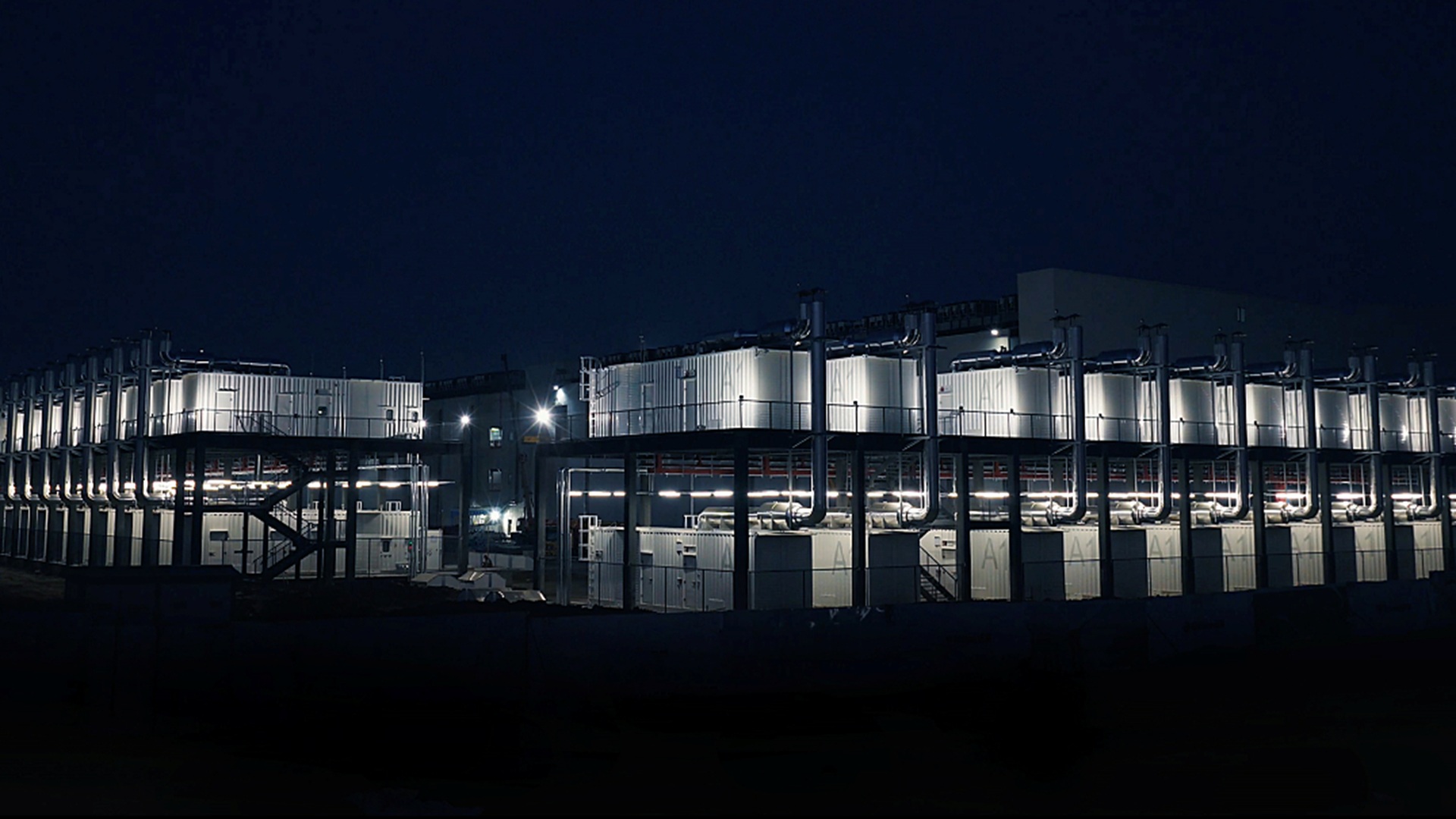
CoreWeave said it will expand its AI cloud platform into Indonesia, its first move into the Asia-Pacific region since the company scaled up from a niche GPU cluster provider into a specialist neocloud operating across the US and Europe. The plan covers three data centers with a combined 360 megawatts of contracted IT power, all expected to come online throughout 2028. Unlike some of its earlier partnerships built around joint ventures or leased colocation capacity, CoreWeave says it will own and operate all three Indonesian sites independently, funding and building the infrastructure itself rather than relying on a local partner to carry the balance sheet risk.
Chief Operating Officer Sachin Jain framed the move around following demand into a market before it saturates rather than sticking to the industry's usual playbook of expanding into already-established hubs. "CoreWeave goes where we can bring AI pioneers the capacity, performance, and reliability they need to build and scale their ideas," he said. The company plans to build local operational teams in Indonesia well ahead of launch, a detail worth noting given how many hyperscaler regional expansions run lean on local staffing for months or years after facilities first go live, leaving customers to route support requests back to a distant regional hub.
Why Indonesia and not a bigger APAC hub
Indonesia is not the obvious first stop for a neocloud chasing Asia-Pacific growth. Singapore, Japan, and Australia all have deeper existing data center markets, more mature power infrastructure, and better subsea cable connectivity already in place. CoreWeave's own framing points to why it picked Jakarta anyway: Indonesia is "investing heavily in AI education and digital capacity, and it's becoming one of Southeast Asia's fastest-growing destinations for global tech investment," in Jain's words. That framing describes a deliberate bet on a market still building its foundational digital economy, ahead of the point where established regional hubs get too crowded and expensive to enter cheaply.
Data residency requirements across Southeast Asia also favor local build-out over serving the region entirely from Singapore or Australia. Government agencies, academic institutions, and corporations across the region increasingly need to keep AI workloads and underlying data inside national borders for regulatory and sovereignty reasons, and CoreWeave positioned the new sites explicitly to serve that mix of customers, alongside startups running resource-intensive AI projects that cannot easily wait years for capacity to open up elsewhere in the region.
The market read
CoreWeave shares rose nearly 7 percent to close at $91.71 the day of the announcement, a sharp reaction for what is, in absolute terms, a modest addition to the company's global footprint. As of March 31, 2026, CoreWeave already operated 49 data centers with more than 1 gigawatt of active capacity and 3.5 gigawatts contracted globally, figures that dwarf the 360 megawatts committed to Indonesia. An extra tranche that size does not move those totals dramatically on paper, which makes the size of the stock reaction worth digging into further.
What moved the stock is more likely the signal than the raw capacity number: CoreWeave demonstrating it can execute a self-funded, self-operated international expansion outside its home markets on its own balance sheet. That is a capability investors have been watching for closely, as evidence the company can scale beyond its original US GPU cluster business without leaning entirely on hyperscaler partnerships, debt-heavy joint ventures, or the kind of circular financing arrangements that have drawn scrutiny elsewhere in the neocloud sector this year.
What it says about the neocloud land grab
CoreWeave entering Indonesia lands in the same week Nvidia-backed Firmus raised fresh capital to push into the wider Asia-Pacific region from its Australian base, and both moves point at the same underlying dynamic. Specialist AI infrastructure providers are racing hyperscalers to underbuilt regional markets before Amazon, Microsoft, and Google get there with their own committed capacity. Neither CoreWeave nor Firmus can match the hyperscalers' global capital base dollar for dollar, but both can move faster into specific markets where local incentives and data residency rules create a genuine opening for a smaller, more focused operator.
That race changes the calculus for enterprises evaluating regional cloud vendors in Southeast Asia over the next two years. A market that looked like a two or three horse race between the major hyperscalers a year ago now has credible neocloud entrants building dedicated capacity on a comparable timeline. That shift should show up directly in procurement conversations as genuine pricing and availability leverage rather than a theoretical alternative buyers can safely ignore while waiting for the incumbents to finish their own regional buildouts.
What this means for infrastructure planning
If your AI workloads touch Southeast Asia, CoreWeave's 2028 timeline is a data point worth tracking alongside whatever Google, AWS, and Azure are building in Singapore and Jakarta over the same window. A 2028 online date is far enough out that it should factor into three-year capacity plans now, budgeted and staffed for, rather than get filed away as a future option to revisit closer to launch once the picture is clearer.
The bigger takeaway is that neocloud providers are no longer confined to filling GPU gaps in markets hyperscalers already dominate. CoreWeave choosing to lead into an underbuilt market, rather than follow an established one once the risk is gone, is a strategy shift worth watching for signs it repeats in Latin America, Africa, or other regions where data residency rules are pushing compute demand ahead of local supply faster than incumbent hyperscalers can currently keep pace with.