The Headline Number Everyone Will Quote
Synergy Research Group put worldwide cloud infrastructure services revenue at 168 billion dollars for the third quarter of 2026, up 55% from a year earlier. The market has roughly doubled in just eight quarters, a pace that would have sounded implausible for an already-massive industry as recently as 2023. AI-specific services now make up about a third of that total, a sign of how quickly spending has shifted from general-purpose compute and storage toward training and inference workloads specifically, and a figure every cloud buyer should compare against their own AI share of spend to see whether they are ahead of or behind the market.
Synergy's John Dinsdale attributes the growth to a combination of factors rather than any single driver: added capacity coming online, higher pricing across the board, and a mix shift toward pricier AI services that command premium margins over commodity compute. That is a healthier growth story than pure volume expansion, since it suggests providers are capturing more value per unit of infrastructure rather than simply building more of the same undifferentiated compute. For CFOs watching cloud spend, it also explains why unit prices have not fallen the way a pure capacity expansion story would normally predict, since an increasing share of every invoice now reflects premium AI services rather than commodity virtual machines.
The Market Share Numbers Mask the Real Competition
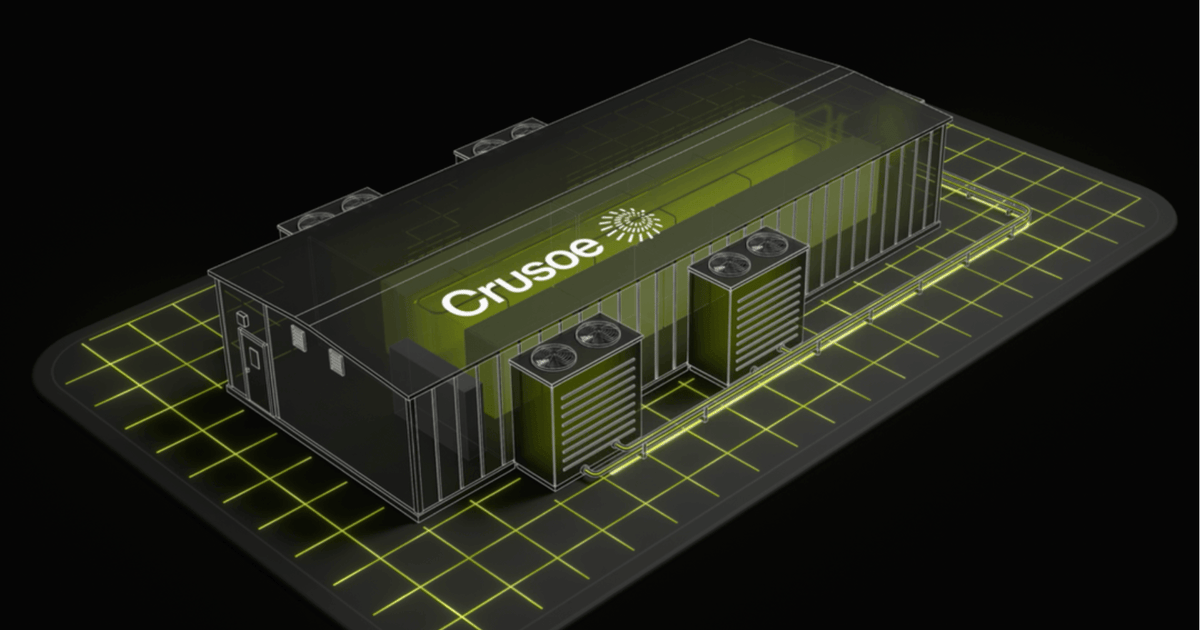
Amazon holds 26% of the market, Microsoft 19%, and Google 16%, with Microsoft and Google both growing faster than Amazon this quarter and continuing to close the share gap one quarter at a time. That ranking is familiar territory for anyone tracking the hyperscaler race, and it has not changed much in two years beyond the slow narrowing at the margins. The more interesting detail sits just below the top three: Oracle and a cluster of neoclouds, specifically CoreWeave, Crusoe, and Nebius, posted the fastest growth rates of any providers measured this quarter, outpacing all three incumbents by a wide margin.
That growth is coming from a much smaller revenue base, which makes the percentage gains easier to achieve, but it also means an increasing share of new AI capacity is being built and sold by companies with far less balance sheet depth than Amazon, Microsoft, or Google carry. For enterprise buyers evaluating vendor risk, that shift changes the questions worth asking about counterparty stability, not just price and performance, since a neocloud's growth rate tells you nothing about whether it can weather a funding squeeze or a demand slowdown two years into a contract.
The Construction Pipeline Is Enormous and Already Spoken For
CBRE tracked 7,481 megawatts of data center capacity under construction across eight North American markets in the first half of 2026, up 24.8% from the prior period. More than 80% of that capacity is already preleased, meaning most of what is being built has a committed tenant before it is even energized. That preleasing rate is both reassuring and concerning: it shows real demand backing the construction, but it also means very little spare capacity will exist for buyers who have not already signed.
JLL's demand breakdown explains who is doing the signing. Hyperscalers account for 59% of North American tenant demand, neoclouds 11%, and dedicated AI companies another 7%, with the remaining share spread across enterprise and other tenants. That concentration means the health of the entire construction pipeline rests heavily on a relatively small number of large, committed buyers continuing to honor multi-year capacity agreements even if their own AI economics shift.
The Consolidation Risk Nobody Wants to Price In
Dinsdale addressed the neocloud question directly when asked about the risk of overbuilt or stranded capacity: "Valuations will vary greatly, but I don't imagine too many stranded assets being trashed." That is a measured forecast, not a dismissal. It implies some neocloud operators will see their valuations compressed hard enough to force a sale or restructuring, while the physical infrastructure itself gets absorbed by a buyer rather than abandoned outright.
For enterprise customers with capacity contracts tied to a neocloud provider, that scenario is worth planning around now rather than after the fact. A provider's physical data centers surviving a consolidation does not guarantee the same pricing, service levels, or operational continuity a customer signed up for under the original owner. Contract language covering change-of-control and assignment should be standard in any multi-year agreement with a provider outside the top three, and most procurement teams have not historically treated it that way.
What 3 Trillion Dollars by 2030 Actually Implies
Dell'Oro's forecast of global data center capital expenditure exceeding 3 trillion dollars by 2030 is the kind of number that gets repeated without anyone examining what it assumes. It assumes neocloud and AI-company demand, which together already account for roughly a fifth of North American tenant demand according to JLL, keeps growing at something close to its current pace through multiple more years of capital markets conditions that may not stay as accommodating.
It also assumes the construction pipeline keeps clearing the grid and labor bottlenecks that GlobalData and IDC have separately flagged as already adding roughly two years to project timelines. A forecast built on current growth rates extrapolated forward is only as good as the assumption that nothing structural changes, and this quarter's data shows several structural things already changing at once: tenant concentration, neocloud credit quality, and delivery timelines all moving in directions that complicate a straight-line projection.
The Enterprise Reading of a Strong Quarter
A 55% year-over-year growth rate and a mostly preleased construction pipeline both signal real, durable demand, not a bubble about to pop on its own schedule. That is the headline, and it is accurate. The more useful reading for an enterprise buyer is in the composition underneath it: a growing share of the capacity being built is financed and operated by companies with less financial cushion than the hyperscalers everyone defaults to trusting.
The practical move is to map which providers in your own cloud and AI infrastructure stack fall into that faster-growing, thinner-balance-sheet category, and to make sure your contracts anticipate a consolidation event rather than assume the counterparty you signed with today is the one operating your capacity in three years. Strong market numbers and elevated counterparty risk are not contradictory. This quarter, they are describing the same market from two different angles.