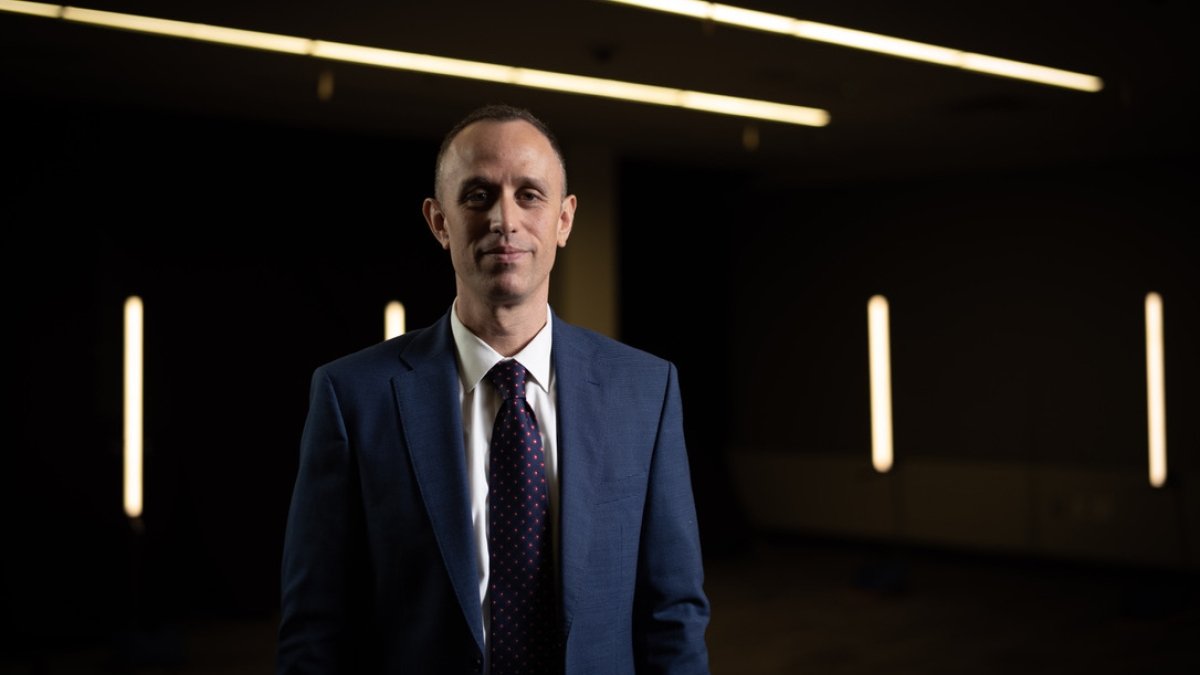
A founder's exit, two decades in the making
Phil Regier joined Arizona State University in 1987 and became Dean of Educational Initiatives and CEO of EdPlus in 2009, a role he held for more than a decade while building what is now one of the largest online learning operations in American higher education. Under his leadership, online enrollment grew from roughly 400 students to more than 119,000, and the program portfolio expanded from six offerings to more than 400. He also helped establish the ASU+GSV Summit, now one of the industry's biggest edtech gatherings.
On November 2, ASU announced that Derrick Anderson would succeed him, with Regier moving into an advisory role as Senior Advisor on Educational Technology rather than leaving the university outright. That continuity matters. ASU is treating this as a careful handoff of an asset that took nearly two decades to build, keeping the outgoing founder on the payroll in an advisory capacity precisely because the university does not want to risk destabilizing a unit this large and this entangled with corporate and philanthropic partners.
A policy scholar, not a product executive
Anderson's background is unusual for someone taking over a 119,000-student online operation. He holds a PhD in public policy and management from the University of Georgia and spent his most recent role as Vice President of Enterprise Design and Policy at the University of Utah. Before that, he was Senior Vice President of Education Futures at the American Council on Education, where he led national initiatives involving hundreds of universities. He has also worked directly with ASU president Michael Crow on the university's public enterprise model.
His research on university design and on governing emerging technologies has been supported by the National Science Foundation and the Gates Foundation, and he was named one of 64 fellows in the National Academy of Public Administration's 2026 class. That is the resume of a scholar who studies how institutions absorb new technology responsibly, and it signals ASU expects the next phase of EdPlus's growth to run through institutional design and policy questions, with AI treated as a governance problem to architect carefully rather than a feature to ship quickly and iterate on later.
What EdPlus actually built, beyond enrollment numbers
The enrollment growth under Regier is the headline figure, but the partnerships EdPlus built along the way are arguably the more durable asset. The unit helped establish the Starbucks College Achievement Plan, which gave Starbucks employees a path to a degree, and the Global Freshman Academy, an open-enrollment model that let students try college coursework before committing to a degree. EdPlus also built partnerships with Uber, Air University, the Mastercard Foundation, and the Al Ghurair Foundation.
Those partnerships are the real competitive asset Anderson inherits. Enrollment scale is replicable with enough marketing spend and the right accreditation; a roster of corporate and philanthropic partners built over a decade, each with its own integration requirements and political sensitivities, is a much harder thing to rebuild from scratch. Anderson's central task is holding together the machinery that makes 400 programs and a dozen major partners function as one coherent operation, while finding where AI fits into contracts that were negotiated years before generative AI was a line item anyone had to think about.
Anderson's own framing of AI
In his first public remarks after the appointment, Anderson said technology, including AI, gives universities the chance to make learning more personal and more flexible, and that a learner anywhere should be able to find a place at ASU. ASU president Michael Crow praised Anderson as a skilled design thinker who would build on EdPlus's existing foundation, language that reinforces the idea that this is a continuity hire dressed up as a succession.
Notably, ASU has not announced any specific AI product, deployment, or investment commitment tied to the appointment itself. That absence is worth sitting with. Plenty of edtech leadership announcements arrive bundled with a flagship AI feature to justify the news cycle, timed so the personnel change and the product launch share a single press day. ASU chose to announce the person and the philosophy first and let the product roadmap follow later, which reads as either unusually disciplined communications planning or a sign that the roadmap genuinely is not locked yet and Anderson intends to shape it himself.
Why this matters beyond one university
ASU Online is not a scrappy startup experimenting with AI tutoring on the side. It is one of the largest, most scrutinized online degree operations in the country, and its choices get copied by peer institutions and watched by the corporate partners who rely on it for workforce pipelines, including companies that run employee degree benefit programs. Who ASU puts in charge, and how that person talks about AI publicly, is a reasonable leading indicator of where large-scale online higher education is headed next.
Choosing a governance and design scholar over a product leader suggests ASU expects the next hard problems in online learning to center on accreditation, data privacy, and institutional policy around AI use rather than on which chatbot vendor to integrate. For any enterprise buyer evaluating university partners for workforce training or degree benefit programs, that is a useful signal about what kind of conversations to expect from ASU's side of the table going forward, and a reminder that the most consequential edtech decisions increasingly get made by people whose job title has nothing to do with technology.