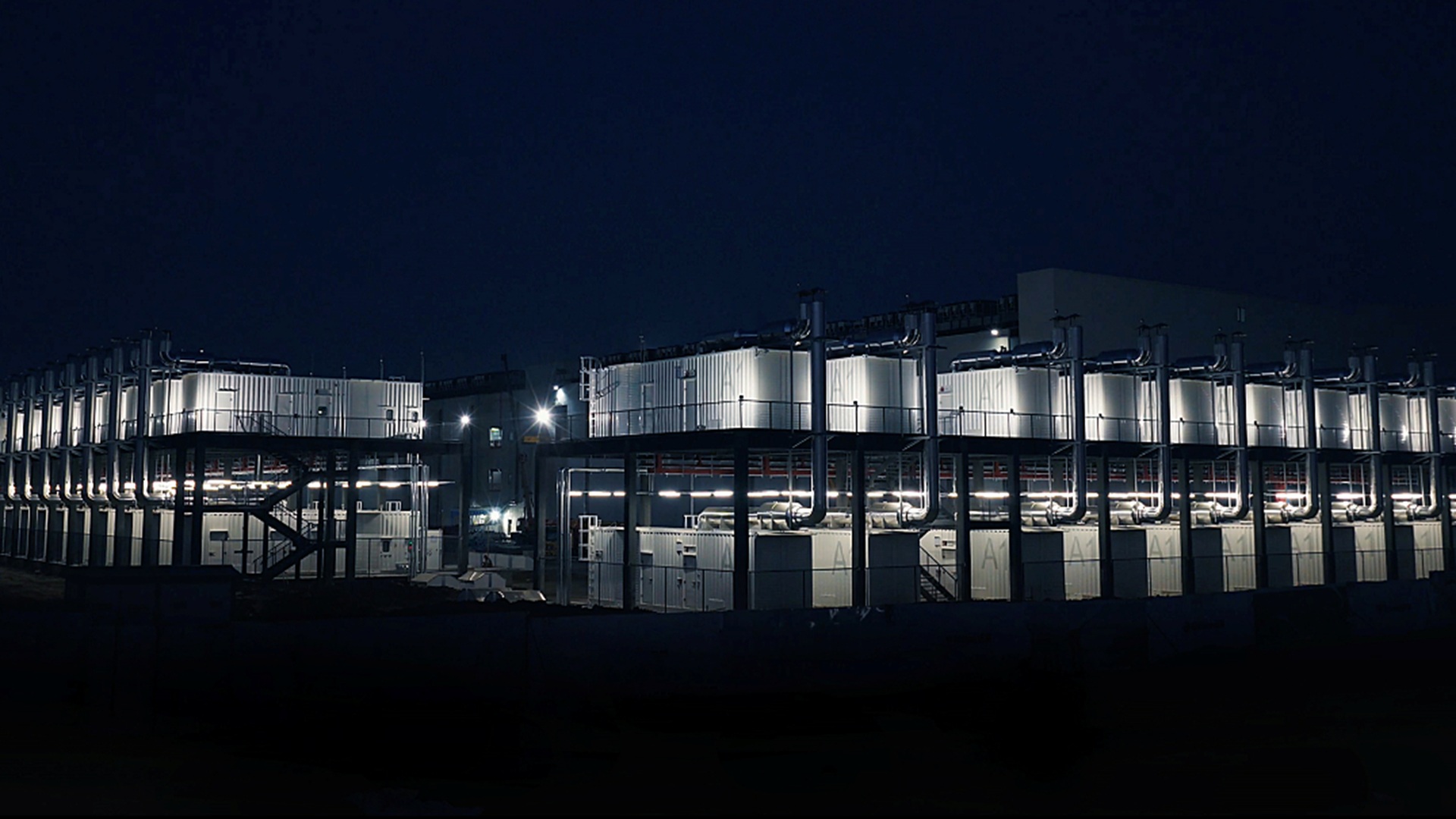
Groundbreaking on a long-committed investment
AWS broke ground in July on a new data center in Hyderabad's Future City, reaffirming a commitment to invest more than $21 billion in cloud and AI infrastructure in India between 2026 and 2030. The figure sits inside a larger $48 billion total Amazon investment in the country, and AWS had already put more than $1.3 billion into Indian infrastructure by the end of 2025, meaning the new spending represents a significant acceleration rather than a first commitment being made from scratch in an unfamiliar market. India now ranks among the handful of countries where AWS discloses a specific multi-year dollar figure rather than describing investment plans in general terms, alongside markets like Japan and Australia where AWS has made similar large, publicly quantified commitments.
The expansion adds capacity to the existing AWS Asia Pacific Hyderabad region, which already serves startups, large enterprises, and government organizations across India. An AWS director said the support of the Telangana state government has been essential to fast-tracking the build of India's digital backbone, language that signals how much state-level permitting speed now factors into where hyperscalers choose to expand first when weighing multiple competing locations within the same country and the same regulatory environment.
India as a production hub, not just a growth market
What distinguishes this investment from typical emerging-market cloud expansion is the scale and the multi-year horizon involved. A $21 billion commitment through 2030 signals AWS treating India as a long-term production and compute hub for its Asia Pacific operations, not simply a market where it is chasing subscriber growth quarter over quarter. That distinction matters for enterprise customers evaluating where to run latency-sensitive or data-residency-constrained workloads across the broader region, since production-hub status implies deeper, more durable capacity commitments than a typical regional expansion.
India's data localization requirements, particularly in financial services and government sectors, make in-country capacity a compliance necessity rather than a convenience for many enterprises operating there. AWS building out Hyderabad and Mumbai capacity in parallel gives customers more resilience options within India's borders, reducing the need to route regulated workloads through Singapore or other regional hubs that add latency and complicate compliance reporting for regulated industries. Banks and insurers with India-specific mandates have been asking hyperscalers for exactly this kind of dual-region domestic footprint for several years.
The skilling pipeline behind the infrastructure
AWS says it has trained more than 10 million individuals in cloud skills across India since 2017, and its data center skilling program in Telangana has already placed 110 graduates into roles at the Hyderabad facility out of 250 trained so far. That workforce pipeline is a deliberate answer to a problem hyperscalers face everywhere they build: skilled data center technicians and cloud operations staff are scarce, and importing talent is slower and more expensive than training locally from the outset.
For India specifically, this skilling investment doubles as a talent retention strategy, giving engineers a reason to build careers domestically rather than emigrating to US or European tech hubs for better opportunities. It is a model other hyperscalers expanding into India, including Microsoft and Google, have begun replicating at smaller scale, though none has yet matched AWS's stated ten-million figure across a comparable timeframe, giving AWS an early advantage in the local hiring market for scarce data center operations talent.
Telangana's bid to own India's AI infrastructure narrative
A Telangana state minister called the AWS expansion a strong endorsement of the state's ambition to become India's AI and cloud capital, explicit positioning against other states, notably Maharashtra, that are also courting hyperscaler investment aggressively. State-level competition for data center investment in India is intensifying in a manner similar to the US, where states compete on tax incentives, power availability, and permitting speed to win the same pool of hyperscaler capital moving through the region each year.
This competitive dynamic benefits enterprise customers in the near term, since states racing to attract hyperscaler capital tend to accelerate permitting and offer power pricing incentives that eventually filter through to lower regional cloud costs. Enterprises with significant India operations should track which states win the next round of hyperscaler announcements, since that will likely determine where the cheapest and most resilient regional capacity ends up over the coming several years, and where new colocation and interconnection options open up first.
What this means for global capacity planning
AWS's continued India investment, even as it faces scrutiny over slower cloud growth relative to Azure and Google Cloud in some markets, suggests the company sees India as one of the few regions where demand growth remains uncomplicated by power constraints or grid capacity limits of the kind now slowing projects in Texas and parts of Europe. That relative lack of a power bottleneck is itself becoming a competitive advantage for the country, one Indian officials are clearly aware of and eager to keep highlighting to prospective investors.
For global enterprises building multi-region AI and cloud strategies, India's combination of committed hyperscaler capital, government-backed skilling pipelines, and comparatively available power positions it as a region likely to see faster capacity growth over the next three years than more power-constrained US markets, a factor worth weighing directly in long-term regional infrastructure planning and vendor negotiations going forward, especially for workloads that do not require proximity to US-based engineering teams or same-region latency guarantees.