Why multi-model access is the actual headline
Most university AI rollouts covered this year picked a single vendor and built around it, whether that meant a homegrown tutor, a Gemini deployment, or an enterprise deal with one AI lab. The University of Arizona took a different structural approach: its new AI Platform, built on Amazon Bedrock, lets students, faculty, and staff choose among five commercially available models, Claude, OpenAI, Gemma, Meta Llama, and Amazon Nova, rather than forcing everyone onto one.
That architecture choice matters more than it sounds. A single-vendor campus AI deployment ties the institution's entire AI strategy to one company's pricing, capability roadmap, and uptime. A multi-model platform built on Bedrock lets Arizona swap which model handles which task, or let individual users and departments pick based on their own preference, without rebuilding the underlying infrastructure every time a new model ships or an existing one changes terms.
The privacy design that most pilots skip until something goes wrong
The platform is explicitly built to comply with FERPA, the federal student privacy law, and collects only aggregate usage metrics rather than the content of individual interactions. That is a meaningfully stronger privacy posture than campuses typically retrofit after a pilot program expands, and it suggests Arizona treated compliance as a design requirement from the start rather than a problem to solve once the platform scaled.
This design choice traces directly back to process: in 2025, the university's Office of Responsible Artificial Intelligence surveyed staff, faculty, and students and ran town halls before building anything. That process surfaced three priorities, universal access, clear usage guidance, and strong privacy protections, and the platform's current design maps cleanly onto all three. Governance work done before procurement tends to produce fewer retrofits later than governance work done after a pilot already has thousands of users.
What is live now versus what is still a roadmap item
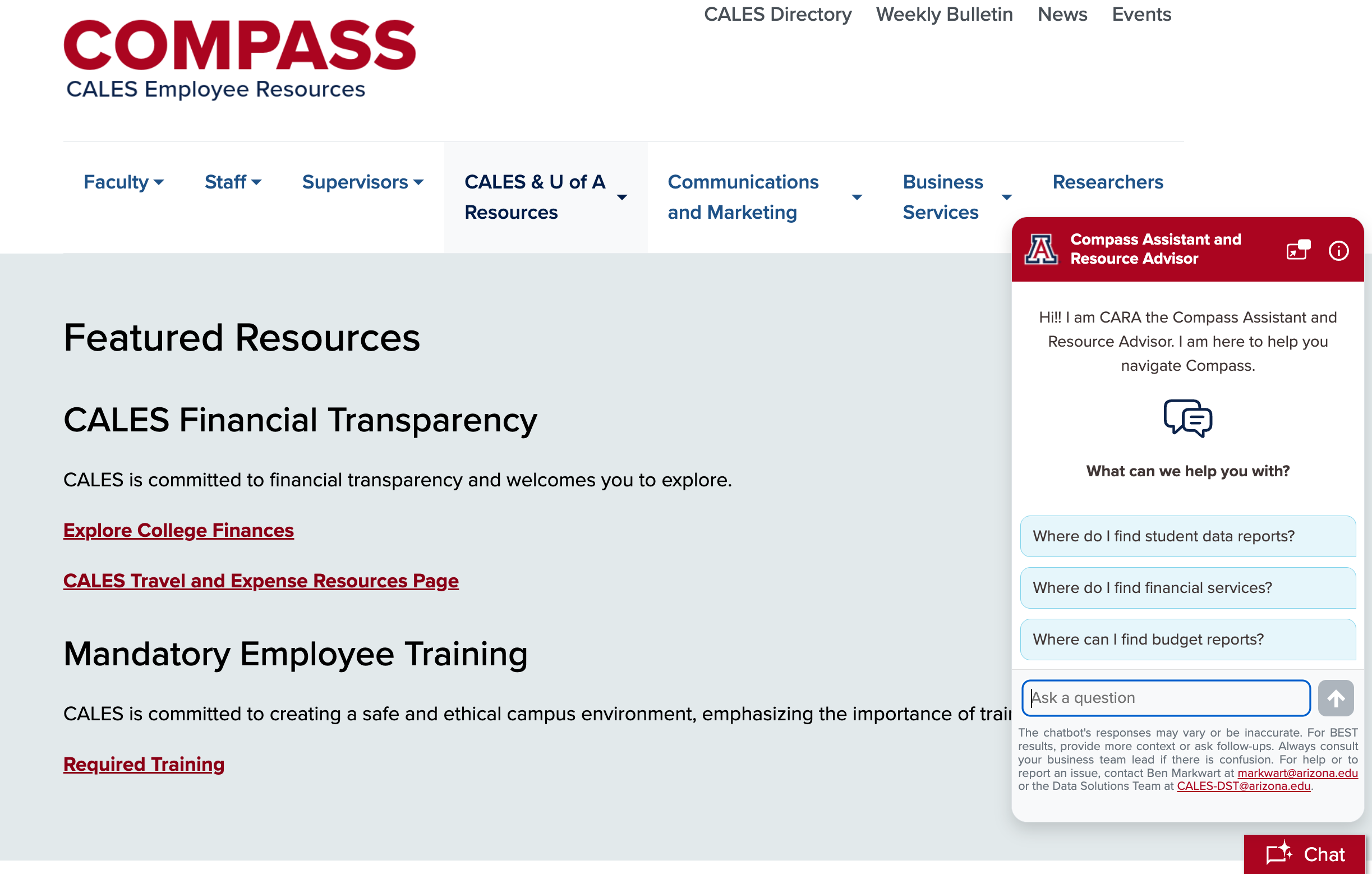
Only one piece of this platform is actually running today: U of A Gen AI, already in pilot with several thousand campus members, giving them the five-model choice described above. Everything else, the public campus chatbot, the Arizona AI assistant for department-level custom chatbots, and AI sandboxes for safe experimentation, is a 2026 roadmap item rather than a shipped product.
That distinction matters for anyone evaluating Arizona's approach as a model to copy. The genuinely novel piece, multi-model choice through Bedrock with FERPA-compliant aggregate metrics, is proven at pilot scale today. The more ambitious pieces, department-scoped chatbots drawing only from approved institutional data, are still unbuilt, and that is exactly the kind of component that tends to reveal hard governance problems once real departments start requesting access to real, messy institutional data.
The sandbox idea addresses a problem other campuses have hit hard
Planned AI sandboxes, where researchers, instructors, and students can test AI systems without exposing sensitive or restricted data, respond directly to a failure mode that has shown up repeatedly at other institutions this year: faculty and students experimenting with AI tools using real student records or unpublished research data because no safe testing environment existed. A sandbox with no access to real sensitive data removes that temptation structurally rather than relying on a policy nobody reads.
Whether the sandbox actually gets used, as opposed to faculty continuing to experiment with whatever tool is fastest regardless of data exposure, depends entirely on execution details the announcement does not yet specify: how easy the sandbox is to access, whether it supports the same five models as the main platform, and whether using it is actually faster than the shadow IT alternative.
What other universities should take from this specifically
The piece of Arizona's approach most worth copying is the sequencing: survey and govern first, then build a narrow pilot with strong privacy defaults, then expand feature by feature with FERPA compliance baked in from day one rather than bolted on after legal flags a problem. That order is slower than standing up a single-vendor chatbot in a weekend, but it produces a platform other departments can actually extend without re-litigating privacy and compliance each time.
For CIOs at peer institutions still deciding between a single AI vendor deal and a multi-model platform approach, Arizona's bet is worth watching specifically because it is testable: if department-level adoption of the forthcoming custom chatbot tool outpaces what single-vendor campus deployments have achieved elsewhere, that is real evidence the flexibility was worth the added platform complexity.