A Senior Apple Hardware Leader Crosses the Aisle
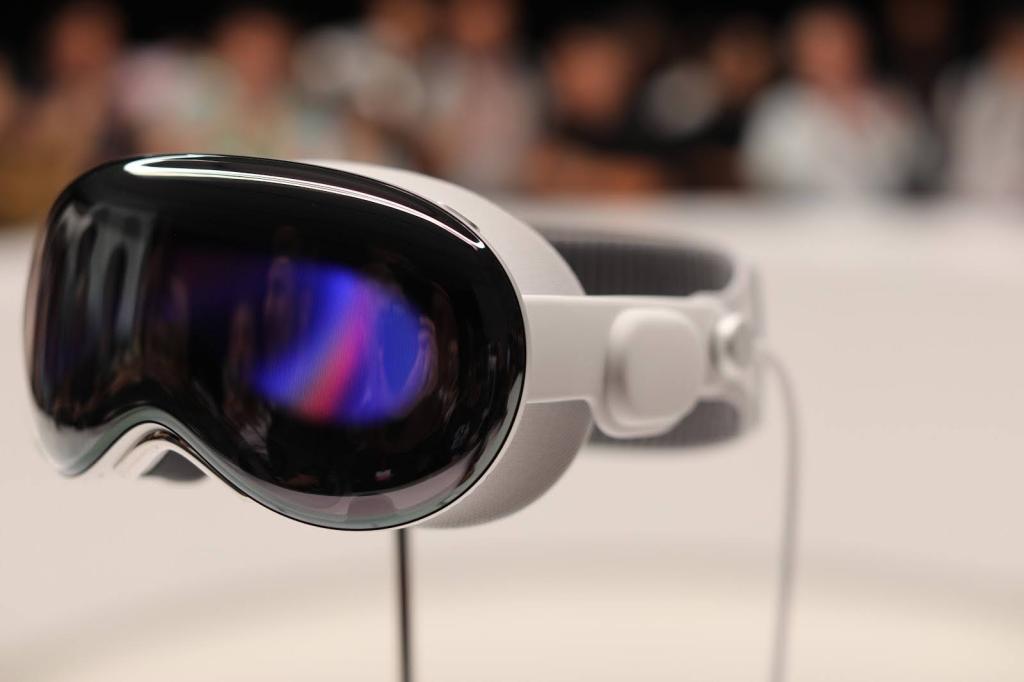
Paul Meade, the Apple vice president who has steered both the Vision Pro headset and the company's still unreleased smart glasses, is reportedly leaving to join OpenAI's hardware team. The news, first reported by Bloomberg's Mark Gurman on June 26 and circulating widely the next day, marks one of the most senior hardware departures Apple has weathered in years. Meade did not run a side project. He led the engineering behind Apple's most ambitious wearable bets, including the device meant to answer Meta's smart glasses momentum.
We read this as more than a single resignation. When a company that defines itself by hardware integration loses the executive who owns its head-worn future, the gravitational pull of the AI labs becomes impossible to ignore. OpenAI is no longer poaching only researchers and infrastructure engineers. It is now recruiting the people who know how to ship physical products at scale, the discipline Apple has spent two decades perfecting and that frontier labs conspicuously lack.
OpenAI's Device Ambitions Take Shape
OpenAI has been openly developing a consumer AI device alongside Jony Ive, Apple's former chief design officer, whose firm the company absorbed. Sam Altman has teased a product he says will feel more peaceful and calm than an iPhone, language that reads as a deliberate jab at the attention economy Apple and Google built. Recent reporting suggested the project hit snags as the team struggled to refine the concept, which makes the recruitment of a proven hardware operator like Meade look less like opportunism and more like a fix.
The strategic logic is straightforward. A frontier model without a native surface depends on someone else's glass, someone else's operating system, and someone else's distribution. Apple controls all three for hundreds of millions of users. By hiring the engineer who built Apple's wearable roadmap, OpenAI buys institutional knowledge it could not assemble from scratch, and it shortens the distance between a chatbot and a device customers carry on their face.
Why Meade Was Available
The departure did not happen in a vacuum. Apple's hardware engineering organization is being reshaped under incoming chief executive John Ternus, and the restructuring reportedly left several vice presidents feeling demoted. Meade ran the Vision Pro, a product that has underdelivered against its premium price, and the cheaper smart glasses intended to recover lost ground against Meta. Leading an underperforming flagship and a delayed follow-up is a precarious place to sit when the org chart is being redrawn above you.
There is a cultural dimension that enterprise leaders should not miss. Talent moves toward optionality and mandate. A frontier lab with effectively unlimited capital, a blank hardware canvas, and a chief executive promising to reinvent the personal computer offers both. An incumbent in the middle of a reorganization, defending a product that has not found its market, offers neither. The asymmetry is precisely what makes these moves so corrosive for the companies on the losing end.
The Full-Stack Endgame
This hire fits a larger pattern we have tracked all year. OpenAI unveiled its first custom inference chip with Broadcom in late June, it is building data centers at gigawatt scale, and it is now assembling a device organization with Apple pedigree. The throughline is vertical integration. The lab that started as a research outfit increasingly wants to own silicon, model, software, and hardware, the same control loop that made Apple the most valuable company on earth.
For CTOs and CIOs evaluating where to place long-term bets, the message is that the AI platform layer is consolidating upward into hardware. The vendors who will matter in three years may not be the ones who merely serve the best tokens, but the ones who control the surfaces those tokens reach. Apple still holds the strongest position in consumer hardware, but losing the architect of its wearable future to a direct rival is the kind of signal that tends to precede a shift, not follow one.