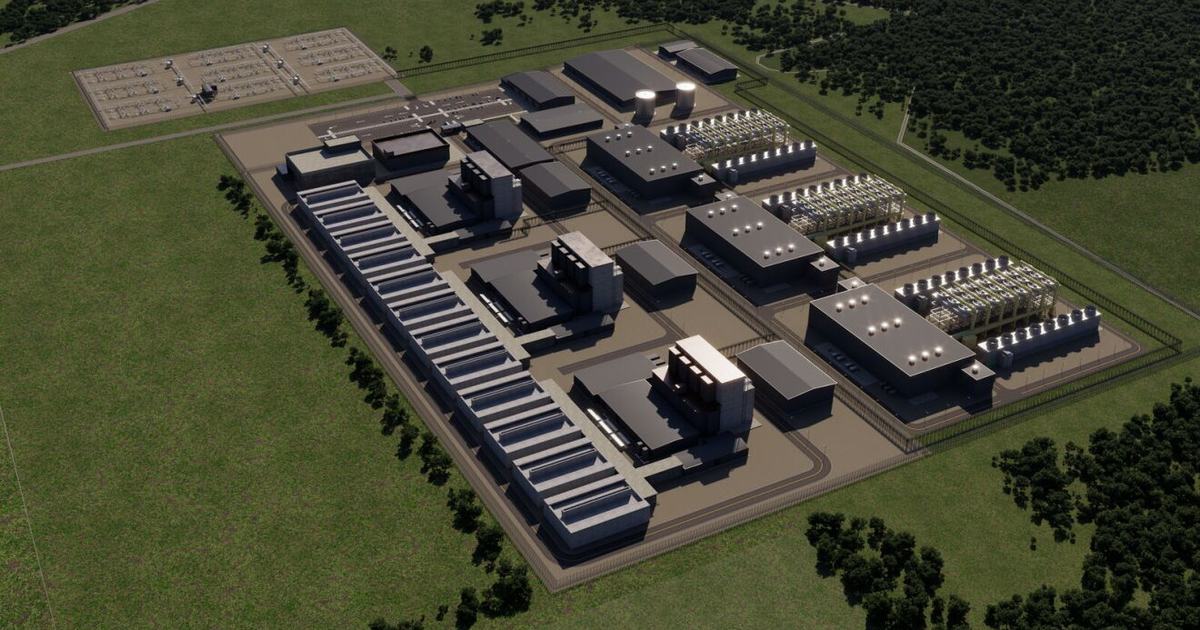
A second mega-deal arrives two months after the first
Bloomberg reported on October 19, citing a person familiar with the matter, that Anthropic is negotiating to lease additional compute capacity from Nscale in a deal that could again reach 45 billion dollars. That figure would match the companies' first agreement, signed in August 2026 for 460 megawatts at Nscale's Monarch campus in West Virginia. The new talks reportedly cover a second data center at the same site, also sized at 460 megawatts, and would include Nvidia's upcoming Vera Rubin chips rather than the current generation.
Two deals of identical size and scale, struck roughly two months apart with the same counterparty, is not how most enterprises structure vendor relationships, and that is precisely what makes this worth watching. Either Anthropic's compute demand forecast moved sharply upward in a matter of weeks, or the first deal was always understood internally as a down payment on a much larger, phased commitment to Nscale specifically rather than to the broader neocloud market.
Monarch is becoming shared critical infrastructure
Nscale's Monarch campus is the company's largest project, a 2,250 acre site acquired in March 2026 with a potential buildout of up to 8 gigawatts. The first 2 gigawatt phase is expected online in the first half of 2028. Microsoft has separately signed for 1.35 gigawatts at the same campus, with a large-scale Vera Rubin NVL72 GPU deployment planned there as well. Power for the site comes from Caterpillar G3500 series fast-response natural gas generator sets rather than grid interconnection alone, a choice that speeds deployment but adds its own fuel and emissions considerations.
That means two of the industry's largest AI compute buyers, Anthropic and Microsoft, are both now structurally dependent on a single campus operated by a company that only listed five active data centers totaling 55 megawatts in its own September 2026 IPO prospectus. Concentration risk in AI infrastructure is usually discussed in terms of GPU supply or power availability. This is a reminder that physical site risk, a single campus, a single power design, a single operator, belongs on that same risk register.
Why a frontier AI lab is choosing a neocloud over hyperscalers
Anthropic already has substantial infrastructure commitments with the traditional hyperscalers, and nothing in the Nscale reporting suggests those are being unwound. What the Nscale deals represent instead is diversification, spreading an enormous and still-growing compute requirement across multiple suppliers so that no single vendor, including Google or AWS, controls all of Anthropic's capacity destiny. Neoclouds like Nscale can often move faster on raw GPU deployment than hyperscalers encumbered by broader service portfolios and longer internal approval cycles, which matters when the chips in question, Vera Rubin, are not yet shipping at volume.
The tradeoff is counterparty risk of a different kind. Nscale is a young company still building out its first major campus, financing an 8 gigawatt ambition, and preparing for its own IPO. Anthropic is reportedly also confidentially filed for an IPO as of June 2026. Two companies at that stage of maturity, each dependent on the other for a deal this size, are making a correlated bet: if either stumbles financially or operationally, the other's roadmap is directly exposed in a way that a deal with an established hyperscaler would not produce.
What this says about the neocloud market generally
Nscale's trajectory here mirrors a broader pattern among AI-focused neoclouds: land one marquee customer, use that contract to raise the capital and credibility for a second, larger commitment, and repeat. The company's own IPO prospectus disclosure of just 55 megawatts of active capacity against tens of billions of dollars in signed deals illustrates how far ahead of actual operating infrastructure these commitments now run. That gap between contracted capacity and built capacity is the central financial risk in the entire neocloud category, and it applies to Nscale's peers as much as to Nscale itself.
For enterprise buyers outside the frontier AI lab tier, the practical relevance still matters even though it sits one layer removed. If Anthropic's pricing, API availability or model release cadence depends partly on Nscale capacity coming online on schedule, any delay at Monarch becomes a downstream risk to every company building products on Anthropic's models. That adds a new category of vendor risk worth tracking directly: the construction schedule of your AI model provider's infrastructure supplier, sitting two layers upstream of your own product roadmap and largely invisible until something slips.
The roadmap implication
If your product roadmap depends materially on Anthropic's models, it is reasonable to ask your Anthropic account team directly how much of your committed capacity or pricing is tied to Nscale infrastructure specifically, and what contingency exists if that capacity slips behind the first half of 2028 target for Monarch's initial phase. This is the same diligence enterprises have already learned to apply to their own cloud vendors' subcontractors and backup facilities, now extended one more layer up the AI supply chain to the compute source behind the model itself, where fewer customers currently think to look.
More broadly, treat this as confirmation that compute supply chains for frontier AI are now multi-vendor by design, not by accident, and that the neocloud layer between chip makers and model providers carries real execution risk that a vendor's revenue or funding headlines do not fully disclose. Build your own vendor risk assessments for AI providers to include a line item for infrastructure provider concentration, the same way you already assess a SaaS vendor's hosting dependency.