The deal and why Amazon is doing it twice
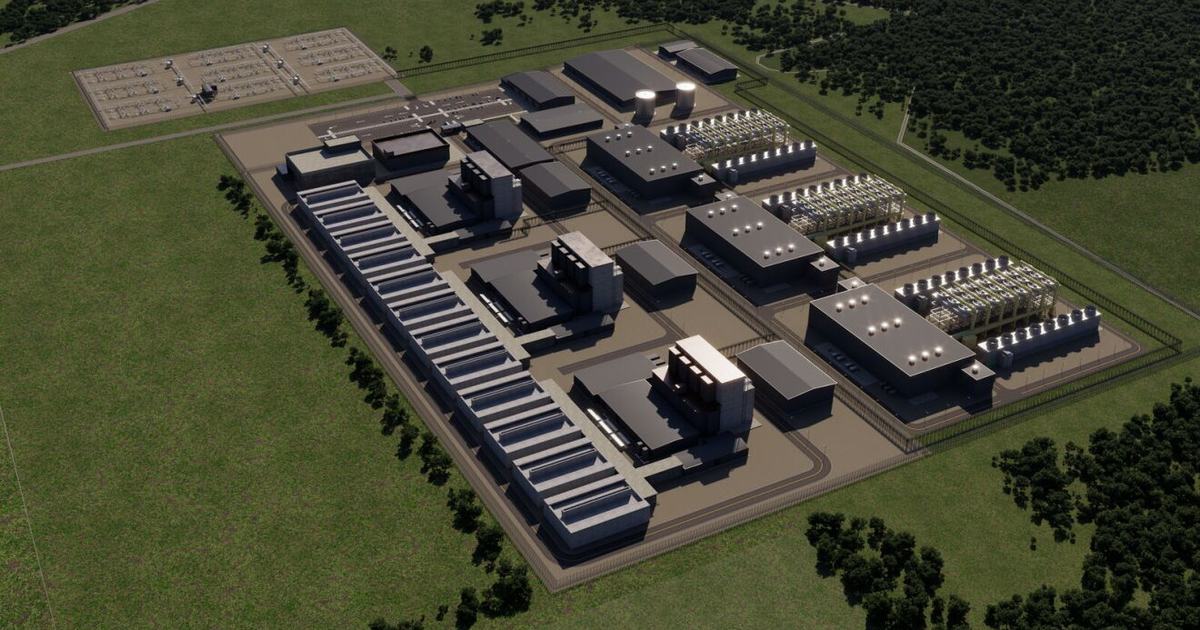
Amazon and American Electric Power announced on October 19 that they are exploring deployment of up to 960 megawatts of nuclear capacity in Indiana, using 12 X-energy Xe-100 reactors each rated at 80 megawatts electrical and 200 megawatts thermal. Power generated would serve both Amazon's data center portfolio and AEP's broader Indiana grid, with Amazon financing the project and agreeing to be the first buyer of power once the plant is operational. AEP's Indiana Michigan Power utility already has more than 50 years of nuclear operating experience, which the companies are using to justify the technical risk.
This is not Amazon's first deal of this exact shape. The company struck a nearly identical arrangement with Energy Northwest in 2024 for up to 960 megawatts from roughly 12 SMRs at the Cascade Advanced Energy Facility near Richland, Washington. Running the same financing and off-take structure twice, with the same reactor vendor and the same capacity target, suggests Amazon has found a template it intends to repeat rather than a one-off experiment. AWS's Josh Weissman, vice president of data center delivery, said the goal is reliable, affordable, carbon-free power for Indiana communities and businesses for decades.
One reactor vendor is becoming load-bearing infrastructure
X-energy's order book is now doing a lot of work across the hyperscaler landscape. Beyond the Washington and Indiana deals with Amazon, the company has agreements for up to 6 gigawatts in the UK with Centrica and up to 1.44 gigawatts in Pennsylvania with grid operator PJM and power producer Talen. It is simultaneously building a US TRISO-X fuel facility to supply the specialized fuel its reactors require. X-energy completed an IPO in April at an 11.9 billion dollar valuation, after raising more than 700 million dollars in private funding with Amazon leading the most recent round.
That concentration is worth tracking even if your company has no direct relationship with X-energy. Google, Data4, Oracle, Switch and Equinix are all separately backing small modular reactor projects, which means a meaningful slice of the next decade's data center power supply runs through a small number of SMR vendors and an even smaller number of fuel suppliers. If X-energy or a peer hits a permitting delay, a fuel supply problem or a financing gap, the ripple effects land on multiple hyperscalers' capacity plans at once, not just Amazon's.
Nuclear timelines do not move at cloud speed
The AEP announcement gives no construction start date, no completion date and names no specific data center the power will serve. That vagueness is not an oversight, it reflects where SMR projects genuinely sit: early-stage exploration agreements that still require permitting, utility commission approval, and years of construction before a single megawatt reaches a server rack. Amazon's own target, more than 5 gigawatts of US nuclear capacity by 2039, is explicitly a multi-decade goal, not a near-term capacity fix for anyone's current GPU shortage.
That timeline mismatch is the part enterprise buyers tend to miss when they read these announcements as capacity reassurance. A 960 megawatt SMR deal announced today does nothing for the power constraints limiting AWS region buildout over the next two to three years, which is the window that actually matters for most enterprise infrastructure roadmaps. It is a signal about where AWS expects to have power a decade from now, useful for long-range planning but irrelevant to whether your next capacity request gets filled on schedule.
Power procurement is now a cloud vendor's competitive strategy
What makes this deal worth tracking as a cloud story rather than purely an energy one is what it reveals about how AWS is competing for the next generation of capacity. Nuclear, renewable and grid-upgrade deals are becoming a visible, publicized part of hyperscaler strategy precisely because power, not chips or land, is now the binding constraint on data center expansion across most of the US. Amazon financing reactor construction directly, rather than simply signing a long-term power purchase agreement, is a more aggressive posture than its peers have generally taken.
For CTOs evaluating which hyperscaler is best positioned to deliver committed capacity in power-constrained US markets over the next five to ten years, these announcements function as a leading indicator, imperfect but directionally useful. A vendor willing to underwrite reactor construction and commit to being first buyer is signaling a longer planning horizon and a higher risk tolerance for securing future power than one that is only buying existing renewable credits or waiting on grid operators to build transmission capacity.
The roadmap implication
Add power procurement strategy to the list of questions your team asks when evaluating a hyperscaler's long-term reliability in a given US region, alongside the usual pricing, service parity and compliance criteria. If you are negotiating a multi-year capacity commitment with AWS tied to a specific region, it is reasonable to ask the account team directly how that region's power supply is expected to evolve and whether any nuclear, renewable or grid-upgrade commitments specifically touch the facilities your workloads will run in.
This also argues for building more slack into capacity planning for any workload anchored to a single US region experiencing documented power constraints. The gap between an SMR announcement and operational power can run a decade, and your infrastructure roadmap for the next three to five years should assume that gap persists rather than hoping an exploratory nuclear deal closes it early. Treat these announcements as evidence of vendor intent, not as a change to near-term capacity availability.

