An Insider Gets the Job Instead of an Outsider
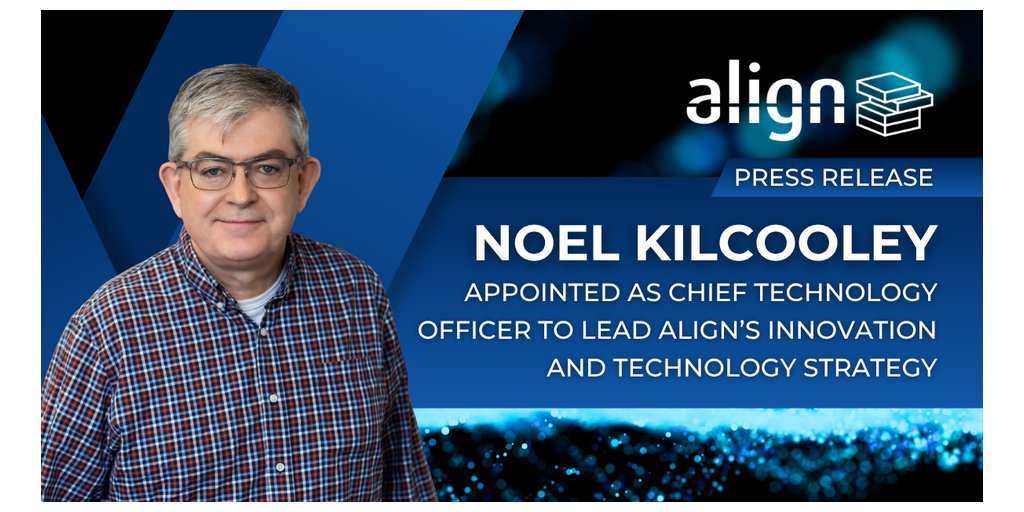
On August 11, 2026, Align announced that Noel Kilcooley would become its Chief Technology Officer, promoting a 25-year company veteran rather than running an external search for the role. Kilcooley's mandate now covers technology strategy, the innovation agenda, AI initiatives, cybersecurity, and compliance at the Dallas-based provider of managed IT and technology infrastructure services. CEO Jim Dooling credited Kilcooley's combination of technical expertise, strategic thinking, and client-first leadership as the reason he was, in Dooling's words, the ideal person for the role.
Kilcooley's own statement leaned into continuity rather than reinvention, calling it an honor to serve as CTO during an exciting period for the company. That is a notably different tone from the wave of appointments elsewhere this month pairing the CTO or Chief AI Officer title with a hyperscaler resume. Align chose the opposite signal: deep institutional memory of its own systems and client base over an outside name carrying AI-native credibility earned somewhere else.
Twenty-Five Years Inside One Company
Kilcooley has spent his entire quarter-century career at Align, working across engineering, cloud architecture, and technology leadership roles. Align's own account of his record credits him with strengthening the firm's security capabilities, improving operational efficiency, and guiding its adoption of cloud services and AI tools well before this promotion made it official. That is the case for promoting from within: nobody outside Align understands its client contracts, its infrastructure quirks, and its security posture as well as someone who has spent 25 years building all three from the inside.
It is also the case against it. A quarter-century inside one organization can produce exactly the kind of institutional depth Align is banking on, and it can just as easily produce blind spots about how AI-native competitors are rebuilding technology operations from scratch. Align's leadership is betting Kilcooley's record answers that concern, but the company has not yet published evidence of an AI roadmap distinct from its existing cloud and security work, and prospective clients evaluating Align against a newer entrant would be right to ask for specifics rather than take the tenure narrative at face value.
A Growth Story That Raises the Stakes
The promotion lands while Align is expanding fast. The company points to a No. 1,572 ranking on the 2026 Inc. 5000 list and a No. 10 spot on CRN's Fast Growth 150 for 2026 as evidence of momentum in a 40-year-old business that has had to keep reinventing its service line to stay relevant. Growth at that pace typically strains technology leadership more than it strains sales, because managed IT clients expect the same security guarantees and uptime whether the vendor has 40 clients or 400.
Handing the CTO seat to an insider during a growth sprint is a bet that continuity beats a learning curve. A new external hire would need months to understand Align's client commitments before making consequential architecture calls, time a fast-growing managed services firm may not want to spend. Kilcooley starts with that context already built in, which is precisely the trade-off boards weigh whenever they choose promotion over recruitment at a moment when speed matters more than a fresh set of eyes on the problem, and it is a trade-off Align's board apparently decided was worth making without testing the external market first.
What This Means If You Buy Managed IT Services
If Align is your managed IT or infrastructure vendor, or a peer you are evaluating against one, this appointment is worth a direct question rather than an assumption in either direction. Long tenure at a services vendor can mean deep expertise or it can mean a team that has not been meaningfully challenged to modernize. The only way to know which applies here is to ask Kilcooley's team for specifics on the AI and cybersecurity initiatives he is credited with, not to accept the tenure itself as proof of capability.
The broader pattern worth tracking is a split forming across the technology leadership market this quarter. Some companies, like Credit Acceptance and Osaic, are recruiting AI leadership out of Amazon and other hyperscalers. Others, like Align, are promoting from within and betting client trust matters more than an AI-native resume. Neither approach is inherently correct, and the right one depends heavily on how far behind your own technology organization actually is on AI adoption today. Watch which approach your own vendors and competitors are choosing, and treat it as a leading indicator of how seriously they are taking the AI transition rather than a staffing decision buried in a press release.
The Build-or-Buy Question for Your Own CTO Seat
Every board eventually faces the choice Align just made: promote the insider who knows the business, or recruit the outsider who has already proven they can execute an AI transformation somewhere else. Align's answer says something specific about how it sees its own competitive position, betting that client relationships and institutional knowledge of a decades-old technology stack matter more right now than importing a playbook built at a different kind of company.
Before you default to either path for your own next technology leadership hire, write down what you are actually optimizing for: speed of AI execution, continuity with existing clients and systems, or cost. Align optimized for continuity. Credit Acceptance and Osaic optimized for AI execution speed by importing outside talent, accepting a longer ramp-up period in exchange for a leader who has already run that playbook at scale. Both are defensible choices, but only if you make the trade-off consciously instead of letting habit, budget pressure, or simple convenience decide it for you by default.