The Number That Changes the Conversation
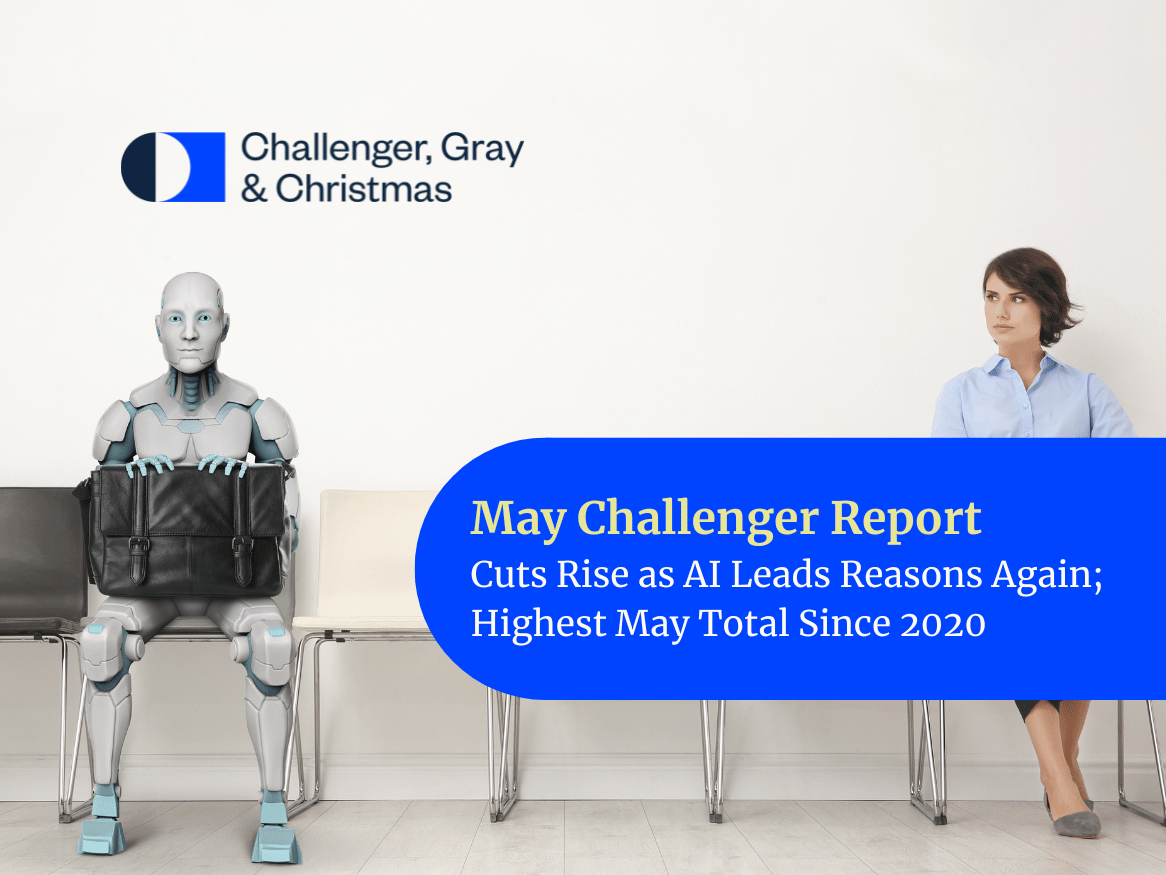
The outplacement firm Challenger, Gray and Christmas reports that artificial intelligence was the single most-cited reason for US job cuts in May 2026, the third consecutive month it has held that position. AI accounted for 38,579 announced cuts in May, roughly 40 percent of the month's total and the highest monthly figure since Challenger began tracking the category in 2023. For a debate that has long traded in projection and anxiety, this is a rare hard number, and it lands with force.
Year to date through May, AI has been cited in 87,714 cuts, already far surpassing the 54,836 attributed to AI in all of 2025. The trajectory is steeper still: the AI share of layoffs climbed from 7 percent in January to 25 percent in March, 26 percent in April, and 40 percent in May. Whatever one's view of how durable this shift will prove, the data marks a transition. The question of whether AI displaces workers has moved from forecast to ledger.
Technology Eats Its Own
The sector leading this wave is the one that built the technology. Challenger's data identifies Technology as the primary industry citing AI in its cuts, with the sector recording 38,242 layoffs in May, its highest monthly total since August 2024. There is a stark logic here. The companies developing AI tools are also the most capable of deploying them internally, and they have the technical sophistication to automate roles that other industries are only beginning to examine.
Andy Challenger, the firm's Chief Revenue Officer, put it directly: "AI is now the leading reason companies give for cutting jobs and the primary industry citing it is Technology." That the technology industry is at the front of AI-driven workforce reduction carries a certain weight. The people closest to the tools, who understand best what they can and cannot do, are acting on that understanding by reshaping their own headcounts. It suggests the displacement is grounded in capability, not merely in narrative.
How Much Is AI, How Much Is the Story
We urge a degree of caution in interpreting these figures, because the data reflects what companies say, not an independently verified cause. Citing AI in a layoff announcement can serve multiple purposes. It frames cuts as forward-looking strategy rather than distress, it reassures investors that the company is embracing efficiency, and it can soften the optics of decisions driven by softer demand or over-hiring. The label is doing work beyond pure description.
That does not mean the AI attribution is fictional, only that it is partly a narrative choice layered on top of genuine operational change. The honest reading is that both forces are real: AI is genuinely automating tasks and reducing the headcount certain functions require, and companies are also leaning on AI as a more palatable explanation for reductions they might have made anyway. Disentangling the two precisely is difficult, but the underlying capability shift is not in doubt.
From Pilots to Payrolls
What makes this moment distinct from prior cycles of automation anxiety is the speed and breadth of the underlying technology. For two years, agentic AI lived largely in pilots, demos, and carefully scoped trials. The Challenger data suggests that period is ending, with AI capabilities now affecting how companies size their workforces in real terms. The total of 397,755 cuts across all reasons year to date, up 16 percent from April, sits against a backdrop in which AI has become the headline driver.
This transition from experimentation to operational dependence is the development enterprise leaders most need to internalize. The strategic question is no longer whether to explore AI but how to manage a workforce in which AI absorbs a growing share of tasks once done by people. That is a question about reskilling, role redesign, and organizational structure as much as about technology, and the companies that treat it as purely a cost-cutting exercise will likely mismanage both the transition and the talent they retain.
What Leaders Should Do With This
For executives, the data is a prompt to move from reactive cutting to deliberate workforce strategy. Reducing headcount because AI can do certain tasks is the easy part; the harder and more valuable work is redesigning roles so that human judgment is concentrated where it adds the most value and AI handles the rest. Organizations that simply shrink risk hollowing out the institutional knowledge and adaptive capacity they will need when the technology's limits become apparent.
There is also a reputational and societal dimension that boards should not ignore. A workforce watching AI cited as the reason for tens of thousands of cuts will reasonably question its own security, and how a company manages that anxiety affects retention, morale, and its standing as an employer. The firms that handle this well will pair efficiency with credible investment in transition and reskilling. The Challenger numbers are a milestone, but how leaders respond to them will matter more than the figures themselves.