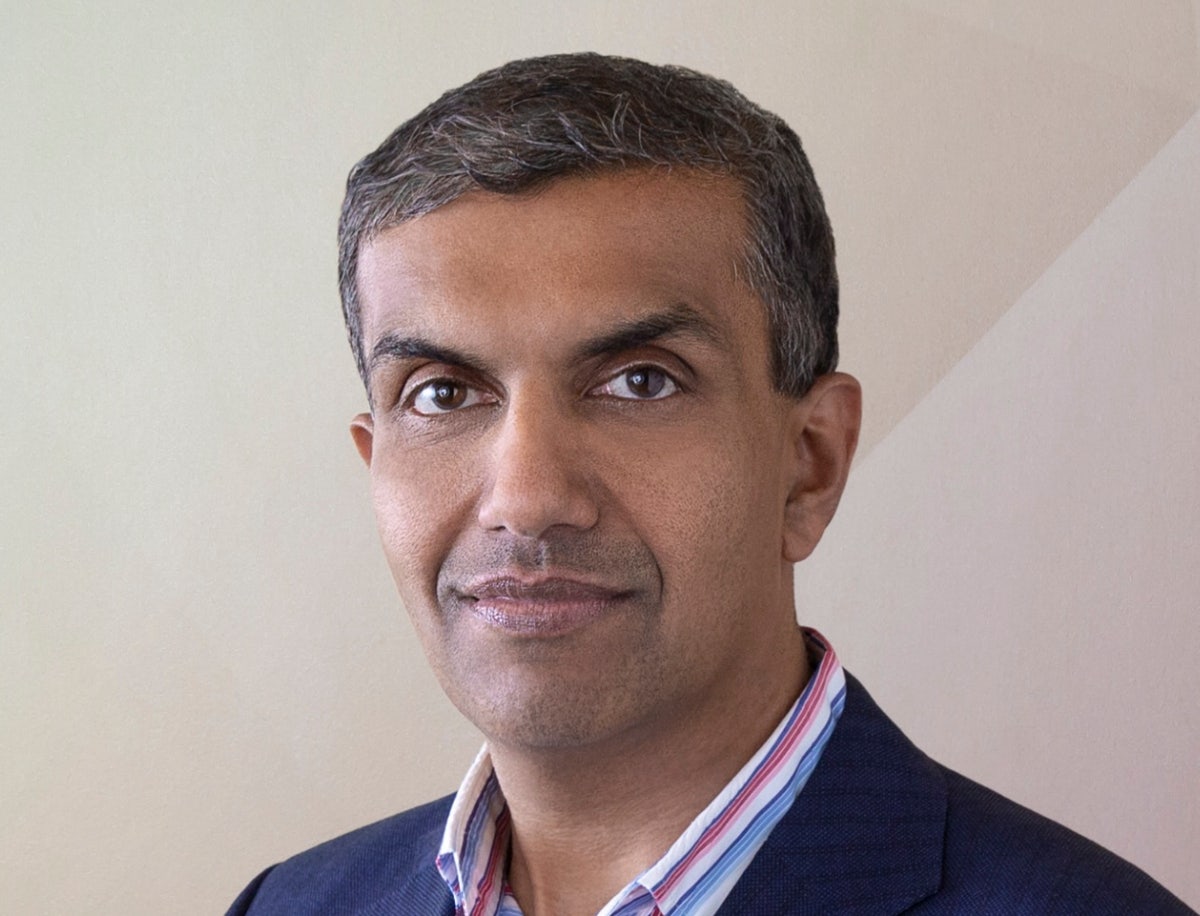
A long-planned handoff announced on a rough day
Adobe's board named Anil Chakravarthy president and CEO effective December 1, 2026, ending Shantanu Narayen's 18-year run at the top of the company. Narayen moves to executive chair rather than exiting outright, a structure that keeps him inside the boardroom and available for continuity during the transition, and Chakravarthy joins the board immediately rather than waiting for the December handoff date. Lead independent director Frank Calderoni said the board "unanimously determined that Anil is the right leader for Adobe's next chapter," language that signals a deliberate, board-driven succession rather than a forced exit prompted by a single bad quarter or activist pressure.
Chakravarthy joined Adobe in January 2020 and has spent the last several years running Customer Experience Orchestration and worldwide field operations, the parts of Adobe that sell directly to enterprise marketing and IT buyers rather than to individual creators buying a Creative Cloud subscription. Narayen framed the choice around AI specifically: Chakravarthy is, in his words, "the right person to lead Adobe's growth in an AI-driven era." That framing matters more than the usual succession press release boilerplate, because the era in question is the exact one currently squeezing Adobe's Creative Cloud margins and its competitive position against newer entrants.
The Informatica playbook, applied to Photoshop
Before Adobe, Chakravarthy spent four years as CEO of Informatica, where his defining move was converting the company from perpetual software licenses into a cloud subscription business worth roughly a billion dollars in recurring revenue. That transformation is the direct precedent enterprise buyers should study, because Chakravarthy said on his appointment that he is "energized by the opportunity to fuel growth and drive Adobe's leadership in the next era of agentic software" spanning creativity, productivity, and customer experience, essentially previewing the same category of pricing overhaul at a much larger scale.
The plan reported alongside his appointment is to shift Creative Cloud's more than 35 million subscribers away from flat per-seat pricing toward consumption-based pricing tied to what AI agents actually produce for each account. That is a bigger swing than it sounds on paper. Per-seat pricing is predictable for finance teams budgeting design and marketing spend a year out, while usage-based AI pricing is inherently variable, and CIOs who currently manage Adobe as a fixed enterprise agreement line item should expect that renegotiation conversation to open well before Chakravarthy's official start date.
The exit that undercut the announcement
The same day Adobe announced its next CEO, David Wadhwani said he was leaving the company entirely. Wadhwani has run the creativity and productivity division, the business unit that includes Photoshop, Illustrator, and Creative Cloud, for nearly five years, and that division alone generates roughly three-quarters of Adobe's total revenue. He is departing to pursue entrepreneurship, according to reporting on the announcement, and his exit was not framed as connected to the CEO transition, though the timing invites exactly that reading regardless of the official explanation offered.
Losing the head of your largest and most AI-exposed business unit on the exact day you name a new CEO is not a coincidence investors or enterprise customers will read charitably. Chakravarthy now has to fill that seat immediately while simultaneously executing a pricing overhaul inside that same division, a sequencing problem most incoming CEOs would prefer to avoid. For a company already fighting Figma and Canva for creative market share, a vacant Creative Cloud leadership seat arriving in the middle of a pricing transition is genuine execution risk, not merely a headline that fades after a news cycle.
Wall Street split on what this means
Adobe shares fell roughly 3.4 percent in premarket trading to around $276 following the news, part of a stock that is already down about 18 percent for the year and well off its 52-week high of $370.86. Analysts did not agree on what the move actually means for the company's trajectory. Barclays raised its price target to $295 while keeping an Equalweight rating, and RBC Capital raised its target to $315 with an Outperform rating, both reads suggesting at least some confidence that the succession plan itself strengthens Adobe's execution against AI-native competitors over the medium term.
Morgan Stanley went the opposite direction, downgrading Adobe to Underweight with a $240 target and citing concern that AI competition could erode the recurring revenue base that has made Creative Cloud so valuable on Adobe's balance sheet for the past decade. That analyst split matters directly for enterprise buyers: it means even Wall Street's own coverage cannot agree whether Chakravarthy's consumption pricing bet strengthens Adobe's competitive moat or simply exposes, in public, how thin that moat has already become against Figma and Canva.
A CFO seat is still empty too
Chakravarthy's promotion is not the only executive gap Adobe is carrying into this transition period. CFO Dan Durn exited the company in June, and Adobe has not yet named a permanent replacement, which means the incoming CEO will spend his first several months simultaneously negotiating a company-wide pricing overhaul, backfilling a creative division leadership seat, and operating without a permanent finance chief fully installed to model the financial impact of any of it alongside him.
Adobe's AI-linked annualized recurring revenue reached $500 million in the second quarter of fiscal 2026, roughly tripling year over year, and that is the number Chakravarthy will point to as proof the underlying strategy already works before he takes the top job. But that growth is arriving alongside the lingering aftermath of Adobe's failed attempt to buy Figma for $20 billion, a deal blocked by regulators in December 2023 that left its most direct AI-era creative competitor free to keep taking market share ever since.
What enterprise buyers should track next
For CIOs and procurement teams running Adobe as an enterprise agreement, the near-term signal worth tracking is not the CEO transition ceremony itself but the pricing mechanics Chakravarthy telegraphed on day one of his appointment. A move from per-seat to consumption-based AI pricing changes how Creative Cloud shows up in a multi-year budget forecast, and enterprises with large seat counts across design, marketing, and content teams should start modeling usage-based scenarios now rather than waiting until the December 1 handoff actually takes effect.
The Creative Cloud leadership vacancy left by Wadhwani's departure is the other detail worth watching closely. Whoever Chakravarthy names to replace him will effectively run the product line responsible for three-quarters of Adobe's revenue during the exact window the company is renegotiating how enterprise customers pay for it. That specific hire, more than the CEO announcement itself, will tell enterprise technology buyers whether Adobe's next chapter is genuinely stable or being improvised under real competitive pressure.