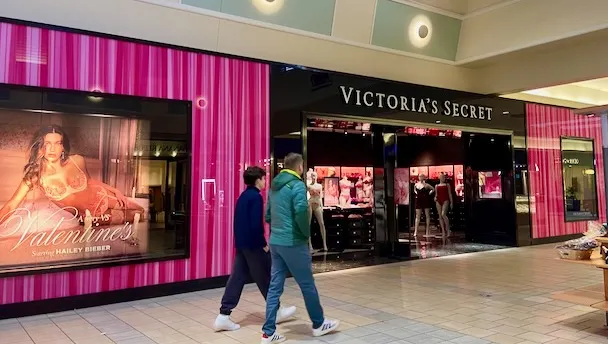
Two technology hires, one announcement
Victoria's Secret & Co named Adrian Butler as chief technology officer, pulling him directly from Foot Locker where he ran the retailer's long-term growth strategy, known internally as Lace Up, for the past several years. Butler also carries prior leadership experience from Target and Dine Brands Global earlier in his career, giving him exposure to both big-box retail scale and multi-brand restaurant operations before landing in intimate apparel, a category with its own distinct supply chain and personalization challenges.
In the same announcement, Gerri Martin-Flickinger, formerly chief technology officer at Starbucks, joined the company's board of directors. She replaces Mariam Naficy, who declined reelection following sustained pressure from activist investors. Filling both an operating technology role and a board technology seat in one coordinated release is an unusual level of sequencing for a mid-cap retailer, and it strongly suggests the two hires were negotiated in parallel rather than announced simply as each individual search happened to close out on its own timeline.
Why the board seat took a comprehensive search
Martin-Flickinger's board appointment followed what the company described as a comprehensive search that began in May and was run through an executive search firm, meaning Victoria's Secret spent roughly three months specifically hunting for the right technology voice to add to its board rather than filling the seat quickly from an existing director's personal network. That extended timeline signals the seat was treated as a genuine strategic priority rather than a routine, low-stakes board refresh handled between quarterly meetings.
Her Starbucks background is relevant to more than just the resume line it adds to the proxy statement. Starbucks under her tenure dealt with large-scale digital ordering, loyalty program technology, and supply chain investments at a scale and complexity comparable to what Victoria's Secret needs to modernize now, as it tries to compete against digitally native intimate apparel and loungewear brands that have steadily taken market share over the past several years of category disruption.
The activist pressure behind the board change
Naficy's decision to decline reelection did not happen in a vacuum removed from broader investor sentiment. It followed direct pressure from activist investors, the kind of pressure that typically targets underperforming governance structures or perceived strategic drift rather than any single executive's individual day-to-day performance record. Board seats vacated specifically under this kind of activist pressure tend to get filled with replacement candidates chosen to visibly and directly answer the activists' stated complaints about the company's direction, which is exactly what a technology-credentialed director accomplishes here for a board facing continued scrutiny over how it oversees a multi-year digital turnaround plan investors are still evaluating quarter by quarter. Activists rarely publish a scorecard, but the substitution of a sitting director for a named technology operator is the kind of concrete, visible change that tends to satisfy their demands, at least for the next annual meeting cycle.
Board Chair Donna James framed the two appointments together as evidence of the company's "commitment to evolving its leadership, governance, and technology expertise" for long-term growth, language clearly aimed at investors who are watching closely to see whether the board is responding substantively to the pressure that pushed Naficy out, rather than simply replacing one departing name with another director drawn from a similar background. Pairing that message with an actual operating hire, not just a board seat, gives James a concrete answer the next time an activist raises the same governance complaint in a public letter.
The financial backdrop gives the hires room to work
Unlike a technology leadership change made in the middle of a genuine crisis, this one arrives from a position of relative financial stability. Victoria's Secret posted a 3 percent sales increase and strong first quarter 2026 performance, and the appointments come shortly after the company began trading under its new VSXY ticker, marking a clean separation point for what management is positioning as its next chapter as a standalone public company independent of its former parent structure.
That stability matters specifically for Butler. A CTO hired during an active sales decline typically inherits an immediate, unavoidable cost-cutting mandate from day one. A CTO hired after a quarter of measurable growth has considerably more room to invest in the kind of platform work, personalization engines, supply chain visibility tools, and digital experience upgrades that pay off over multiple years rather than needing to show hard results in the very next earnings call to keep his job.
What Butler's Foot Locker record suggests he prioritizes
Butler's work on Foot Locker's Lace Up strategy was explicitly framed as a long-term growth plan rather than a short-term cost-cutting play, and that orientation is likely to carry over directly into how he approaches his first year at Victoria's Secret. Retailers hiring from Foot Locker's recent technology bench are effectively betting on operators who have already run multi-year digital transformation roadmaps at a comparable-scale specialty retailer, rather than executives arriving from adjacent industries without direct specialty retail operating experience under real margin pressure and activist scrutiny of the kind Victoria's Secret is currently facing from its own shareholder base heading into the holiday quarter. That combination of retail scale and turnaround discipline is precisely what boards under activist pressure look for when time to prove results is short.
For Victoria's Secret specifically, the test that matters will be whether Butler can translate that long-horizon approach into faster, visible wins on personalization and omnichannel fulfillment, the two areas where digitally native competitors have consistently out-executed legacy intimate apparel retailers over roughly the past five years of category disruption and shifting consumer shopping behavior across both mobile and in-store channels. Investors will be watching his first two quarters closely for early signs of which priority wins out.
The pattern enterprise boards should notice
Victoria's Secret's decision to pair an operating CTO hire with a technology-literate board addition, negotiated together and announced together in one release, is a template other retail boards operating under similar activist pressure should study closely. It answers two separate investor criticisms at once: that management lacks sufficient technology execution capability, and that the board itself lacks the specific expertise required to properly oversee that execution going forward, a combination that is hard for activists to keep pushing against.
For CIOs and CTOs watching the broader retail leadership market from other companies, this also confirms that specialty retail is now recruiting technology talent from the exact same bench as big-box and quick-service peers. Foot Locker and Starbucks alumni landing at an intimate apparel company in the same announcement is a clear sign that technology leadership hiring has stopped being segmented cleanly by retail category or perceived brand prestige, and that the same executive pool now serves every format.