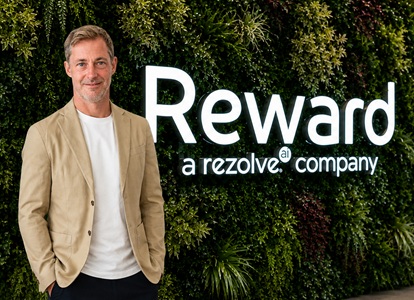
The hire behind a 230 million dollar acquisition
Reward, the customer engagement and commerce media specialist that Rezolve Ai acquired for 230 million dollars earlier this year, has named Matthew Keylock as its first Chief Data and Analytics Officer. Keylock brings nearly three decades of experience in data, analytics, and AI, most recently as global Chief Data and Analytics Officer at Mars Petcare, where he built and led the company's global data and analytics function. Earlier in his career he held senior roles at Yoox Net-A-Porter Group and dunnhumby, two companies built almost entirely around customer data at scale.
Reward CEO James House framed the hire in terms that leave little ambiguity about priorities: 'Data and insight are at the heart of Reward,' he said, adding that 'Matt brings an exceptional track record of turning data into commercial value.' Keylock himself called Reward's transaction dataset 'exceptional' and described 'a significant opportunity to push the boundaries of customer intelligence and personalisation.' Both statements point toward the same conclusion, that this hire is fundamentally about the underlying data asset, with the loyalty program experience that surrounds it treated as the delivery mechanism rather than the point.
What Reward actually is, and why Rezolve wanted it
Founded in 2001, Reward is the UK's largest bank-linked rewards provider, operating across more than 15 countries and connecting over 30 major banks and payment networks, including Barclays, NatWest, Visa, and Mastercard, to a network of more than 50,000 retail outlets ranging from Amazon to McDonald's. Its core function is delivering personalized, card-linked offers to bank customers based on real transaction and behavioral data, which is a fundamentally different data asset than the browsing or app-usage data most retail personalization tools rely on.
Rezolve CEO Daniel Wagner has described the acquisition as core strategy advancement rather than diversification, embedding Reward's capabilities directly into Rezolve's Brain Commerce infrastructure to combine AI-driven discovery, engagement, transaction, and loyalty into one operating model. The stated goal is to position personalized, transaction-linked rewards upstream of payment and fulfillment, deep inside the moment a consumer is actually spending money, rather than bolted on after the fact through a separate loyalty app. That upstream positioning is the entire thesis behind Rezolve's broader agentic commerce push, and it depends entirely on Reward's transaction data being usable, not just accessible.
Why a CDAO now, months after the deal closed
Acquisitions built around a data asset often stumble in the months after close, when the acquiring company discovers that turning raw transaction data into productized intelligence requires dedicated leadership the target company never had. Reward did not have a chief data and analytics officer before Keylock, which means Rezolve is only now building the organizational function needed to fully exploit what it paid 230 million dollars to acquire. That gap between acquisition and data leadership hire is common, but closing it quickly matters more when your entire strategic thesis depends on the data.
Keylock's specific background makes the intent clear. Mars Petcare, Yoox Net-A-Porter, and dunnhumby are all organizations where customer data had to be turned into direct commercial outcomes, personalized offers, merchandising decisions, loyalty economics, rather than sitting in a dashboard for executives to admire. Hiring someone with that exact pattern of experience, rather than a generic data science leader, tells you Rezolve wants Reward's transaction data converted into revenue-generating targeting and personalization products quickly, not researched at length.
The agentic commerce angle CTOs should track
Card-linked transaction data sits in a different trust and utility category than most of the data retail and commerce technology leaders currently work with. It is verified, it reflects actual spend rather than intent signals, and banks control access to it under regulatory frameworks that make it harder for pure AI startups to simply scrape or license at will. Rezolve's bet is that owning a bank-linked rewards network, rather than building relationships with banks from scratch, is the faster path to that data for its agentic commerce platform.
For retail and commerce technology leaders evaluating AI personalization vendors, this deal and hire are worth studying as a pattern. Vendors that can point to real transaction-level data relationships with banks and payment networks are working with a fundamentally stronger signal than vendors relying purely on first-party browsing behavior or third-party ad data. Keylock's job now is to prove that advantage translates into measurably better targeting and personalization outcomes, which is the test that will determine whether Rezolve's 230 million dollar bet pays off, and it is a test that will play out in front of the same banks and retailers this audience already does business with.
What it means for your own data leadership bench
The broader lesson for CIOs and CTOs sitting on valuable but underexploited transaction or behavioral data is that the data itself is not the asset, the leadership capable of turning it into product is. Reward had the bank relationships and the retail network for over two decades before this hire, and none of it converted into a dedicated personalization business until Rezolve brought in someone whose entire career has been built around exactly that conversion.
If your organization sits on a comparable trove of transaction, loyalty, or behavioral data that has never had a dedicated chief data and analytics officer pushing it toward commercial products, this is a useful prompt to ask why. The gap between having valuable data and having a team organized to monetize it responsibly is usually a leadership gap first, and Rezolve's decision to fill that gap at Reward within months of closing the acquisition is a reasonable template for how quickly that gap should get addressed after any similar deal.


