What was actually signed
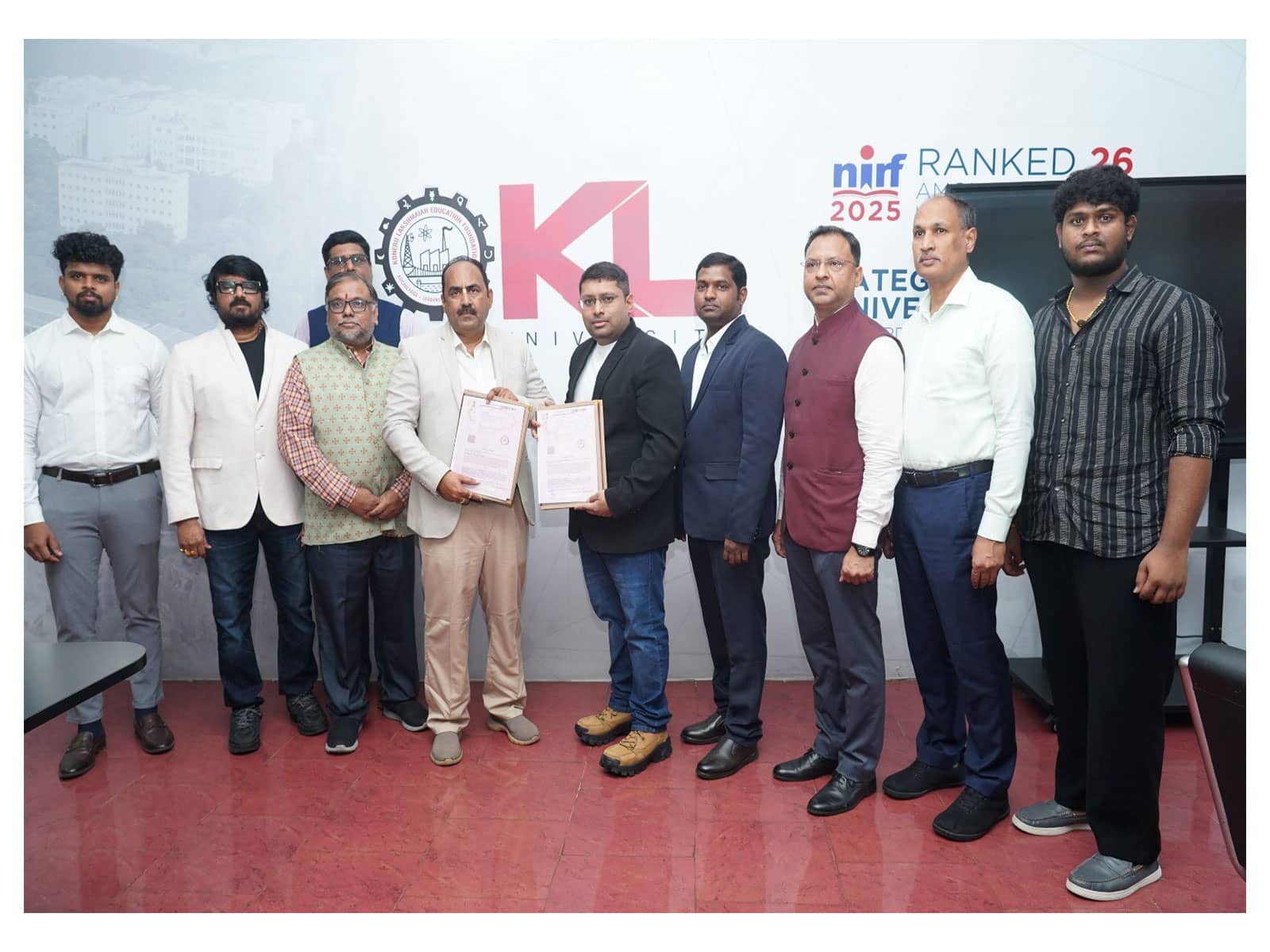
KL Deemed to be University and HCL Group's GUVI AI Labs signed a memorandum of understanding on September 21 at the university's Vaddeswaram campus, launching what the partners are calling India's first Agentic AI Campus. The claim to being first rests on scope: rather than adding an AI elective or a standalone certificate track, the initiative embeds AI integration across degree curricula, laboratories, and learning activities university-wide, spanning programs that would not traditionally touch AI coursework at all.
The curriculum covers artificial intelligence, machine learning, generative AI, and large language models as baseline literacy, then layers in the harder skill the partnership is actually selling: building autonomous and semi-autonomous AI agents capable of reasoning, planning, and executing workflows on their own. That is a meaningfully different ambition than teaching students to use AI tools. It is teaching students to build the systems other people will use, and to do it across disciplines rather than inside a computer science silo, which is the structural bet the whole partnership is built around.
The skills stack behind the agentic framing
Underneath the agentic AI headline sits a specific and fairly current skills list: prompt engineering, retrieval-augmented generation, intelligent chatbots, AI copilots, and workflow automation, paired with full stack development, cloud computing, and DevOps competencies. That combination matters because agent building is not purely a model skill, it requires the same software engineering discipline that ships any production system: deployment pipelines, monitoring, and integration with existing enterprise infrastructure that predates any of this curriculum.
Chancellor Er. Koneru Satyanarayana put the philosophy behind the design directly: "Universities must embed AI across the learning ecosystem," rather than teaching it as an isolated subject. Dr. Srinath, Dean of Student Skilling, added that students would get "hands-on exposure" across multiple AI technologies and enterprise systems, language that signals the program is built around applied deployment, not theory-first instruction, with the expectation that graduates arrive able to work inside existing enterprise stacks rather than needing months of onboarding before contributing to real systems.
Why the applied domains list is the interesting part
The program names six applied domains for real-world projects: healthcare, agriculture, finance, retail, cybersecurity, and supply chains. That spread is notable for a university partnership, because it maps closely to the sectors where enterprise buyers are actually trying to deploy agentic AI right now, and where the talent pipeline for people who can build and govern agents is thinnest, particularly in retail and supply chain operations where agentic pilots have accelerated faster than internal hiring can keep up.
For a retail or supply chain operator watching the graduate talent market, a program explicitly training students to build agents against those exact domains is a different signal than a general computer science degree with an AI elective bolted on. It suggests the university is designing the curriculum around employer demand in specific verticals rather than a generic AI literacy requirement, which is the harder and more defensible thing to build, and it is the kind of applied specificity that most computer science programs elsewhere have been slow to adopt.
HCL's role and what it says about vendor involvement
HCL Group, an IT services and consulting firm with deep enterprise delivery experience, is not a typical academic partner. Its involvement through GUVI AI Labs suggests the curriculum is being shaped with an eye toward what enterprise clients are actually asking HCL to deliver, agentic systems that touch real workflows in the same domains the program lists. That gives the partnership a market feedback loop most university AI programs lack, since curriculum decisions can be informed by live client engagements rather than academic projections about where the technology is headed.
The specific contractual and financial terms of the partnership were not disclosed in the announcement, which is a real limitation for assessing how deep HCL's operational involvement will be beyond the launch event. What is clear is the intent: position graduates as job-ready for agentic AI roles inside the kind of enterprise environments HCL itself serves, rather than job-ready for AI research roles, and that framing alone distinguishes this partnership from most academic AI programs launched over the past two years.
What this means for enterprise talent pipelines
For CTOs and CIOs struggling to hire people who can actually build and govern AI agents rather than just prompt a chatbot, a curriculum designed around this exact skill set is worth tracking as a hiring pipeline, not just an education story. The gap between people who can use AI tools and people who can build production agent systems is one of the most cited hiring bottlenecks in enterprise AI deployment right now, and this program is explicitly targeting that gap rather than general AI literacy, with cybersecurity and finance named alongside retail and supply chains as the applied domains students will work against.
It also raises a fair question about durability. A university program launched around a fast-moving technical category risks teaching to today's tools rather than durable skills. The inclusion of full stack development, cloud computing, and DevOps alongside the AI-specific skills is a hedge against that risk, since those competencies stay relevant even as the specific agent frameworks and models in use change, which is the same hedge most enterprise engineering hiring managers already apply when evaluating any AI-focused candidate.
What to watch next
The near-term test is graduation outcomes: whether students from this program can walk into an enterprise environment and build a working agent against a real workflow, not just describe agentic AI concepts in an interview. That data will not exist for at least a graduating cycle or two, so enterprise buyers should treat this as an early signal rather than a proven pipeline today, and should ask any early hires from the program to show working systems rather than coursework transcripts.
The broader pattern worth watching is whether other universities, in India and elsewhere, follow this whole-curriculum embedding model rather than the elective-and-certificate approach most institutions have used so far. If agentic AI skill building becomes a baseline expectation across degree programs rather than a specialization, that changes the calculus for how enterprises structure entry-level AI hiring within the next two to three years, shifting screening criteria away from credentials toward demonstrated agent-building work.