What Instacart is actually selling now
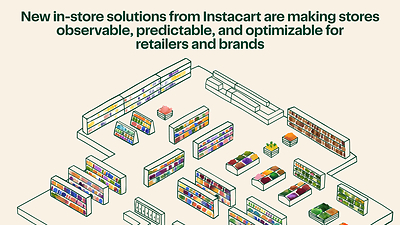
Instacart announced two integrated in-store software solutions on September 21: Inventory Intelligence, built for retailers, and Store Excellence Portal, built for CPG brands. Both products use computer vision and shopper-generated data to build a real-time digital map of grocery shelves, covering shelf visibility, merchandising optimization, demand forecasting, lost-sales estimation, competitive benchmarking, and out-of-stock prediction. This is a meaningfully different product category than the delivery and advertising businesses most people associate with Instacart, and it signals a company willing to sell operational software as a direct product line rather than a byproduct of its marketplace.
Chief commercial officer Ryan Hamburger framed the gap the products are meant to close directly: traditional inventory systems were not built for today's reality, they rely on estimates and periodic counts. That is a pointed critique of the retail execution status quo, where most grocers still rely on scheduled manual audits or infrequent sensor sweeps to know what is actually on their shelves at any given moment.
The data asset behind the pitch
The products lean on scale Instacart has spent over a decade accumulating: roughly 600,000 Instacart shoppers moving through stores, generating more than 10 million data points daily, drawn from a base of 1.6 billion lifetime orders. Instacart says its shoppers visit each participating location more than 15 times a day, which is the operational detail that makes continuous shelf mapping possible without dedicated scanning hardware or a separate audit workforce having to be built from scratch.
The real innovation here is less the computer vision itself, a mature technology at this point, than the reuse of an existing gig workforce already walking store aisles for delivery fulfillment as a de facto sensor network. Retailers get shelf-level visibility without installing new hardware, and Instacart gets a new revenue line from data it was already collecting as a byproduct of order fulfillment, effectively monetizing exhaust data that used to disappear the moment an order was delivered.
Early adopters and what they are solving for
Queen's Price Chopper is named as an early retailer user. Dylan Queen, representing the chain, said having visibility to on-shelf realities and inventory trends over time will help the company better orchestrate replenishment, a comment that points at the specific operational pain point, reactive rather than proactive restocking, that Inventory Intelligence targets. That pain point is a familiar one across regional grocery chains that lack the scale to run their own dedicated shelf-scanning programs the way the largest national chains sometimes can.
On the CPG side, Advantage Solutions is an early user of Store Excellence Portal. EVP Andy Keenan described the value as the ability to identify where products are missing, prioritize by sales opportunity, and direct field resources to the shelves that need it most. That framing matters because it shifts CPG field teams from broad, scheduled store visits to targeted, data-driven interventions where the lost-sales impact is highest, a change that should improve the return on every field rep's time in the aisle.
Competing with retail execution incumbents
This launch puts Instacart into direct competition with an established category of retail execution and shelf-monitoring vendors that grocers and CPG brands already pay for, from dedicated computer vision startups to legacy audit firms. Instacart's advantage lies in monetizing infrastructure, its shopper network, that already exists and is already walking the aisles, rather than needing to fund new hardware or a new field force from a standing start.
That cost structure should make Instacart price competitive against vendors who have to fund their own scanning hardware or in-store personnel. The open question is data quality and consistency: shopper-generated computer vision data collected incidentally during order fulfillment carries a different reliability profile than data from a dedicated scanning pass, and grocers evaluating this should ask Instacart directly about accuracy benchmarks before replacing existing retail execution tools they already trust.
What this means for CPG shelf strategy
For CPG brands, Store Excellence Portal offers something they have historically had to buy piecemeal from third-party audit firms or infer indirectly from sales data: near real-time visibility into whether their products are actually stocked and merchandised correctly at the shelf. Lost-sales estimation tied to actual shelf conditions, rather than modeled from point-of-sale data alone, is a meaningfully sharper tool for prioritizing field team time and for negotiating shelf placement and promotional support with retail partners during category reviews.
The competitive benchmarking feature is the part CPG brands will likely value most and retailers will be most cautious about. Knowing how your product's shelf presence compares to a competitor's inside the same store is valuable intelligence for a brand, but it also means retailers are effectively giving CPG partners more visibility into their own execution gaps than they may be entirely comfortable with, a tradeoff worth negotiating explicitly before signing on.
The roadmap implication for grocery IT
Shelf visibility clearly matters for a grocery CIO's roadmap. The decision this launch actually forces is whether to buy that visibility from Instacart, a partner that already touches fulfillment, advertising, and now execution, or to keep those functions with separate best-of-breed vendors that each specialize in one layer of the stack. Consolidating with Instacart reduces integration overhead but increases dependency on a single partner across an increasing share of the store's digital operations, a tradeoff every procurement conversation should surface explicitly.
The more durable signal is what this says about where Instacart is taking its business model. Delivery and advertising were the first two acts. Operational software that retailers and CPG brands pay for directly, independent of order volume, is a third, and it positions Instacart less as a delivery marketplace and more as an infrastructure layer sitting between grocers, brands, and the physical shelf itself.