Another 6 billion dollars on the table
Walmart confirmed on October 30 that it will invest roughly 6 billion dollars over the next several years to expand its automation partnership with Symbotic, extending automated technology across 25 of its US distribution centers. The company frames the spending as support for its broader supply chain strategy: a wider product assortment, faster order speeds, and more reliable restocking, delivered through added storage capacity and improved product flow at the regional distribution center level.
Rob Montgomery, Walmart's executive vice president for US supply chain operations, described the goal in plain operational terms, saying the investment is meant to simplify work for associates and lower costs. Symbotic already runs an older automated ecommerce fulfillment system at 19 other Walmart locations, and its BreakPack system, which allows individual item picking alongside full case picking, has rolled out to about half of Walmart's regional distribution centers already.
The track record this spending follows
Just three weeks earlier, Supermarket News reported on a Wall Street Journal investigation describing significant problems in Walmart's warehouse automation rollout. Cardboard boxes too large for the equipment to handle, wheeled self-driving robots that break down frequently, and the difficulty of retrofitting automation into warehouses built in the 1980s and 1990s all featured in the reporting, alongside a pattern of vendor sprawl: different robotic systems from multiple suppliers running different tasks at different sites, each with its own maintenance requirements.
The costs behind those problems are concrete rather than abstract. Engineers needed to maintain automated equipment cost more than typical warehouse workers, and electricity for an automated grocery facility can reach about 800,000 dollars a month, versus roughly 250,000 dollars a month before automation. Walmart has invested nearly 1 billion dollars in store-fulfillment automation since 2016, including buying and then selling its original technology partner, Alert Innovation, whose system was rolled out in 20 stores before proving too inefficient to scale.
Why Walmart is still writing bigger checks
Walmart's own response to the Wall Street Journal's reporting was blunt about where it stands in the learning curve: new technology is never perfect on day one, and the company says it is constantly learning and adjusting. That framing matters because it signals Walmart is treating the early failures as a cost of iteration rather than a reason to retreat, a stance that only makes sense if leadership believes the eventual payoff outweighs years of expensive troubleshooting.
Symbotic's own leadership is betting the current pilot proves the model. Chief executive Richard Cohen pointed to a new SymMicro ecommerce system being tested at a Dallas store since August, expected to be running within about six months, with a second site planned to follow shortly after. Cohen was explicit that success at that scale is the trigger for broader expansion, telling reporters that should trigger a bunch more sites once Walmart actually sees the system working.
The scale Walmart is building toward
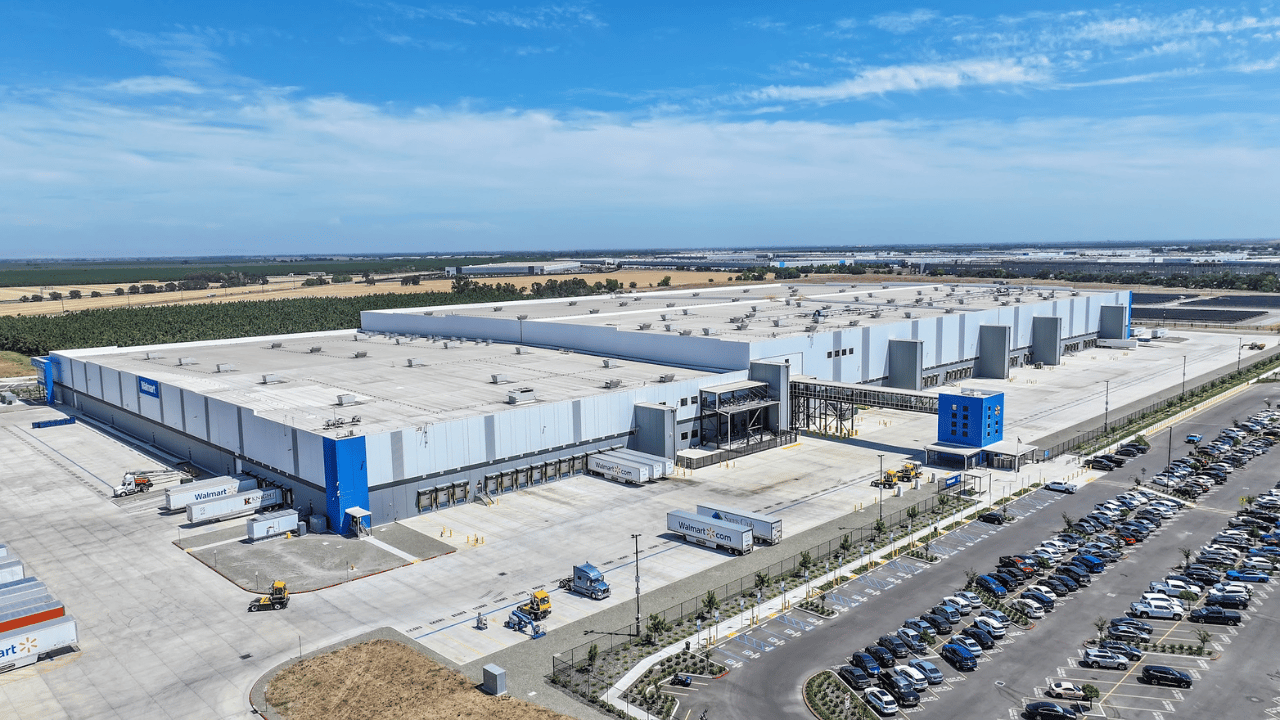
The 6 billion dollar commitment to distribution centers sits alongside a parallel buildout of next generation fulfillment centers aimed at ecommerce. Walmart opened its fifth such facility in Stockton, California, a roughly 900,000 square foot highly automated site expected to create more than 1,000 jobs, with a sixth planned for Carnesville, Georgia at 1.5 million square feet. Existing next-gen centers already operate in Indiana, Texas, Pennsylvania, and Illinois, ranging from 871,000 to 2.2 million square feet.
Walmart says the design cuts order fulfillment from 12 steps down to five, a meaningful efficiency claim if it holds consistently across sites with different ages, layouts, and retrofit constraints. The company currently employs more than 140,000 warehouse workers, and automating pallet assembly so trucks can be unloaded and shelves stocked faster is described as a central goal, one that should gradually reduce labor needs even as it reshapes the skills those remaining workers need.
What build versus buy really costs here
The most instructive detail in Walmart's history with automation is not the robot failures themselves but the vendor sprawl that compounded them: multiple suppliers, multiple maintenance regimes, and one entire technology partner acquired, deployed, and then abandoned before a replacement from a different vendor could be trusted at scale. That is the real cost of automation decisions made facility by facility rather than through a single, accountable platform relationship, and it rarely shows up on the capital expenditure line that gets presented to the board.
Consolidating around Symbotic for this new 6 billion dollar phase looks like Walmart correcting that exact mistake, concentrating its remaining automation bets with one vendor it has already tested across 19 sites rather than spreading risk across competing suppliers. Retailers earlier in their own automation journey should read that as the more important signal than the headline dollar figure: vendor concentration, chosen deliberately after a proven pilot, beat vendor sprawl chosen by accident one warehouse at a time.
What this means for the roadmap
Any retail technology leader evaluating warehouse or store automation should treat Walmart's publicly documented experience as a checklist rather than a marketing reel. Model electricity and maintenance labor costs alongside the robots themselves before signing a contract, because Walmart's own numbers show those operating costs can triple relative to a conventional facility. Insist on a single proven pilot location running at target throughput before any commitment to multi-site scale, exactly the sequencing Symbotic's own chief executive described as the trigger for Walmart's next phase.
Most importantly, resist the instinct to diversify vendors as a hedge against any one supplier failing. Walmart's history suggests the opposite discipline pays off: fewer, better-tested automation partners, chosen after a scrapped first attempt taught the company what to look for, rather than a portfolio of point solutions that each need their own support contract and failure mode. The 6 billion dollar number is less interesting than the concentration decision sitting underneath it.