A sixth metro, and a familiar playbook
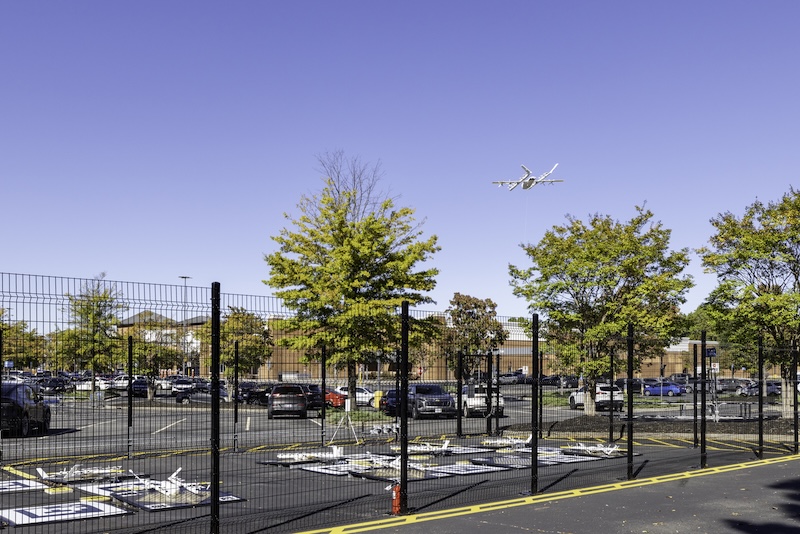
Walmart and Wing switched on drone delivery around Memphis on November 11, their first launch in Tennessee and the sixth metro in a partnership that already covers Charlotte, Orlando, Houston, Atlanta, and Dallas-Fort Worth. The service reaches tens of thousands of homes near three Supercenters: store #950 in Bartlett, store #2322 in Cordova, and store #70 in West Memphis, Arkansas. Customers order groceries, household goods, and baby items for delivery to their yards in as little as 30 minutes. Wing's Chief Business Officer Heather Rivera framed the launch in community terms, saying the company wanted to show up as a helpful, good neighbor for residents throughout the Memphis metro, language aimed as much at local regulators and prospective host communities as at shoppers themselves.
What matters for operators watching from outside Walmart's four walls is the cadence of these launches rather than the novelty of any single one. Six metros in a few years reads less like a science project still searching for product-market fit and more like a repeatable rollout motion, built around a fixed catalog, a fixed delivery promise, and a fixed radius around existing Supercenters that already carry the inventory. That consistency, the ability to stamp out the same model in a new city every few months without reinventing the operating assumptions each time, is the real product on display here, and it is a harder thing for a competitor to copy quickly than the drone hardware itself.
Why 20 metros by 2027 is the number that matters
Walmart and Wing have stated a target of roughly 20 major US metros by 2027, naming Los Angeles, Seattle, Denver, and Miami among the next wave of expansion. Going from six metros to twenty in under two years requires standing up regulatory clearances, airspace coordination, ground operations, and local hiring at a pace most logistics organizations would call aggressive for a delivery channel that still represents a small share of total order volume industry-wide. Few retail logistics programs attempt that kind of geographic multiplication on a fixed public timeline, which is itself a signal of how confident Walmart has become in the underlying unit economics after five prior metro launches.
That confidence only makes sense if Walmart is treating drone delivery as infrastructure to be amortized across its existing Supercenter footprint, rather than evaluating each metro as its own stand-alone business case. Every new metro leans on stores that already exist, inventory that already moves through established supply chains, and a store workforce that already operates the pickup and staging process. The marginal cost of standing up metro number seven should be meaningfully lower than metro number one was, and that compounding economics, more than any single technology improvement in the aircraft, is what should concern competitors that lack a comparably dense store network to anchor a similar rollout against.
The competitive read for grocers and big-box chains
Drone delivery remains a narrow slice of total fulfillment volume, constrained by payload limits, weather sensitivity, and airspace rules that vary by jurisdiction and can change with little notice. Narrow volume still carries real competitive weight in the specific use case it serves well: getting a forgotten ingredient or a diaper emergency to a doorstep within half an hour. In that window, drones compete directly with gig-driven delivery apps on speed, and increasingly on cost, since a drone network removes the per-trip driver wage that defines the economics of app-based delivery once the fixed infrastructure is in place and amortized across volume.
Retailers without comparable store density, or without a partner like Wing willing to co-invest in airspace clearance and ground infrastructure, end up choosing between slower fulfillment windows or higher-cost driver networks to serve that same urgent-need customer moment. That gap does not close through a single partnership announcement of a retailer's own. It closes through years of unglamorous regulatory filings, airspace negotiations, and operational pilots that Walmart began earlier than most of its peers and is now compounding into a geographic lead that will take years for a late starter to match.
What this means for enterprise technology leaders
For CTOs and CIOs outside retail, the useful lesson here concerns infrastructure sequencing more than drone technology specifically. Walmart treats each new metro as a chance to re-run a validated playbook against new geography rather than announcing a fresh capability every time, the same discipline enterprise technology leaders try to apply when scaling a platform migration across business units instead of redesigning the approach for every new team or region. That kind of repeatability is usually the difference between a program that reaches twenty sites and one that stalls after three, regardless of industry.
The operational dependencies underneath the partnership are instructive in their own right. Wing supplies the aircraft, the flight software, and the airspace expertise needed to clear each new market with regulators. Walmart supplies the real estate, the inventory systems, and the brand trust that gets a household comfortable with a drone landing in its yard. Each side stays focused on the domain it understands best rather than attempting to absorb the other's expertise internally, and that clean division of labor, rather than a vertically integrated drone fleet built from scratch, is what turned six working metros into a credible, time-bound path to twenty.
The risk sitting underneath the expansion curve
Scaling at this pace carries its own exposure, and the risks sit mostly outside Walmart's direct control. Weather disruption, a high-profile safety incident involving an aircraft, or a tightening of Federal Aviation Administration rules could all stall the 2027 target without much warning, since Wing operates the aircraft and bears primary responsibility for flight safety and airspace compliance. Rapid geographic expansion also tends to produce thinner local operating experience in each freshly launched metro, arriving right as consumer demand typically spikes heading into the holiday season when any service hiccup draws outsized attention.
The strategic signal underneath those risks still comes through clearly for anyone paying attention. Walmart is building last-mile optionality that smaller or less capital-intensive competitors will struggle to replicate on a comparable timeline, and it is doing so quietly enough that the headline coverage in any single metro reads as a local news item about a neighborhood convenience. The cumulative effect across six metros and counting is a logistics capability most of the retail industry has not yet started building, let alone scaling toward the twenty-metro footprint Walmart has now put a date on.