Seven countries, one platform, one year
Jysk, the Danish home goods retailer, has completed its unified commerce rollout across the Netherlands, Belgium, the UK, and Ireland, the latest stops in a seven-country migration to an Enactor-powered platform finished within 2026. Enactor's Olena Opalko called it a milestone year for both companies, noting that more than 2,200 Jysk stores are now live on the platform and that every single country rollout across the full program was delivered on time, without the schedule slippage that typically accompanies a project of this geographic scope.
That claim, delivered on time across seven separate national markets each carrying its own regulatory, tax, and payment card requirements, is the part of this story genuinely worth pausing on rather than treating as routine vendor language. Point-of-sale migrations have earned a well-deserved reputation for slipping schedules by months once local variations in tax rules, card network requirements, and store-level hardware compatibility inevitably surface partway through a project. Jysk and Enactor appear to have avoided that familiar pattern across the entire program, which is a harder operational feat than the milestone framing initially suggests.
What store-level feedback actually tells you
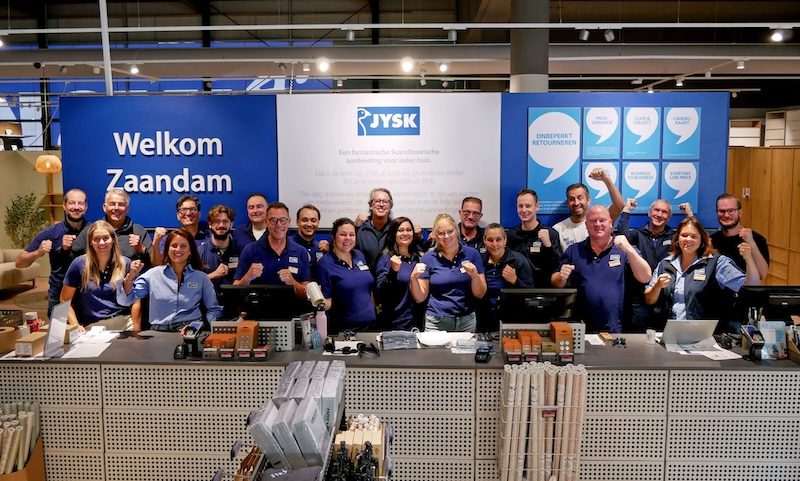
Melissa Hessing, a store manager at Jysk's Alkmaar location in the Netherlands, said colleagues are already seeing the benefits and described the new checkout system as user-friendly and largely self-explanatory for staff encountering it for the first time. That kind of quote is easy enough to wave away as routine vendor messaging attached to a press release, yet it also happens to carry the signal that matters most in any POS rollout of this size: whether frontline staff genuinely needed extensive retraining to operate it, or could adapt with only minimal friction during the transition window.
A checkout system that requires heavy retraining carries hidden costs that extend well beyond the software license itself, showing up instead in lost selling hours, temporary service slowdowns during the changeover period, and manager time spent troubleshooting confused staff rather than actually managing the sales floor during peak periods. A system genuinely described as self-explanatory by the people actually using it day to day is stronger evidence that a rollout avoided those hidden costs than any uptime percentage or performance benchmark a vendor could publish in a case study.
Why unified commerce platforms are having a moment
Unified commerce was named a key focus area at this year's RTIH Innovation Awards, reflecting a broader pattern across European retail of replacing fragmented, store-by-store point-of-sale systems with a single platform spanning checkout, inventory, and customer data across every market a retailer operates in. The same underlying pressure pushing AI shopping agents and retail media networks into the mainstream is driving this shift too. Retailers increasingly need one coherent data layer in place before any of those newer, more headline-friendly capabilities can actually work reliably across channels and borders.
A point-of-sale system functions as the base layer underneath essentially all of that newer capability. Store transaction data that stays fragmented across country-specific legacy systems cannot realistically feed a unified loyalty program, a consistent real-time inventory view, or an AI-driven personalization engine without substantial integration work absorbed first. Jysk's migration reads as unglamorous next to agentic commerce headlines elsewhere in retail, yet it is precisely the kind of foundational infrastructure project that makes those flashier headlines achievable later for whichever retailer has the discipline to tackle the plumbing well ahead of time.
The delivery discipline is the exportable lesson
For CIOs weighing their own legacy POS replacement, the most relevant takeaway from Jysk centers on sequencing discipline rather than on the specific vendor chosen for the job. Rolling out country by country, measuring store-level adoption through direct manager feedback rather than dashboard metrics alone, and treating each national rollout as a discrete, time-boxed project with a defined start and end date all appear to have mattered more here than any single feature of the Enactor platform itself in explaining why the schedule held.
That discipline is considerably harder to copy in practice than it sounds when summarized in a few bullet points. Seven on-time rollouts within a single year, across markets carrying different regulatory regimes and payment requirements, demands a vendor relationship and an internal program office both operating at a level of maturity that many retailers genuinely underestimate when they first scope out a POS replacement of this scale. The technology choice is rarely the actual reason these multi-country projects fail or slip their timelines. Program management discipline, far more often than the software itself, ends up being the deciding factor.
What is still unconfirmed
The article naming this milestone identifies only four of the seven countries included in the completed rollout, leaving the other three markets and the remaining rollout timeline entirely unspecified for now. Whether the full seven-country footprint is now actually complete, or whether additional markets remain scheduled to go live sometime into 2027, is a detail that neither Jysk nor Enactor has yet made public in any statement tied to this announcement.
That disclosure gap aside, the core signal behind this milestone still holds up on its own terms. A retailer of Jysk's size completed a multi-country checkout migration without a single publicly reported miss on schedule across any of the markets named, and did so in the same year that unified commerce became a named, awards-worthy category at an industry program built specifically to recognize exactly this kind of unglamorous but consequential operational achievement.